
 EN
EN
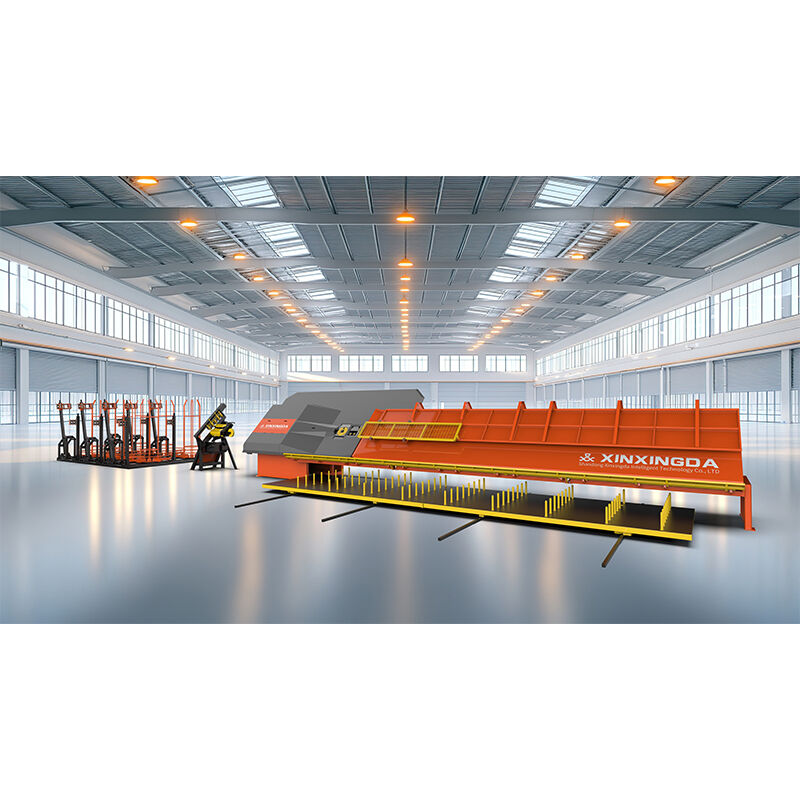
Understanding which applications benefit most from CNC steel bar bending machine technology is crucial for construction companies and manufacturers seeking to optimize their operations. These automated systems offer precision, speed, and consistency that transform traditional rebar fabrication processes across multiple industrial sectors. The strategic deployment of CNC steel bar bending machine solutions can significantly impact project timelines, quality standards, and overall operational efficiency.
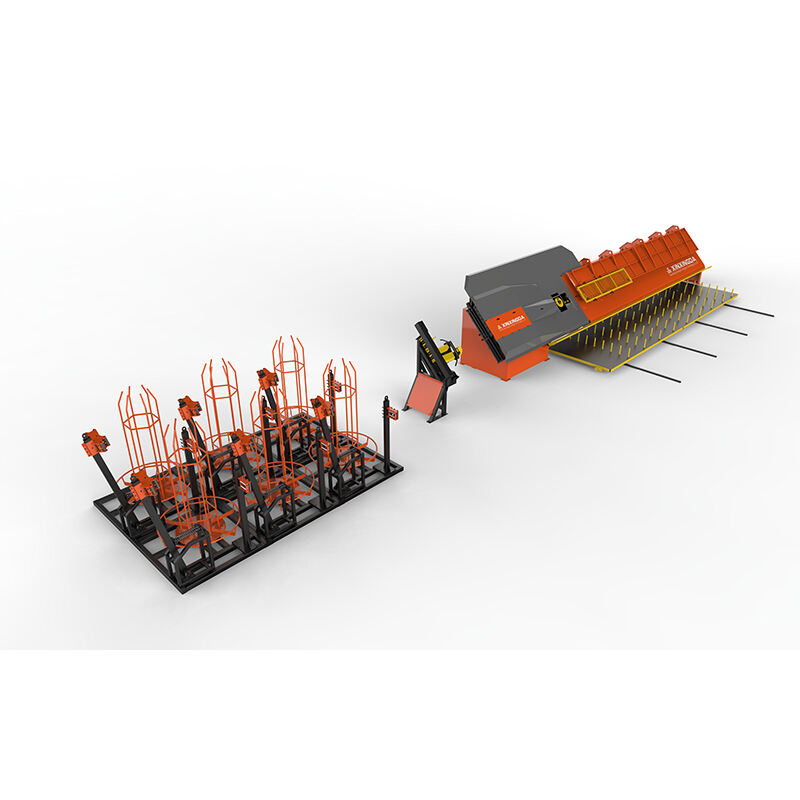
Modern construction and manufacturing environments demand precise steel reinforcement solutions that meet stringent quality requirements while maintaining cost-effectiveness. The applications that derive maximum benefit from CNC steel bar bending machine implementation share common characteristics including high-volume production needs, complex geometric requirements, and strict tolerance specifications. Identifying these optimal use cases enables organizations to make informed investment decisions and maximize their return on automated bending technology.
High-Volume Construction Projects
Commercial Building Development
Commercial construction projects represent one of the primary applications where CNC steel bar bending machine technology delivers exceptional value. Large-scale office buildings, shopping centers, and industrial complexes require thousands of precisely bent rebar pieces with consistent specifications. The automated nature of CNC steel bar bending machine operations ensures that each piece meets exact dimensional requirements while significantly reducing production time compared to manual bending methods.
The repetitive nature of commercial construction reinforcement needs aligns perfectly with CNC capabilities. Standard beam reinforcement, column ties, and foundation elements can be programmed once and reproduced consistently throughout the project lifecycle. This consistency eliminates the variability associated with manual bending processes and reduces the risk of structural integrity issues caused by improperly shaped reinforcement bars.
Quality control in commercial projects benefits substantially from CNC steel bar bending machine precision. Each bent piece maintains identical specifications, ensuring uniform load distribution and structural performance across the entire building. The documentation capabilities of modern CNC systems also provide detailed production records that support quality assurance protocols and regulatory compliance requirements.
Infrastructure Development Programs
Infrastructure projects including highways, bridges, and tunnels present ideal applications for CNC steel bar bending machine deployment. These projects typically involve massive quantities of reinforcement steel with complex geometric requirements that would be challenging and time-consuming to produce manually. The precision offered by CNC technology ensures that critical structural components meet engineering specifications exactly.
Bridge construction particularly benefits from CNC steel bar bending machine capabilities due to the complex curved and angular reinforcement shapes required for structural integrity. The ability to program precise bend angles and radii ensures that reinforcement patterns match engineering drawings perfectly. This precision is essential for maintaining the structural performance and safety margins specified in infrastructure design calculations.
Long-term infrastructure projects gain additional value from CNC steel bar bending machine consistency over extended production periods. The automated systems maintain identical bending parameters regardless of operator changes or production shifts, ensuring that reinforcement quality remains constant throughout multi-year construction timelines. This reliability is crucial for infrastructure projects where structural performance must be maintained over decades of service life.
Precast Concrete Manufacturing
Standardized Component Production
Precast concrete manufacturing represents an optimal application environment for CNC steel bar bending machine technology due to the repetitive nature of component production. Precast facilities produce identical structural elements repeatedly, requiring consistent reinforcement patterns that match precisely with concrete forms and molds. The programmable nature of CNC systems enables exact replication of complex reinforcement geometries across thousands of identical components.
The speed advantages of CNC steel bar bending machine operations become particularly pronounced in precast environments where production schedules drive profitability. Automated bending systems can produce reinforcement patterns significantly faster than manual methods while maintaining the precision required for proper concrete coverage and structural performance. This efficiency enables precast manufacturers to meet aggressive delivery schedules while maintaining quality standards.
Inventory management in precast operations benefits from CNC steel bar bending machine capabilities through just-in-time production strategies. The ability to quickly program and produce specific reinforcement patterns enables manufacturers to reduce inventory carrying costs while ensuring that production schedules are maintained. This flexibility is particularly valuable when managing multiple concurrent projects with varying reinforcement requirements.
Custom Architectural Elements
Architectural precast elements with complex geometric features present challenging applications that showcase CNC steel bar bending machine advantages. Decorative panels, curved facades, and sculptural concrete elements often require intricate reinforcement patterns that would be extremely difficult to produce consistently using manual bending methods. CNC technology enables precise reproduction of these complex patterns while maintaining the dimensional accuracy required for proper concrete placement.
The programming flexibility of modern CNC steel bar bending machine systems allows precast manufacturers to accommodate unique architectural requirements without significant setup time or specialized tooling. Complex curves, multiple bend angles, and three-dimensional reinforcement patterns can be programmed and produced with precision that matches architectural specifications. This capability enables precast manufacturers to compete effectively in high-value architectural markets.
Quality assurance for architectural elements benefits from CNC steel bar bending machine consistency in producing reinforcement that matches design intent precisely. The visual quality of architectural concrete depends heavily on proper reinforcement placement and concrete coverage, both of which require precisely bent reinforcement bars. Automated production ensures that these critical dimensional requirements are maintained consistently across all architectural elements.
Specialized Industrial Applications
Heavy Manufacturing Facilities
Heavy manufacturing facilities including steel mills, automotive plants, and machinery manufacturing operations require robust reinforced concrete foundations and structures capable of supporting massive equipment loads. These applications benefit significantly from CNC steel bar bending machine capabilities in producing the heavy-duty reinforcement patterns required for industrial-grade concrete structures. The precision offered by CNC systems ensures that reinforcement placement matches engineering calculations for load distribution and structural performance.
Machine foundation requirements in industrial facilities often involve complex reinforcement geometries designed to handle dynamic loads and vibration isolation. CNC steel bar bending machine technology enables precise production of these specialized reinforcement patterns while maintaining the dimensional accuracy required for proper concrete placement around anchor bolts and foundation hardware. This precision is essential for ensuring proper equipment alignment and operational performance.
The durability requirements of industrial applications make CNC steel bar bending machine precision particularly valuable. Reinforcement patterns must maintain structural integrity under continuous heavy loading conditions, requiring exact placement and proper concrete coverage. The consistency provided by automated bending systems helps ensure that these critical performance requirements are maintained throughout the construction process.
Marine and Coastal Construction
Marine construction projects including ports, docks, and coastal protection structures present unique challenges that benefit from CNC steel bar bending machine capabilities. These environments require reinforcement patterns designed to resist corrosion and wave action while maintaining structural integrity under extreme loading conditions. The precision offered by CNC systems ensures that reinforcement placement provides optimal concrete coverage and protection against environmental exposure.
Tidal and wave loading conditions create complex stress patterns in marine structures that require precisely engineered reinforcement designs. CNC steel bar bending machine technology enables accurate production of these specialized patterns while maintaining the dimensional accuracy required for proper structural performance. The consistency provided by automated systems helps ensure that reinforcement quality remains constant despite challenging construction environments.
Corrosion protection in marine environments depends heavily on proper concrete coverage of reinforcement steel. CNC steel bar bending machine precision helps ensure that reinforcement positioning maintains adequate cover while providing the structural performance required for marine applications. This precision is essential for achieving the service life expectations of coastal and marine infrastructure investments.
Quality-Critical Manufacturing Sectors
Nuclear and Power Generation
Nuclear power facilities and other critical energy infrastructure represent applications where CNC steel bar bending machine precision becomes essential for regulatory compliance and safety performance. These projects require reinforcement patterns that meet extremely strict tolerances and quality standards, with detailed documentation and traceability requirements that are well-suited to automated production systems. The consistency provided by CNC technology helps ensure that all reinforcement meets the stringent specifications required for nuclear-grade construction.
Seismic design requirements in power generation facilities often involve complex reinforcement patterns designed to provide ductility and energy dissipation during earthquake events. CNC steel bar bending machine capabilities enable precise production of these specialized seismic reinforcement details while maintaining the dimensional accuracy required for proper structural performance. The programmable nature of CNC systems also facilitates the documentation and quality control processes required for nuclear construction projects.
Radiation shielding applications in nuclear facilities require reinforcement patterns that accommodate dense concrete mixes and specialized placement requirements. CNC steel bar bending machine precision helps ensure that reinforcement positioning maintains proper spacing and alignment despite the challenging placement conditions associated with high-density concrete construction. This precision is essential for achieving the shielding performance and structural integrity required for nuclear applications.
Pharmaceutical and Clean Room Construction
Pharmaceutical manufacturing facilities require reinforced concrete structures that meet strict cleanliness and contamination control standards. CNC steel bar bending machine technology provides the precision required to produce reinforcement patterns that accommodate complex HVAC systems, process equipment, and specialized construction details while maintaining the dimensional accuracy required for proper concrete placement and finishing.
Clean room construction often involves reinforcement patterns that must accommodate specialized flooring systems, vibration isolation, and precision equipment mounting requirements. The programmable capabilities of CNC steel bar bending machine systems enable accurate production of these complex patterns while maintaining the consistency required for achieving the tight tolerances associated with pharmaceutical manufacturing environments.
Validation and documentation requirements in pharmaceutical construction benefit from the traceability capabilities of modern CNC steel bar bending machine systems. These facilities require detailed records of all construction materials and processes, making the automated documentation features of CNC systems particularly valuable for meeting regulatory compliance requirements and supporting facility validation processes.
FAQ
What volume of production justifies investing in a CNC steel bar bending machine?
The break-even point for CNC steel bar bending machine investment typically occurs when monthly production volumes exceed 500-1000 pieces or when project requirements involve complex geometries that would be time-intensive to produce manually. Facilities producing standardized reinforcement patterns for multiple projects often see ROI within 12-18 months, while operations handling custom architectural or specialized industrial applications may justify investment at lower volumes due to the precision and consistency requirements.
Can CNC steel bar bending machines handle different steel grades and sizes?
Modern CNC steel bar bending machines are designed to accommodate multiple steel grades from standard rebar to high-strength alloys, with diameter capabilities typically ranging from 6mm to 50mm depending on the specific machine model. The programmable control systems can adjust bending parameters automatically for different material properties, ensuring consistent results across various steel specifications while maintaining proper bend radii and avoiding material stress concentrations.
How does CNC steel bar bending machine precision compare to manual bending methods?
CNC steel bar bending machines typically achieve dimensional tolerances of ±2mm or better, compared to manual bending tolerances that often vary by ±10mm or more depending on operator skill and consistency. This precision improvement translates directly to better concrete coverage, improved structural performance, and reduced material waste, while also eliminating the variability associated with different operators or production shifts.
What maintenance requirements should be considered for CNC steel bar bending machine operations?
CNC steel bar bending machines require routine maintenance including hydraulic system checks, lubrication of moving components, and periodic calibration of positioning systems to maintain precision performance. Most manufacturers recommend daily operational checks, weekly detailed inspections, and monthly comprehensive maintenance procedures, with annual calibration and major component inspections to ensure continued accuracy and reliability throughout the equipment service life.
Table of Contents
- High-Volume Construction Projects
- Precast Concrete Manufacturing
- Specialized Industrial Applications
- Quality-Critical Manufacturing Sectors
-
FAQ
- What volume of production justifies investing in a CNC steel bar bending machine?
- Can CNC steel bar bending machines handle different steel grades and sizes?
- How does CNC steel bar bending machine precision compare to manual bending methods?
- What maintenance requirements should be considered for CNC steel bar bending machine operations?