
 EN
EN
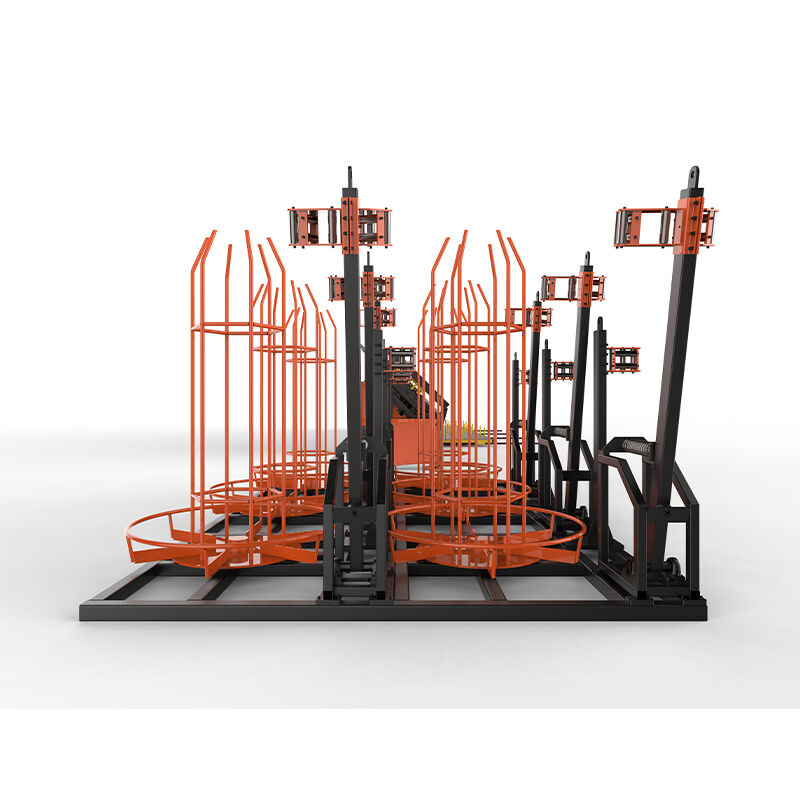
Selecting the right steel bar bending lathe for industrial applications is a critical decision that directly impacts production efficiency, operational costs, and product quality in construction and manufacturing environments. As the demand for precision-bent reinforcement bars continues to grow across infrastructure projects, fabrication shops, and precast concrete facilities, understanding the key factors that differentiate one steel bar bending lathe from another becomes essential. This comprehensive guide explores the technical considerations, performance criteria, and practical decision-making strategies that industrial buyers and production managers need to evaluate when investing in this specialized equipment.
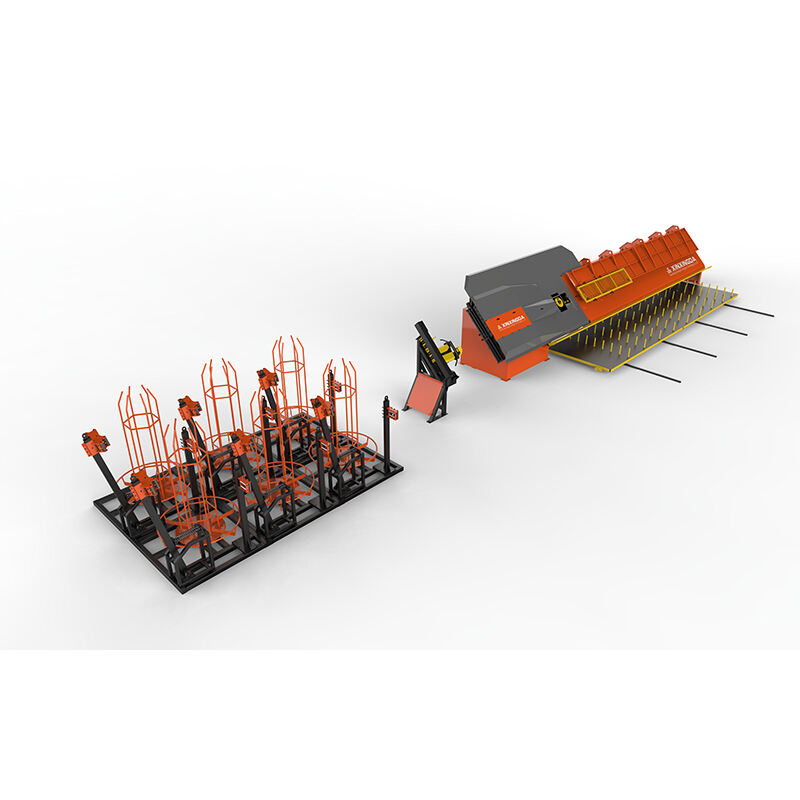
The process of choosing a steel bar bending lathe requires balancing multiple technical specifications with real-world production requirements, budget constraints, and long-term operational goals. Industrial applications vary significantly in their demands, from high-volume production lines requiring rapid cycle times to specialized fabrication shops needing versatility across different bar diameters and bending configurations. By systematically evaluating machine capabilities against your specific application requirements, you can identify the steel bar bending lathe that delivers optimal performance, reliability, and return on investment for your operation.
Understanding Core Technical Specifications
Bending Capacity and Bar Diameter Range
The bending capacity of a steel bar bending lathe represents its fundamental capability to process different sizes of reinforcement bars, typically measured by the maximum bar diameter it can handle. Industrial applications often require processing bars ranging from 6mm to 40mm or even 50mm in diameter, and selecting a machine with appropriate capacity ensures you can handle both current and anticipated future requirements. When evaluating bending capacity, consider not only the maximum diameter specification but also how the machine performs across the entire diameter range, as some equipment may struggle with smaller bars despite having high maximum capacity ratings.
The relationship between bar diameter and bending speed becomes particularly important in production environments where throughput directly affects profitability. A steel bar bending lathe with adequate motor power and hydraulic or mechanical transmission systems will maintain consistent bending speeds across different bar sizes, whereas underpowered machines may slow significantly when processing larger diameters. Additionally, assess whether the machine's bending mechanism can accommodate both standard round bars and deformed reinforcement bars with ribbed surfaces, as different bar types may require adjustments to the bending dies and support mechanisms.
Bending Angle Precision and Repeatability
Angle precision determines how accurately a steel bar bending lathe can achieve specified bend angles, which is critical for applications requiring tight tolerances in structural components. Modern CNC-controlled machines typically offer precision within ±0.5 degrees, while manual or semi-automatic systems may have tolerances of ±1 to ±2 degrees. For industrial applications such as bridge construction, high-rise buildings, or precast concrete elements where component fit-up is crucial, investing in equipment with superior angle precision reduces rework, material waste, and assembly complications on job sites.
Repeatability refers to the machine's ability to consistently reproduce the same bend angle across multiple pieces, which becomes essential in batch production scenarios. A steel bar bending lathe with excellent repeatability ensures that all bars in a production run meet identical specifications without requiring constant operator intervention or quality checks between pieces. Look for machines equipped with servo motors, digital angle encoders, and automated positioning systems that eliminate variability introduced by manual adjustments or mechanical wear over time.
Production Speed and Cycle Time
The cycle time of a steel bar bending lathe encompasses the complete duration from loading a bar to completing the bend and returning to the starting position, directly determining hourly production capacity. High-volume industrial applications require equipment capable of processing 15 to 30 bends per minute for standard configurations, while more complex bending sequences may reduce throughput accordingly. When evaluating production speed, distinguish between the machine's theoretical maximum speed and its practical operating speed under typical working conditions, including time for bar positioning, operator interaction, and any necessary adjustments between different bend configurations.
Advanced steel bar bending lathe models incorporate quick-change tooling systems, automated bar feeding mechanisms, and programmable control systems that minimize non-productive time between bending operations. These features become particularly valuable in applications requiring frequent changeovers between different bar sizes or bending patterns, where traditional machines might require significant setup time. Consider how the machine's speed characteristics align with your specific production workflow, including whether bottlenecks exist elsewhere in your process that might make ultra-high-speed bending less critical than other performance factors.
Evaluating Control Systems and Automation Features
Manual Versus CNC Control Architectures
The control system architecture of a steel bar bending lathe fundamentally determines its operational flexibility, ease of use, and integration potential within modern manufacturing environments. Manual machines rely on mechanical stops and operator skill to achieve desired bend angles, making them suitable for simple, repetitive tasks but limiting precision and requiring experienced personnel. Semi-automatic systems incorporate electrical controls for motor operation while retaining manual positioning, offering a middle ground between cost and capability for small to medium production volumes.
CNC-controlled steel bar bending lathe equipment represents the current standard for serious industrial applications, providing programmable angle control, multiple bending sequence storage, and digital interfaces that reduce operator skill requirements. Modern CNC systems allow operators to input complex bending patterns through touchscreen interfaces, save programs for recurring jobs, and achieve consistent results regardless of operator experience level. When evaluating CNC options, assess the controller's user interface design, programming complexity, memory capacity for storing bending programs, and whether it supports integration with production management software or CAD systems used in your engineering department.
Automated Bar Feeding and Positioning Systems
Automated feeding systems significantly enhance the productivity of a steel bar bending lathe by eliminating manual bar loading and positioning, which traditionally consumes substantial operator time in high-volume production environments. Motorized feeding mechanisms can automatically advance bars to precise lengths for each bend based on programmed dimensions, reducing cycle time and improving measurement accuracy compared to manual methods. For operations processing long reinforcement bars or producing multiple bends per bar, automated feeding becomes essential for maintaining competitive production rates.
When evaluating automated feeding capabilities, consider the system's maximum bar length capacity, feeding speed, positioning accuracy, and whether it includes safety features to prevent bar movement during the bending operation. Some advanced steel bar bending lathe models incorporate servo-driven feeding with digital length measurement, offering positioning accuracy within ±1mm and enabling complex multi-bend sequences without operator intervention. Assess whether the feeding system can accommodate the range of bar stiffness and weight characteristics in your typical production mix, as lightweight small-diameter bars and heavy large-diameter bars present different handling challenges.
Program Storage and Job Management Capabilities
The ability to store, retrieve, and manage bending programs directly impacts operational efficiency in industrial environments where multiple different bar configurations are produced regularly. A steel bar bending lathe with substantial program memory can store hundreds or thousands of unique bending sequences, allowing operators to quickly recall specifications for recurring jobs without manual re-entry. This capability reduces setup time, eliminates programming errors from repeated data entry, and enables faster response to production schedule changes or rush orders.
Modern steel bar bending lathe systems may offer USB connectivity, network integration, or cloud-based program management that enables engineering departments to develop bending programs off-line and transfer them to production equipment electronically. This approach streamlines the workflow from design to production, reduces errors from manual transcription, and allows centralized management of bending specifications across multiple machines. Consider whether the machine's data management capabilities align with your existing production planning systems and whether technical support is available for integration projects.
Assessing Build Quality and Long-Term Durability
Frame Construction and Structural Rigidity
The structural foundation of a steel bar bending lathe determines its long-term durability, bending accuracy under load, and resistance to deformation from repeated high-force operations. Industrial-grade machines feature heavy-duty welded steel frames or cast iron construction designed to withstand the substantial forces generated during bending without flexing or vibrating. Frame rigidity directly affects bending precision, as even slight deflection under load can introduce angle variations that accumulate over production runs and compromise dimensional consistency.
When evaluating frame construction, look for machines with reinforced stress points, thick-walled structural members, and proper weight distribution that provides stability during operation. A well-designed steel bar bending lathe will maintain its accuracy specifications even when processing bars at maximum rated capacity, whereas lighter-duty construction may only achieve rated precision with smaller diameter bars. Consider the machine's total weight as an indicator of structural mass, though engineering design quality matters more than weight alone in determining actual rigidity and vibration resistance.
Drive System Design and Power Transmission
The drive system of a steel bar bending lathe converts motor power into the rotational force needed to bend reinforcement bars around bending dies, with system design significantly affecting reliability, maintenance requirements, and operational costs. Hydraulic drive systems provide high force capacity with smooth, controllable bending action, making them suitable for large-diameter bars and heavy-duty industrial applications. However, hydraulic systems require regular fluid maintenance, are sensitive to temperature variations, and may develop leaks that create maintenance challenges and environmental concerns.
Mechanical drive systems using gear reduction or direct motor drive offer simpler maintenance, more predictable operating costs, and elimination of hydraulic fluid-related issues. Modern servo motor-driven steel bar bending lathe equipment provides precise speed control, excellent low-speed torque characteristics, and integration with CNC control systems for programmable bending sequences. When evaluating drive systems, consider the maintenance expertise available in your facility, ambient operating temperature conditions, and whether the drive design provides adequate force margin beyond your typical bar diameter requirements to ensure long-term reliability.
Component Quality and Manufacturer Support
The quality of individual components used throughout a steel bar bending lathe directly determines its reliability, maintenance frequency, and total cost of ownership over its operational lifetime. Premium machines incorporate name-brand motors, industrial-grade bearings, hardened tool steel bending pins, and quality hydraulic components that withstand continuous industrial use. Lower-cost equipment may use generic components with shorter service lives, requiring more frequent replacement and potentially causing unexpected downtime that disrupts production schedules.
Equally important is the manufacturer's commitment to long-term parts availability and technical support, as even well-built equipment will eventually require replacement components or technical assistance. Before selecting a steel bar bending lathe, research the manufacturer's reputation for customer support, typical lead times for replacement parts, availability of local service technicians, and whether comprehensive technical documentation is provided. Consider whether the manufacturer offers training programs for operators and maintenance personnel, as proper equipment operation and preventive maintenance significantly extend machine lifespan and maintain performance specifications.
Matching Machine Capabilities to Application Requirements
Production Volume and Throughput Needs
The production volume requirements of your industrial application fundamentally determine the appropriate class of steel bar bending lathe equipment, from entry-level manual machines to fully automated high-speed production systems. Operations processing fewer than 500 bars daily may find manual or semi-automatic machines adequate, while high-volume fabrication shops or rebar processing centers handling thousands of bars per shift require automated equipment with rapid cycle times and minimal operator intervention. Accurately forecasting production volumes, including seasonal peaks and anticipated growth, prevents premature equipment obsolescence and ensures adequate capacity for business expansion.
When matching machine capabilities to volume requirements, consider not only the raw bending speed but also the complete production workflow including material handling, quality inspection, and bundling operations. A steel bar bending lathe with exceptional speed provides limited benefit if upstream bar cutting or downstream material handling creates bottlenecks that prevent the machine from operating at full capacity. Analyze your complete production system to identify whether bending speed represents the constraining factor in overall throughput, or whether investments in material handling automation or additional machines would deliver better capacity improvements.
Product Mix and Flexibility Requirements
The diversity of bar configurations your operation produces significantly influences the type of steel bar bending lathe that delivers optimal performance, as different machine designs excel at different application profiles. Operations focused on high-volume production of standardized shapes benefit from dedicated machines optimized for rapid repetitive bending, potentially including specialized tooling for common configurations. Conversely, job shops or custom fabricators handling diverse orders with frequent changeovers require versatile equipment with quick tooling changes, extensive program storage, and flexibility to accommodate unusual bending requirements.
Consider whether your typical product mix includes primarily simple single-angle bends or complex multi-bend configurations such as stirrups, spirals, or custom shapes. Some steel bar bending lathe models specialize in stirrup production with dedicated tooling and automated positioning for common rectangular or circular configurations, while general-purpose machines offer broader capability at the cost of some specialization. Evaluate whether a single versatile machine or multiple specialized machines better serves your specific product portfolio, considering both equipment costs and the operational complexity of managing multiple machine types.
Space Constraints and Installation Considerations
The physical footprint of a steel bar bending lathe and its installation requirements must align with available floor space, facility infrastructure, and material flow patterns within your production environment. Compact benchtop machines occupy minimal space but offer limited capacity, while industrial-grade equipment may require dedicated floor space of 3 to 6 meters in length to accommodate the machine body, bar feeding systems, and operator access. When evaluating space requirements, consider not only the machine's static footprint but also clearance needed for loading long bars, removing finished products, and performing maintenance operations.
Installation considerations extend beyond floor space to include electrical power requirements, with larger steel bar bending lathe equipment potentially requiring three-phase power at specific voltage levels that may necessitate electrical infrastructure upgrades. Foundation requirements vary by machine size and design, with heavy-duty equipment potentially requiring reinforced concrete pads or anchor bolt installations to minimize vibration and maintain alignment accuracy. Assess whether your facility can accommodate these installation requirements within budget and timeline constraints, and whether machine placement optimizes material flow patterns for efficient integration with cutting, straightening, and material handling operations.
Calculating Total Cost of Ownership and Investment Return
Initial Purchase Price Versus Long-Term Value
The purchase price of a steel bar bending lathe represents only one component of total ownership cost, and focusing exclusively on minimizing initial investment often results in higher long-term expenses from increased maintenance, reduced productivity, or premature replacement. Entry-level machines may cost 40-60% less than premium equipment but potentially require twice the maintenance, operate at half the speed, and have service lives of 5-7 years compared to 15-20 years for industrial-grade equipment. Conducting thorough total cost of ownership analysis that includes purchase price, installation costs, training expenses, maintenance requirements, energy consumption, and expected service life provides a more accurate foundation for investment decisions.
When comparing options, calculate the cost per bend or cost per production hour for different steel bar bending lathe alternatives, considering both the initial investment amortized over expected equipment life and the ongoing operational expenses. Premium machines with higher purchase prices often deliver lower per-unit production costs through superior speed, reduced maintenance downtime, better energy efficiency, and extended service lives. Consider whether your operation's financial structure favors minimizing upfront capital expenditure or reducing long-term operational costs, and whether financing options or leasing arrangements might enable acquisition of higher-capability equipment within budget constraints.
Productivity Gains and Revenue Impact
The production capacity increase from acquiring a new steel bar bending lathe or upgrading from manual to automated equipment directly generates revenue through higher output volume, faster order fulfillment, and ability to accept additional business. Quantifying these productivity benefits requires analyzing current production constraints, calculating the additional daily output enabled by new equipment, and determining whether market demand exists to absorb increased production. Operations currently constrained by bending capacity may see immediate revenue increases, while facilities with adequate capacity but quality or consistency challenges may realize benefits through reduced rework and improved customer satisfaction.
Labor cost reduction represents another significant productivity benefit, as automated steel bar bending lathe equipment requires fewer operators per unit of production compared to manual machines. A single operator can potentially supervise multiple automated machines or perform additional value-added tasks while the equipment operates autonomously, effectively multiplying labor productivity. Calculate the annual labor cost savings from reduced operator requirements, considering both direct wages and associated overhead costs, then weigh these savings against the equipment price premium for automation features to determine payback periods and return on investment.
Maintenance Costs and Operational Reliability
Ongoing maintenance expenses significantly impact the total ownership cost of a steel bar bending lathe, with maintenance requirements varying substantially based on machine design, component quality, and operating intensity. Hydraulic systems require regular fluid changes, filter replacements, and seal inspections, with annual maintenance costs potentially reaching 5-8% of equipment value for intensively used machines. Mechanical drive systems generally have lower maintenance requirements but may need periodic gear lubrication, bearing replacement, and adjustment of mechanical linkages to maintain precision.
Unplanned downtime from equipment failures disrupts production schedules, delays customer orders, and generates costs far exceeding the direct repair expenses through lost production capacity and potential penalty charges for late deliveries. Selecting a steel bar bending lathe with proven reliability, quality components, and responsive manufacturer support minimizes these risks and associated costs. Review maintenance documentation and speak with existing users of equipment under consideration to understand realistic maintenance schedules, common wear items, typical component lifespans, and whether the manufacturer provides preventive maintenance guidance that enables proactive servicing before failures occur.
FAQ
What bar diameter range should I prioritize when selecting a steel bar bending lathe for construction applications?
For typical construction applications, prioritize machines that can handle bar diameters from 10mm to 32mm, as this range covers the most common reinforcement sizes used in concrete structures including columns, beams, and slabs. If your work includes heavy civil engineering projects such as bridges or large foundations, consider equipment capable of processing bars up to 40mm or 50mm diameter. Ensure the machine maintains adequate bending speed and precision across the entire diameter range rather than only at maximum or minimum capacity, and verify that the bending mechanism accommodates both plain round bars and deformed reinforcement bars with ribbed surfaces commonly used in construction.
How important is CNC control compared to manual operation for industrial steel bar bending equipment?
CNC control becomes increasingly important as production volume increases, product complexity grows, or operator skill levels vary within your workforce. For operations processing more than 200-300 bars daily, producing complex multi-bend configurations, or requiring high dimensional consistency across batches, CNC-controlled steel bar bending lathe equipment delivers substantial benefits through programmable precision, reduced setup time, and elimination of operator-introduced variability. Manual machines remain viable for small shops with experienced operators handling simple repetitive tasks, but the productivity and quality advantages of CNC control typically justify the investment premium in serious industrial applications.
What maintenance schedule should I expect for a steel bar bending lathe in continuous production use?
Steel bar bending lathe equipment in continuous production typically requires daily visual inspections and lubrication of moving parts, weekly cleaning and debris removal, monthly hydraulic fluid level checks for hydraulically powered machines, and quarterly comprehensive inspections including bearing condition assessment, alignment verification, and adjustment of mechanical linkages. Annual maintenance should include complete lubrication system service, replacement of wear components such as bending pins and support rollers, hydraulic fluid and filter changes if applicable, and precision calibration to maintain angle accuracy. Actual maintenance frequency varies based on production intensity, bar sizes processed, and environmental conditions, with manufacturers providing specific schedules based on machine design and expected duty cycles.
How do I determine the appropriate production speed for my steel bar bending lathe requirements?
Calculate your required production speed by analyzing your typical daily production volume, available operating hours, and desired capacity margin for peak demand periods or equipment redundancy. Divide your target daily output by available production hours to determine required bends per hour, then add 20-30% capacity margin to account for setup time, changeovers between jobs, and maintenance intervals. Compare this requirement against the practical operating speed of candidate machines under realistic conditions rather than theoretical maximum speeds, and consider whether your production workflow includes other operations such as cutting or material handling that might limit the benefit of extremely high bending speeds that exceed capacity in other process steps.
Table of Contents
- Understanding Core Technical Specifications
- Evaluating Control Systems and Automation Features
- Assessing Build Quality and Long-Term Durability
- Matching Machine Capabilities to Application Requirements
- Calculating Total Cost of Ownership and Investment Return
-
FAQ
- What bar diameter range should I prioritize when selecting a steel bar bending lathe for construction applications?
- How important is CNC control compared to manual operation for industrial steel bar bending equipment?
- What maintenance schedule should I expect for a steel bar bending lathe in continuous production use?
- How do I determine the appropriate production speed for my steel bar bending lathe requirements?