
 EN
EN

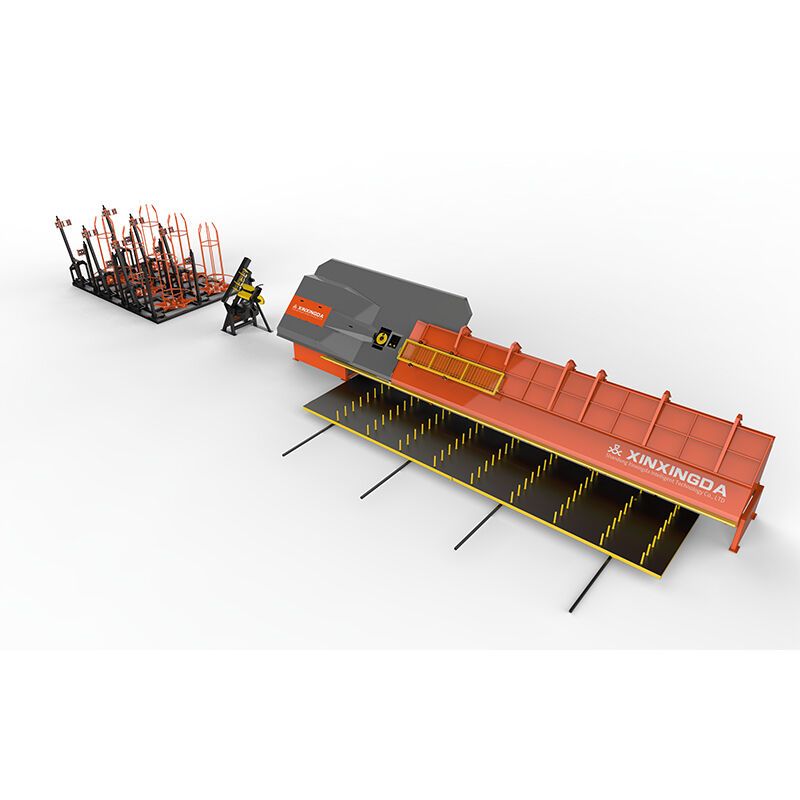
Construction professionals understand that precision and efficiency in reinforcement preparation directly impact project timelines and structural integrity. Among the essential tools for concrete construction, the rebar stirrup bender stands as a critical piece of equipment that transforms straight reinforcing bars into precisely shaped stirrups and other bent configurations. The selection of an appropriate rebar stirrup bender requires careful consideration of multiple factors including project scale, bending capacity, automation level, and long-term operational efficiency. Modern construction demands have evolved beyond simple manual bending tools, pushing the industry toward sophisticated machinery that delivers consistent results while reducing labor costs and improving workplace safety.
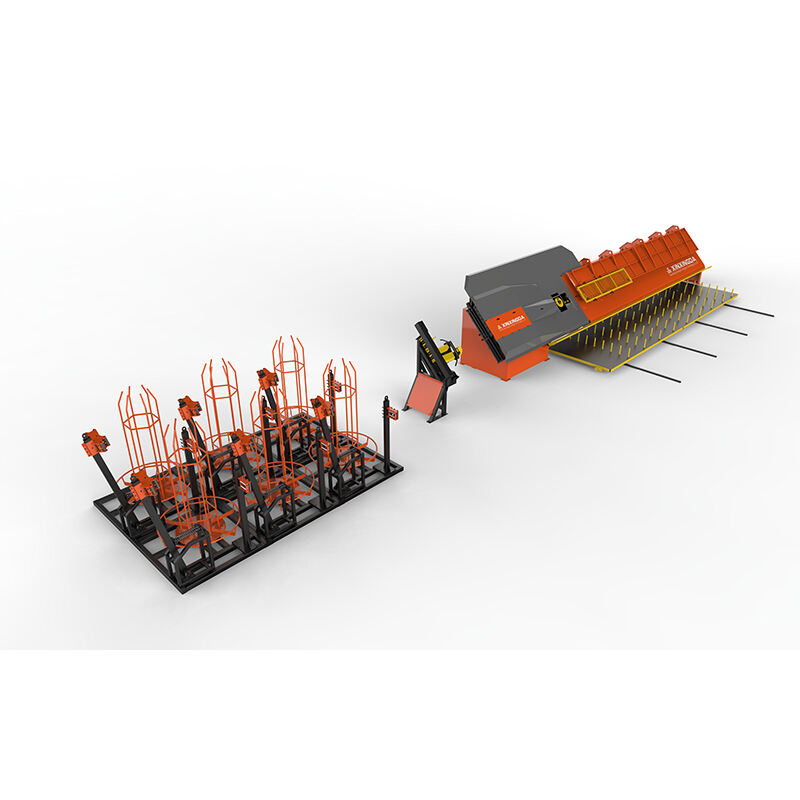
Understanding Rebar Stirrup Bender Categories and Applications
Manual vs Automated Bending Systems
The fundamental distinction between manual and automated rebar stirrup bender systems lies in their operational approach and production capacity. Manual bending equipment typically requires operator involvement for positioning, angle setting, and material handling, making them suitable for smaller projects or specialized applications where flexibility takes precedence over volume. These systems often feature portable designs that allow on-site deployment and offer lower initial investment costs.
Automated rebar stirrup bender systems incorporate programmable controls, servo motors, and computerized positioning mechanisms that enable consistent high-volume production with minimal operator intervention. Advanced automated models can store multiple bending programs, execute complex multi-angle bends, and integrate with other construction equipment through digital interfaces. The choice between manual and automated systems should align with project requirements, expected production volumes, and available skilled labor resources.
Hydraulic vs Electric Drive Mechanisms
Drive mechanism selection significantly impacts the performance characteristics and operational costs of a rebar stirrup bender. Hydraulic systems deliver exceptional force output and smooth operation, making them ideal for heavy-duty applications involving large diameter reinforcing bars. These systems excel in continuous operation scenarios and provide precise control over bending speed and force application, resulting in superior bend quality and reduced material stress.
Electric drive rebar stirrup bender systems offer advantages in energy efficiency, maintenance simplicity, and environmental considerations. Modern electric systems incorporate variable frequency drives and servo control technology to achieve comparable performance to hydraulic alternatives while reducing operational noise and eliminating hydraulic fluid requirements. The selection between hydraulic and electric systems should consider power availability, maintenance capabilities, and specific performance requirements of the intended applications.
Critical Technical Specifications for Equipment Selection
Bending Capacity and Force Requirements
The bending capacity of a rebar stirrup bender represents its ability to process specific bar diameters and steel grades without compromising bend quality or equipment longevity. Capacity specifications typically encompass maximum bar diameter, minimum bend radius capabilities, and maximum bending force output. Understanding project requirements for reinforcing bar sizes and material properties is essential for selecting equipment with appropriate capacity margins.
Force requirements vary significantly based on steel grade, bar diameter, and desired bend angles. High-strength reinforcing steels require substantially greater bending forces compared to standard grade materials. A properly selected rebar stirrup bender should provide adequate force reserves to handle the strongest materials and largest diameters specified in project requirements while maintaining consistent bend quality throughout its operational life.
Precision and Repeatability Standards
Construction applications demand precise dimensional control in stirrup production to ensure proper concrete coverage, structural performance, and assembly efficiency. Modern rebar stirrup bender equipment should achieve angle tolerances within ±1 degree and dimensional repeatability within ±2mm for standard applications. Advanced systems incorporating servo controls and digital feedback mechanisms can achieve even tighter tolerances when required for specialized structural applications.
Repeatability becomes particularly critical in high-volume production environments where thousands of identical stirrups must be produced with consistent dimensions. Quality control systems integrated into advanced rebar stirrup bender equipment can monitor bend angles, detect dimensional variations, and automatically compensate for material property variations to maintain consistent output quality throughout production runs.
Productivity and Efficiency Considerations
Cycle Time and Production Rates
Production efficiency in stirrup manufacturing depends heavily on equipment cycle times and material handling capabilities. A high-performance rebar stirrup bender should minimize non-productive time through rapid positioning, efficient material feeding, and quick bend execution. Cycle times for standard stirrup configurations typically range from 10 to 30 seconds depending on complexity and equipment sophistication.
Advanced rebar stirrup bender systems incorporate features such as automatic material feeding, multi-axis simultaneous movement, and optimized bend sequences to maximize throughput. Production planning should consider not only individual cycle times but also setup requirements, material changeover time, and integration with other fabrication processes. The most efficient systems can produce over 200 stirrups per hour while maintaining consistent quality standards.
Material Handling and Workflow Integration
Efficient material handling systems significantly impact overall productivity and operator safety in stirrup production operations. Modern rebar stirrup bender equipment often includes automated material feeding mechanisms, cut-to-length capabilities, and finished part collection systems that minimize manual handling requirements. Integration of these features reduces labor costs while improving consistency and reducing workplace injury risks.
Workflow integration capabilities enable seamless connection between cutting, bending, and assembly operations. Advanced systems can receive cutting lists and bending programs directly from construction management software, automatically adjust for material properties, and generate production reports for quality control and inventory management. This level of integration maximizes equipment utilization while reducing administrative overhead and potential for human error.
Economic Factors and Return on Investment Analysis
Initial Investment and Operating Costs
The financial evaluation of a rebar stirrup bender requires comprehensive analysis of both initial capital requirements and ongoing operational expenses. Initial investment considerations include equipment purchase price, installation costs, operator training requirements, and any necessary facility modifications. Higher-capacity automated systems typically require greater initial investment but offer superior long-term value through increased productivity and reduced labor requirements.
Operating costs encompass energy consumption, maintenance requirements, replacement parts availability, and labor costs associated with equipment operation. A thorough economic analysis should project these costs over the equipment's expected service life and compare alternatives based on total cost of ownership rather than initial purchase price alone. Energy-efficient rebar stirrup bender systems may justify higher initial costs through reduced operational expenses over time.
Labor Savings and Productivity Gains
Automated rebar stirrup bender systems typically reduce direct labor requirements while enabling skilled operators to focus on more complex tasks and quality control activities. Labor cost savings calculations should consider not only wage reductions but also benefits costs, training expenses, and productivity improvements resulting from consistent automated production. These savings often represent the largest component of return on investment for automated bending equipment.
Productivity gains extend beyond simple labor cost reduction to include improved project scheduling reliability, reduced material waste, and enhanced quality consistency. A high-performance rebar stirrup bender can eliminate bottlenecks in reinforcement fabrication, enabling faster project completion and improved customer satisfaction. These indirect benefits often provide additional justification for investing in advanced bending equipment.
Safety Features and Compliance Requirements
Operator Protection Systems
Modern rebar stirrup bender equipment incorporates multiple safety features designed to protect operators from injury during normal operation and maintenance activities. Essential safety systems include emergency stops, light curtains, safety interlocks, and guarding systems that prevent access to moving components during operation. These features must comply with applicable occupational safety standards and industry best practices.
Advanced safety systems integrate multiple protection technologies to create fail-safe operating environments. Pressure-sensitive mats, two-hand controls, and programmable safety controllers provide overlapping protection layers that account for various potential operator error scenarios. A properly designed rebar stirrup bender should make unsafe operation impossible rather than simply warning against dangerous practices.
Regulatory Compliance and Standards
Construction equipment must comply with relevant safety standards, electrical codes, and environmental regulations in its intended operating location. International standards such as ISO, ANSI, and CE marking requirements establish minimum safety and performance criteria for industrial bending equipment. Compliance verification should include documentation review, testing certificates, and ongoing maintenance procedures required to maintain certification status.
Environmental compliance considerations for rebar stirrup bender systems include noise emissions, energy efficiency standards, and waste management requirements. Equipment selection should account for local regulations regarding industrial noise levels, particularly for equipment intended for urban construction sites. Energy efficiency standards may provide tax incentives or regulatory advantages for high-efficiency equipment selections.
Maintenance Requirements and Service Support
Preventive Maintenance Programs
Reliable operation of a rebar stirrup bender requires systematic preventive maintenance addressing wear components, lubrication requirements, and calibration verification. Maintenance programs should be developed based on manufacturer recommendations, operating environment conditions, and actual usage patterns. Well-maintained equipment typically achieves significantly longer service life and maintains better performance consistency compared to reactive maintenance approaches.
Critical maintenance items for rebar stirrup bender systems include hydraulic fluid changes, electrical connection inspections, mechanical component lubrication, and calibration verification. Advanced systems may incorporate condition monitoring capabilities that track component wear, operating parameters, and maintenance schedules automatically. These features help optimize maintenance timing while preventing unexpected failures that could disrupt production schedules.
Technical Support and Parts Availability
Manufacturer support capabilities significantly impact the long-term value and reliability of rebar stirrup bender equipment. Comprehensive support should include technical assistance, training programs, parts availability, and field service capabilities. Local service support becomes particularly important for complex automated systems that require specialized knowledge for troubleshooting and repair.
Parts availability and supply chain reliability affect equipment downtime and maintenance costs throughout the service life. Manufacturers with established parts distribution networks and commitment to long-term parts support provide better value propositions for equipment investments. Extended warranty programs and service contracts can provide additional assurance regarding ongoing support availability and cost predictability.
FAQ
What factors determine the appropriate size rebar stirrup bender for a construction project?
The appropriate size rebar stirrup bender depends on several key factors including maximum bar diameter requirements, expected production volume, available workspace, and budget constraints. Large infrastructure projects typically require high-capacity automated systems capable of processing #8 bars or larger, while smaller residential projects may be adequately served by portable manual or semi-automatic equipment. Production volume expectations significantly influence equipment selection, as high-volume applications justify investment in faster automated systems while occasional use applications may be better served by simpler manual equipment.
How does bar diameter affect rebar stirrup bender selection and operation?
Bar diameter directly impacts the required bending force, minimum bend radius capabilities, and cycle time for stirrup production. Larger diameter bars require exponentially greater bending forces and may necessitate hydraulic systems rather than electric alternatives. The rebar stirrup bender must be rated for the maximum bar size specified in project requirements with appropriate safety margins to account for material property variations. Additionally, larger bars typically require slower bending speeds to avoid material damage and maintain bend quality, affecting overall production rates and equipment selection criteria.
What maintenance schedule should be followed for optimal rebar stirrup bender performance?
Optimal rebar stirrup bender maintenance schedules vary based on usage intensity and operating environment but typically include daily inspections, weekly lubrication, monthly calibration checks, and annual comprehensive maintenance procedures. Daily activities should focus on visual inspections, cleaning, and basic lubrication of exposed components. Weekly maintenance includes hydraulic fluid level checks, electrical connection inspections, and wear component evaluation. Monthly procedures involve calibration verification, detailed component inspection, and replacement of wear items as needed. Annual maintenance requires comprehensive system evaluation, major component replacement, and professional calibration services.
How can automation features improve rebar stirrup bender efficiency and accuracy?
Automation features improve rebar stirrup bender efficiency through reduced cycle times, eliminated setup errors, and consistent bend quality regardless of operator skill level. Programmable controls enable storage of multiple stirrup configurations, automatic material positioning, and optimized bend sequences that minimize production time. Digital feedback systems provide real-time monitoring of bend angles and dimensions, automatically compensating for material variations and tool wear. Advanced automation can integrate with project management systems to receive cutting lists and production schedules directly, eliminating manual data entry errors while providing detailed production reporting capabilities.
Table of Contents
- Understanding Rebar Stirrup Bender Categories and Applications
- Critical Technical Specifications for Equipment Selection
- Productivity and Efficiency Considerations
- Economic Factors and Return on Investment Analysis
- Safety Features and Compliance Requirements
- Maintenance Requirements and Service Support
-
FAQ
- What factors determine the appropriate size rebar stirrup bender for a construction project?
- How does bar diameter affect rebar stirrup bender selection and operation?
- What maintenance schedule should be followed for optimal rebar stirrup bender performance?
- How can automation features improve rebar stirrup bender efficiency and accuracy?