
 EN
EN

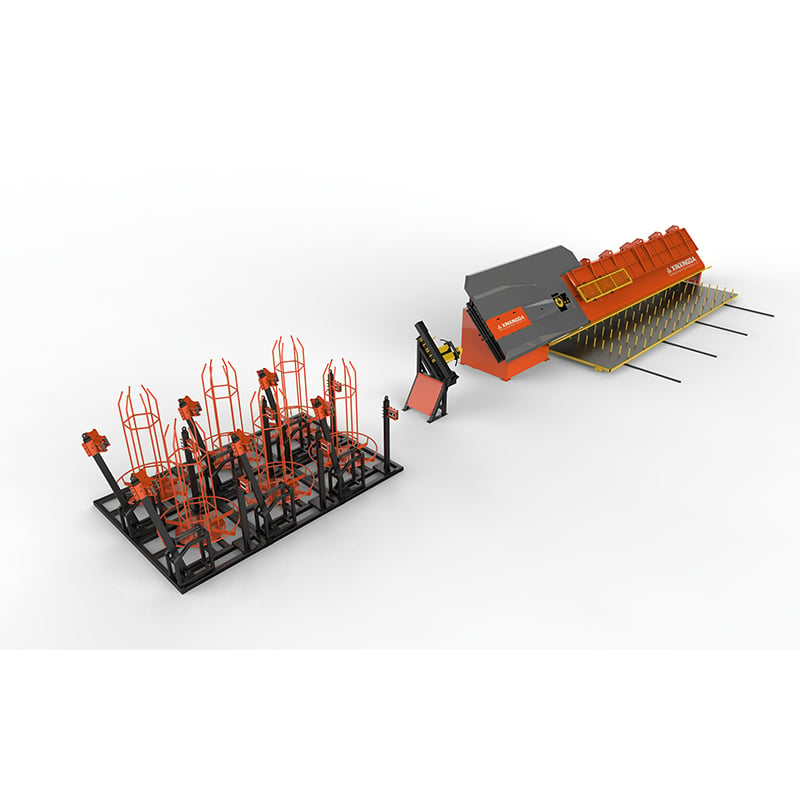
Builders operating in today's competitive construction market face constant pressure to deliver stronger structures faster and at lower cost. steel bar processing equipment has emerged as one of the most impactful investments a construction operation can make. From high-rise residential towers to industrial facilities and infrastructure projects, steel bar processing equipment reshapes how reinforcement work gets done at every stage of a build. Understanding the specific advantages this machinery delivers helps builders make confident decisions about adopting it on their sites.

Steel bar processing equipment covers a range of machines designed to cut, bend, straighten, and shape reinforcing bars to exact specifications. When builders integrate steel bar processing equipment into their workflow, they gain control over quality, speed, and output consistency that manual methods simply cannot match. The advantages are not limited to large contractors. Even mid-scale builders benefit directly from deploying steel bar processing equipment on site or in a prefabrication yard. This article examines the core benefits in detail so builders can evaluate what steel bar processing equipment truly offers to their operations.
Precision and Structural Quality
Exact Dimensions Every Time
One of the most significant advantages steel bar processing equipment brings to builders is dimensional accuracy. When reinforcing bars are cut and bent by machine, every piece conforms to the engineered specification without deviation. Steel bar processing equipment applies consistent force and follows programmed parameters, which eliminates the variation that occurs with manual cutting and bending. Builders working on projects with tight structural tolerances rely on steel bar processing equipment to produce bars that fit precisely within formwork and reinforce load-bearing members as designed.
Precision directly affects the structural integrity of the finished building. A bar that is too short, bent at the wrong angle, or improperly shaped creates weak points that compromise the overall frame. Steel bar processing equipment removes this risk by standardizing each operation. When inspection teams review the reinforcement work, steel bar processing equipment ensures that every bar meets the drawing requirements without rework or rejection.
Consistent Quality Across Large Volumes
Large construction projects require hundreds or even thousands of identically processed bars. Steel bar processing equipment handles this scale without sacrificing quality. Operators program the dimensions once, and the machine replicates the cut or bend across the entire batch. This consistency is difficult to achieve manually and becomes more critical as project volume grows. Steel bar processing equipment keeps quality uniform whether the first bar or the five-hundredth bar is being processed.
Speed and Productivity on Site
Faster Turnaround on Rebar Preparation
Time is a direct cost driver on every construction project. Steel bar processing equipment dramatically reduces the time required to prepare reinforcing bars compared to hand tools and manual methods. A single machine equipped with automated cutting and bending functions can process in one hour what a team of workers would take most of a shift to complete. When builders deploy steel bar processing equipment, rebar preparation stops being a bottleneck and becomes a streamlined step that supports the overall project schedule.
Faster processing also means that builders can respond quickly to design changes or urgent material needs on site. Steel bar processing equipment allows an operator to adjust settings and produce a revised batch of bars in minutes rather than hours. This flexibility protects project timelines and reduces the downstream impact of last-minute engineering revisions.
Reduced Dependence on Manual Labor
Skilled rebar workers are increasingly difficult to recruit and retain. Steel bar processing equipment reduces the number of workers needed for rebar preparation tasks while increasing total output. One trained operator running steel bar processing equipment can achieve results that would otherwise require multiple workers. This labor efficiency lowers payroll costs and allows builders to redeploy skilled personnel to higher-value tasks that require human judgment. Steel bar processing equipment does not eliminate the need for workers, but it multiplies what each worker can accomplish.
Cost Efficiency and Material Optimization
Lower Material Waste
Material waste represents one of the most controllable costs in reinforcement work. Steel bar processing equipment uses nesting and optimization logic to plan cuts in a sequence that minimizes offcuts and unusable scrap. When builders process bars manually, off-spec cuts and wasted lengths add up quickly. Steel bar processing equipment calculates the most efficient cutting pattern for each order, reducing the volume of steel that ends up as waste. Over the course of a large project, the material savings achieved through steel bar processing equipment can be substantial.
Reduced waste also lowers disposal costs and supports sustainability goals that are becoming more important to clients and regulators. Builders using steel bar processing equipment can document material utilization rates as part of their environmental reporting. This positions steel bar processing equipment not just as a productivity tool but as part of a responsible resource management strategy.
Lower Rework and Error Costs
Rework caused by incorrectly processed bars is expensive in both time and materials. Steel bar processing equipment reduces the frequency of errors that trigger rework cycles. When bars are cut and bent precisely by machine, the likelihood of a mismatch at the point of installation drops significantly. Builders who have adopted steel bar processing equipment report fewer rejected bars and less time spent correcting placement errors. The downstream savings from reduced rework often justify the investment in steel bar processing equipment within a relatively short project cycle.
FAQ
What types of projects benefit most from steel bar processing equipment?
Steel bar processing equipment delivers the greatest advantage on projects that require large volumes of precisely shaped reinforcing bars, including high-rise buildings, bridges, industrial structures, and large residential developments. However, even smaller builders benefit from the precision and speed that steel bar processing equipment provides when working on reinforced concrete foundations and structural frames.
Is steel bar processing equipment suitable for on-site use or only in fabrication yards?
Many models of steel bar processing equipment are designed for both on-site deployment and prefabrication yard use. Compact and mobile versions of steel bar processing equipment can be transported to the construction site and set up close to the work area, reducing material handling time. Fixed workshop configurations of steel bar processing equipment are better suited to centralized fabrication operations that supply multiple projects.
How does steel bar processing equipment affect overall project timelines?
Steel bar processing equipment accelerates rebar preparation, which is often a critical path activity in reinforced concrete construction. By reducing processing time and minimizing rework, steel bar processing equipment helps builders maintain or improve their project schedules. Consistent output from steel bar processing equipment also makes it easier for project managers to plan subsequent activities such as formwork installation and concrete pouring with greater confidence.