
 EN
EN
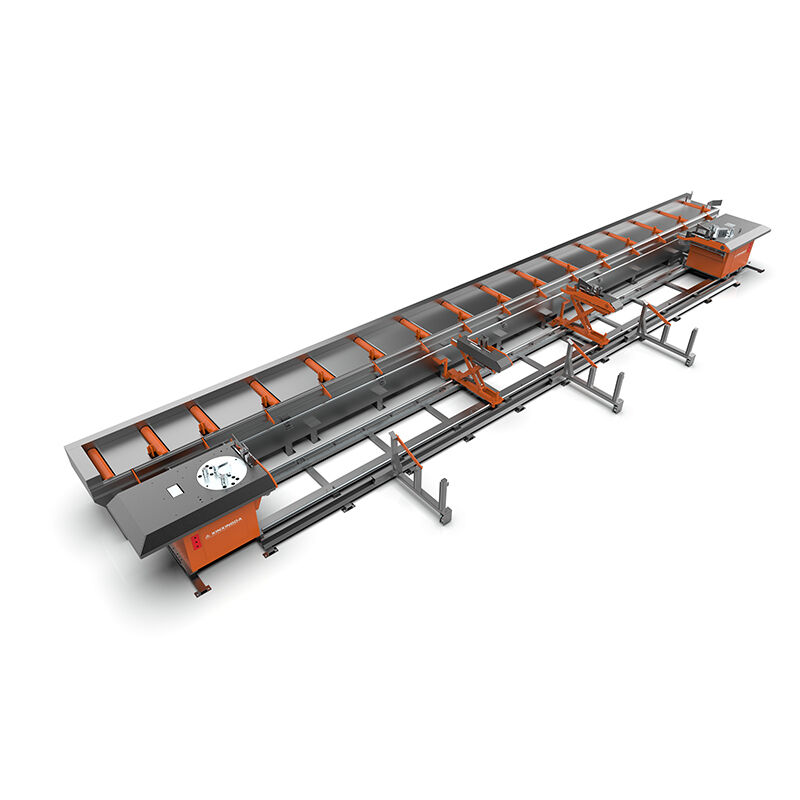
Across the construction, manufacturing, and infrastructure sectors, precision and efficiency in handling reinforcement materials have become critical operational priorities. steel bar processing equipment has evolved significantly over the past decade, introducing CNC automation, real-time measurement systems, and programmable bending logic that dramatically reduce labor dependency and dimensional error. Understanding which applications extract the greatest value from these advancements helps procurement managers, project engineers, and operations teams make informed investment decisions that align with their production demands.
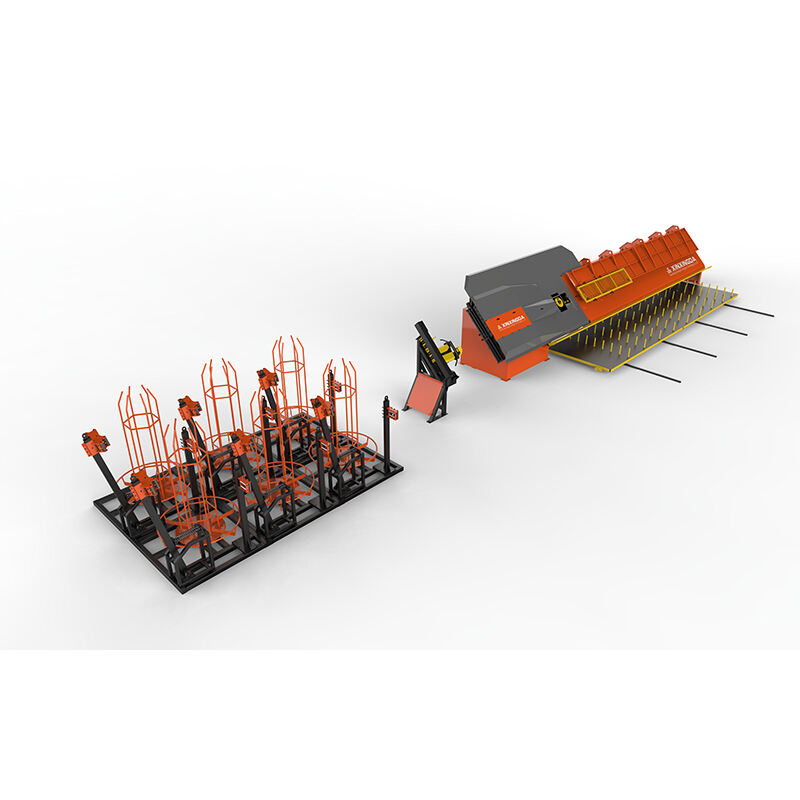
Not every application benefits equally from advanced bar processing technology. High-volume structural projects, complex architectural designs, and precision-critical civil engineering applications tend to gain disproportionate advantages from modern steel bar processing equipment. This article explores the specific application categories where advanced bar processing delivers the most measurable impact, helping industrial buyers and project stakeholders identify where investment in sophisticated machinery translates directly into competitive and operational gains.
Large-Scale Construction and Infrastructure Projects
High-Rise Structural Frameworks
High-rise building construction demands an enormous volume of precisely shaped reinforcement bars within tight scheduling windows. The structural columns, shear walls, core walls, and floor slabs of a multi-story building may require tens of thousands of individually shaped bars, each conforming to strict engineering tolerances. Steel bar processing equipment equipped with CNC bending and automatic feeding mechanisms allows fabricators to handle this output volume without proportional increases in labor or error rates.
In this application, the ability to pre-program complex bend sequences and replicate them consistently across large batch runs is a defining advantage. Conventional manual bending introduces cumulative dimensional variance that can compromise structural integrity or require costly on-site corrections. Advanced steel bar processing equipment eliminates this variance through closed-loop feedback systems that verify angle and length at each step, ensuring every bar meets the design specification regardless of operator skill level.
Scheduling predictability is another major benefit in high-rise applications. When equipment can process hundreds of bars per shift with minimal changeover time between bar shapes, project logistics become far more controllable. Materials arrive at the pour site pre-cut and pre-bent, reducing congestion and waste on the construction floor while accelerating overall cycle time.
Bridge and Overpass Construction
Bridge engineering places extraordinary demands on reinforcement bar accuracy due to the complex curvature, stirrup geometry, and load distribution requirements inherent in deck slabs, pier caps, and abutment walls. Steel bar processing equipment designed for heavy-gauge bars with multiple bending axes is particularly well-suited to these applications, where bars must conform precisely to engineered curves and angles that define structural performance over decades of service.
The ability to process large-diameter bars — commonly 25 mm to 40 mm and above — without compromising bend precision is a critical differentiator in bridge work. Advanced steel bar processing equipment with high-torque bending heads and robust clamping systems manages these diameters efficiently, reducing the manual repositioning and incremental bending steps that older equipment requires. This translates into fewer material fatigue points and better compliance with structural engineering drawings.
Bridge projects also involve prefabrication of rebar cages that are assembled off-site and transported to the installation location. Steel bar processing equipment that ensures consistent, repeatable bar geometry is essential for cage assembly accuracy, since dimensional inconsistencies in individual bars create cumulative misalignment that complicates installation and may trigger structural review processes.
Precast Concrete Manufacturing
Factory-Environment Rebar Fabrication
Precast concrete manufacturers operate in a controlled factory environment where production efficiency, repeatability, and tight quality control are fundamental business requirements. Steel bar processing equipment integrated into precast production lines enables manufacturers to align bar fabrication directly with mold cycle times, eliminating the supply bottlenecks that arise when bar cutting and bending are performed manually or off-site.
The volume diversity in precast manufacturing — spanning beams, columns, wall panels, stair flights, and hollow-core slabs — demands equipment capable of rapid program changeover. Modern steel bar processing equipment with digital job management and stored bend programs allows production supervisors to switch between product types in minutes rather than hours, supporting just-in-time fabrication that reduces work-in-progress inventory and floor space requirements.
Quality documentation is a growing requirement in precast manufacturing, particularly for structural elements destined for critical applications such as parking structures, transportation hubs, and industrial facilities. Advanced steel bar processing equipment can generate production logs that record bar dimensions, bend angles, and process parameters for each batch, providing the traceability data that quality management systems and third-party auditors increasingly require.
Modular and Panel-Based Building Systems
Modular construction and prefabricated panel systems demand extreme dimensional precision from reinforcement bars because the tight tolerances of factory-assembled modules leave no room for field corrections. Steel bar processing equipment that delivers consistent cut length and bend angle accuracy is a foundational requirement for manufacturers competing in this segment, where rework is costly and delivery schedules are non-negotiable.
Panel-based systems frequently involve repetitive bar geometries — the same stirrup or link shape produced thousands of times across a production run. This scenario maximizes the return on investment for advanced steel bar processing equipment, since the efficiency gains of automated feeding, cutting, and bending compound across the full production volume. A single well-programmed run can deliver an entire project's stirrup requirements with minimal supervision.
Civil Engineering and Underground Construction
Tunnel Lining and Segmental Construction
Tunnel construction, particularly the production of precast segmental lining rings, relies on steel bar processing equipment to produce the intricate reinforcement cages that give each concrete segment its structural integrity. The curved and multi-dimensional nature of tunnel reinforcement cages requires bars bent to precise radii and angles that cannot be achieved consistently through manual methods, especially at production volumes demanded by large tunneling contracts.
The tolerance requirements in tunnel lining are among the tightest in construction, because segments must mate precisely with adjacent rings to maintain the structural continuity of the tunnel bore. Steel bar processing equipment that delivers repeatable accuracy in both cut length and bend geometry ensures that cage dimensions align with mold geometry, preventing the fit-up problems that cause production delays and quality rejections on the casting floor.
Automated steel bar processing equipment also improves worker safety in this application. Handling heavy, large-radius bars manually in a confined casting facility presents real ergonomic and injury risks. Equipment that mechanizes the bending and cutting operations reduces direct manual handling, improving the safety profile of the production environment while simultaneously increasing throughput.
Foundation Systems and Pile Cages
Deep foundation systems — including bored piles, driven piles, and diaphragm wall panels — require substantial quantities of longitudinal and transverse reinforcement fabricated to precise specifications. Steel bar processing equipment used in pile cage fabrication must handle long bar lengths, heavy gauges, and the spiral or helical shapes that form the confining reinforcement in cylindrical pile cages.
Advanced steel bar processing equipment with programmable spiral bending capabilities allows fabricators to produce the continuous helical stirrups used in pile cages at speeds and consistency levels far beyond manual methods. The pitch, diameter, and bar gauge of the helix can be programmed and reproduced exactly, ensuring structural compliance across every cage in a large piling program.
Industrial and Energy Sector Construction
Heavy Industrial Plant Structures
Industrial facilities such as petrochemical plants, power generation stations, water treatment infrastructure, and manufacturing complexes involve heavily reinforced concrete structures designed to withstand dynamic loads, thermal cycling, and seismic forces. The reinforcement schedules for these structures are complex and involve a wide variety of bar shapes, sizes, and grades. Steel bar processing equipment capable of handling this diversity efficiently is essential for contractors working in the industrial construction segment.
The ability to switch rapidly between different bar diameters and bend profiles is particularly valuable in industrial plant work, where the reinforcement schedule for a single structure may include dozens of distinct bar types. Modern steel bar processing equipment with digital program libraries and fast tooling adjustment significantly reduces the setup time between bar types, enabling fabricators to maintain production flow across complex schedules without excessive idle time.
Durability and uptime are also critical considerations in industrial construction contexts, where project timelines are driven by equipment commissioning schedules that cannot be renegotiated. Investing in robust, high-capacity steel bar processing equipment reduces the risk of production interruptions that would cascade through the project program, affecting concrete pour schedules, follow-on trades, and ultimately the facility's commissioning date.
Renewable Energy Infrastructure
The rapid global expansion of wind energy, solar farms, and hydroelectric infrastructure has generated significant demand for precision reinforcement fabrication. Wind turbine foundation rings, for example, require complex rebar arrangements that must be fabricated accurately to meet the fatigue life requirements of foundations subjected to continuous dynamic loading over a 25-year or longer operational period.
Steel bar processing equipment plays a central role in renewable energy construction because the foundations and structural supports for these installations are typically massive, heavily reinforced, and must conform precisely to engineering specifications developed for site-specific soil and loading conditions. Equipment that combines cutting accuracy with bending precision ensures that the reinforcement placed in these foundations matches the design intent without field modifications that could introduce structural uncertainty.
FAQ
Which industries gain the most from investing in advanced steel bar processing equipment?
Industries with high volumes of structural concrete work benefit most. These include large-scale construction contracting, precast concrete manufacturing, civil infrastructure development, industrial plant construction, and energy sector projects. In all of these sectors, steel bar processing equipment directly improves output speed, dimensional accuracy, and material utilization, translating into measurable cost and quality advantages over manual or semi-manual methods.
How does steel bar processing equipment improve project outcomes in precast manufacturing?
In precast manufacturing, advanced steel bar processing equipment enables consistent bar geometry across high-volume production runs, rapid changeover between product types, and reliable quality documentation. These capabilities align bar fabrication with mold cycle times, reduce waste from dimensional errors, and support the traceability requirements of structural quality management systems, ultimately improving product quality and production efficiency simultaneously.
What bar sizes and shapes can modern steel bar processing equipment handle?
Modern steel bar processing equipment is engineered to handle a broad range of bar diameters, typically from 6 mm through 40 mm or larger depending on machine capacity. In terms of shapes, CNC-controlled systems can produce straight cuts, simple two-dimensional bends, complex multi-bend stirrups and links, spiral helical shapes for pile cages, and custom profiles programmed directly into the equipment's digital control system, making it adaptable to virtually any reinforcement schedule requirement.
Is steel bar processing equipment suitable for smaller contractors or only large-scale operations?
While the return on investment from advanced steel bar processing equipment is highest in high-volume applications, mid-sized and smaller contractors can also benefit significantly. Equipment with flexible programming, compact footprints, and modular capability allows smaller operations to handle complex bar shapes that would otherwise require outsourcing, improving turnaround time, cost control, and quality consistency even at lower production volumes.
Table of Contents
- Large-Scale Construction and Infrastructure Projects
- Precast Concrete Manufacturing
- Civil Engineering and Underground Construction
- Industrial and Energy Sector Construction
-
FAQ
- Which industries gain the most from investing in advanced steel bar processing equipment?
- How does steel bar processing equipment improve project outcomes in precast manufacturing?
- What bar sizes and shapes can modern steel bar processing equipment handle?
- Is steel bar processing equipment suitable for smaller contractors or only large-scale operations?