
 EN
EN
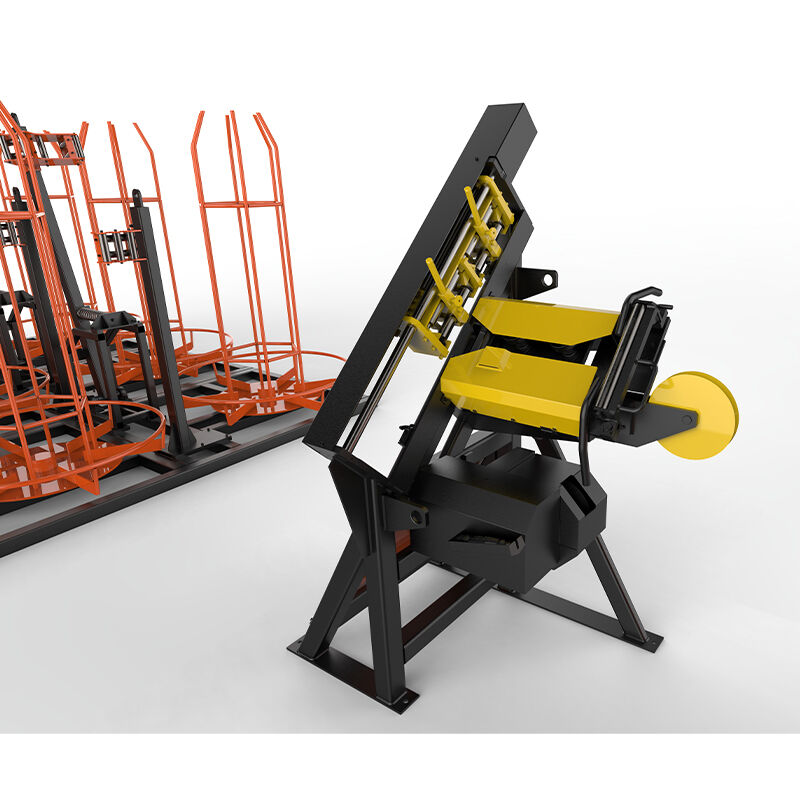
The steel bar bending lathe has become an indispensable tool across numerous construction and manufacturing sectors where precision bending of reinforcement bars is critical. This specialized equipment transforms straight steel bars into complex shapes required for structural reinforcement, architectural elements, and industrial components. Understanding which applications demand the use of a steel bar bending lathe helps project managers, engineers, and contractors make informed equipment investment decisions and optimize their fabrication workflows.
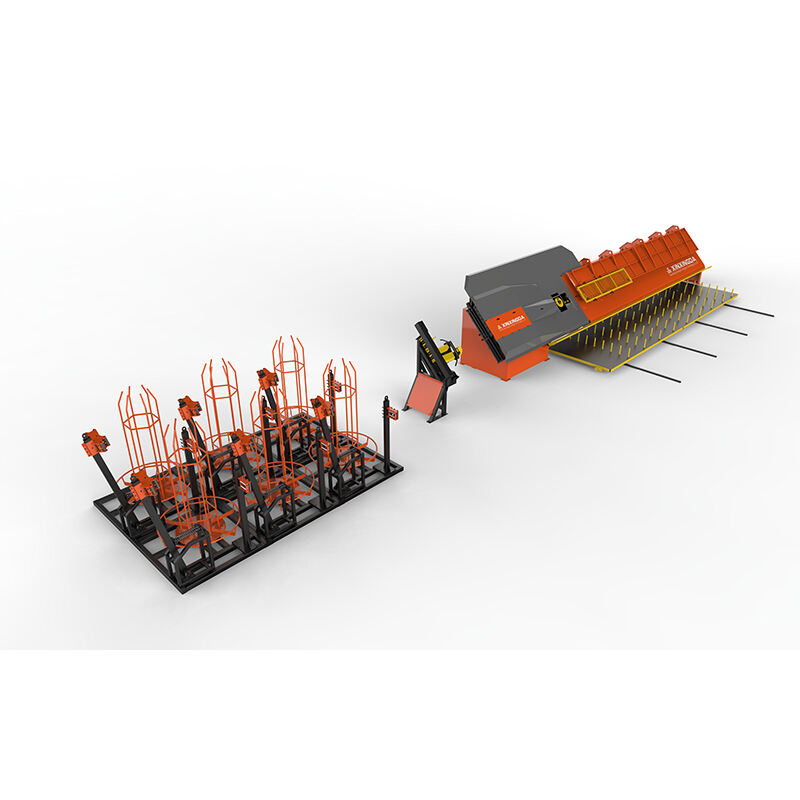
From high-rise building construction to precast concrete production, bridge infrastructure to specialty industrial fabrication, the applications requiring a steel bar bending lathe span diverse industries and project types. Each application presents unique requirements for bending precision, production volume, bar diameter capacity, and shape complexity. This comprehensive examination identifies the primary sectors and specific project scenarios where this equipment delivers essential value, ensuring structural integrity, operational efficiency, and cost-effective fabrication processes.
Large-Scale Building Construction Projects
Residential High-Rise Development
Residential high-rise buildings represent one of the most demanding applications for steel bar bending lathe equipment. These projects require thousands of precisely bent reinforcement bars for floor slabs, columns, beams, and shear walls. Each residential floor typically contains complex stirrup patterns, column cages, and beam reinforcement that must conform to exact specifications. The steel bar bending lathe enables fabricators to produce consistent, repeatable bends that meet stringent structural engineering requirements while maintaining production schedules aligned with construction timelines.
The volume requirements in residential high-rise construction make automated bending essential. A typical 30-story residential tower may require over 50,000 individual bent bars in various configurations. Manual bending methods cannot achieve the consistency, speed, or quality control necessary for such large-scale operations. The steel bar bending lathe processes multiple diameter sizes, from thin stirrups to heavy column reinforcement, with programmable precision that eliminates human error and ensures structural compliance across thousands of identical components.
Quality control in residential construction depends heavily on the accuracy of reinforcement placement and geometry. The steel bar bending lathe produces bars with exact angle tolerances and dimensional consistency that manual methods cannot replicate. This precision directly impacts concrete cover uniformity, load transfer efficiency, and overall structural performance. Developers and contractors increasingly specify mechanized bending for residential projects to reduce rework, minimize material waste, and accelerate construction schedules while maintaining the highest safety standards.
Commercial Complex Construction
Commercial complexes including shopping centers, office buildings, and mixed-use developments demand sophisticated reinforcement configurations that make the steel bar bending lathe essential. These structures often feature complex architectural elements, transfer structures, cantilevers, and long-span floor systems that require intricate bar bending patterns. The equipment handles specialty shapes for architectural concrete, decorative structural elements, and complex connection details that define modern commercial architecture.
The diversity of bar shapes in commercial construction challenges fabrication operations. A single commercial project may specify hundreds of unique bending configurations for different structural elements. The steel bar bending lathe with programmable controls stores these configurations digitally, allowing operators to switch between different bend patterns rapidly without manual setup time. This flexibility proves particularly valuable in fast-track commercial projects where multiple structural systems are fabricated simultaneously to compress construction schedules.
Commercial construction economics favor equipment that maximizes productivity while minimizing labor costs. The steel bar bending lathe typically operates with one skilled technician who can produce output equivalent to multiple manual bending crews. This labor efficiency becomes critical in markets facing skilled labor shortages or projects with aggressive cost targets. The equipment investment amortizes quickly across large commercial projects, delivering measurable return through reduced fabrication time, lower labor expense, and improved quality outcomes that minimize costly field corrections.
Infrastructure and Civil Engineering Works
Bridge Construction and Rehabilitation
Bridge infrastructure represents an application where steel bar bending lathe capabilities prove absolutely critical. Bridge decks, pier caps, abutments, and foundation elements require heavy reinforcement bars bent to precise geometries that ensure structural integrity under dynamic loading conditions. The equipment handles large diameter bars, often 32mm to 50mm, that manual methods cannot bend effectively. Complex stirrup patterns for box girders, curved reinforcement for arch bridges, and specialty shapes for seismic detailing all demand the precision and power that only mechanized bending provides.
Bridge rehabilitation projects present unique challenges that highlight the value of the steel bar bending lathe. Retrofit reinforcement must fit within existing structural constraints, often requiring custom bent bars that match non-standard geometries. The equipment's programmability allows fabricators to create these specialty shapes accurately from engineering drawings, ensuring proper fit during installation. This capability reduces field modification time, minimizes traffic disruption during rehabilitation work, and ensures that strengthening measures perform as designed under service loads.
Durability requirements in bridge construction demand exceptional bend quality. Reinforcement bars with rough bends, stress concentrations, or dimensional inconsistencies compromise long-term structural performance in corrosive environments. The steel bar bending lathe produces smooth, consistent bends that maintain bar integrity, preserve protective coatings, and ensure uniform concrete encasement. These quality attributes directly impact bridge service life, particularly in coastal environments or regions using deicing salts where reinforcement corrosion threatens structural longevity.
Highway and Transportation Infrastructure
Highway construction projects consume enormous quantities of bent reinforcement for pavement slabs, retaining walls, sound barriers, and drainage structures. The steel bar bending lathe enables centralized fabrication facilities to supply multiple highway project sites with consistent, quality-controlled reinforcement. This centralized approach improves construction logistics, reduces on-site congestion, and ensures that all reinforcement meets transportation department specifications regardless of which contractor installs it.
Transportation infrastructure often requires standardized reinforcement details repeated across many miles of construction. Barrier walls, median dividers, and slope protection systems use identical bar configurations produced in large quantities. The steel bar bending lathe excels in these repetitive production scenarios, maintaining dimensional consistency across thousands of identical pieces. This standardization simplifies construction operations, accelerates installation, and ensures uniform structural performance across entire highway corridors.
Tunnel construction and underground transportation projects demand specialty reinforcement shapes for curved structural elements, complex connections, and tight tolerance applications. The steel bar bending lathe produces the precise geometries required for tunnel liner reinforcement, station platform structures, and ventilation shaft details. Equipment mobility and on-site bending capabilities support just-in-time fabrication strategies that reduce material storage requirements in constrained underground work environments.
Precast Concrete Manufacturing Operations
Standard Precast Element Production
Precast concrete plants represent the highest volume application for steel bar bending lathe equipment. These facilities produce repetitive structural elements including wall panels, floor slabs, beams, columns, and stairs where reinforcement bending accuracy directly determines product quality and dimensional consistency. The manufacturing environment demands equipment that operates continuously, processes multiple bar sizes rapidly, and maintains tight tolerances across thousands of production cycles.
Production efficiency in precast operations depends on seamless integration between bending equipment and cage assembly processes. The steel bar bending lathe feeds downstream fabrication stations with precisely bent components that fit together without adjustment. This integration eliminates bottlenecks, reduces handling time, and ensures that assembled reinforcement cages meet the exact dimensions required for mold placement. Modern precast plants design entire production workflows around the capabilities and output rates of their steel bar bending lathe equipment.
Quality assurance in precast manufacturing requires statistical process control that only automated bending equipment provides. The steel bar bending lathe produces bars with measurable consistency, allowing quality managers to verify dimensional compliance through sampling rather than 100% inspection. This reliability proves essential for precast producers serving projects with stringent quality requirements or operating under third-party certification programs that demand documented process control and traceability.
Architectural and Decorative Precast
Architectural precast concrete incorporates complex three-dimensional forms, thin sections, and decorative elements that challenge reinforcement fabrication. The steel bar bending lathe enables production of specialty bar shapes that follow curved surfaces, provide reinforcement for intricate geometries, and accommodate embedded connection hardware. This capability expands the design possibilities for architects while ensuring that decorative precast elements maintain necessary structural performance.
Thin precast panels for building facades require carefully positioned reinforcement that avoids surface cracking while providing adequate strength. The steel bar bending lathe produces precise stirrups and mesh reinforcement that maintains specified concrete cover dimensions despite limited panel thickness. This precision prevents bar placement errors that could cause visible surface defects, rust staining, or structural inadequacies in finished architectural elements.
Customized architectural elements often require one-of-a-kind bar bending patterns that make equipment flexibility essential. The steel bar bending lathe with advanced programming capabilities handles these specialty requirements without extensive setup time, allowing precast producers to economically manufacture small quantities of custom elements alongside standard production runs. This versatility supports design diversity while maintaining manufacturing efficiency.
Industrial and Specialized Fabrication
Concrete Pipe and Box Culvert Production
Concrete pipe manufacturing represents a specialized application where steel bar bending lathe equipment must produce circular reinforcement cages with exact diameter control. These cylindrical reinforcement structures require precise circumferential bars and longitudinal reinforcement bent to maintain consistent spacing around the pipe interior. The equipment's ability to produce uniform circular shapes ensures that finished pipes meet structural load requirements and maintain specified dimensional tolerances throughout their length.
Box culvert production for drainage and utility applications demands rectangular reinforcement cages with precise corner details and consistent stirrup spacing. The steel bar bending lathe produces these configurations efficiently, maintaining the dimensional accuracy necessary for proper concrete consolidation and structural performance. High-volume culvert manufacturers rely on automated bending to meet production targets while ensuring that every unit complies with transportation department specifications and load rating requirements.
Specialty industrial pipes for pressure applications or corrosive service environments require enhanced reinforcement configurations that the steel bar bending lathe fabricates with exceptional precision. These applications demand exact bar positioning to ensure uniform concrete cover, proper load distribution, and long-term durability under demanding service conditions. Equipment reliability and bend quality directly impact product performance in these critical infrastructure applications.
Agricultural and Water Management Structures
Agricultural construction including livestock facilities, grain storage structures, and irrigation systems requires substantial quantities of bent reinforcement for concrete foundations, retaining walls, and containment structures. The steel bar bending lathe enables agricultural contractors to fabricate reinforcement economically for projects located in remote areas where access to specialty fabrication services may be limited. Equipment portability and operational simplicity support on-site or regional fabrication operations that serve dispersed agricultural markets.
Water treatment plants, pumping stations, and storage reservoirs demand reinforcement that resists corrosive environments while providing necessary structural strength. The steel bar bending lathe produces precise bar geometries that ensure adequate concrete cover and proper bar spacing, critical factors in preventing reinforcement corrosion in water contact applications. Bend quality directly impacts the long-term durability of these essential infrastructure facilities.
Irrigation canal construction and water management infrastructure projects benefit from the steel bar bending lathe's ability to produce large quantities of standardized reinforcement for repetitive structural elements. Headwalls, check structures, and concrete linings use identical bar configurations repeated across extensive project areas. Centralized fabrication using this equipment ensures consistency while reducing construction costs through economies of scale in reinforcement production.
Emerging and Specialty Applications
Seismic Retrofit and Structural Strengthening
Seismic retrofit projects in earthquake-prone regions require specialty reinforcement configurations that the steel bar bending lathe produces with precision. Column jacketing, beam reinforcement, and shear wall strengthening details demand exact bar geometries that fit within constrained existing structural dimensions. The equipment's programmability allows fabricators to produce these custom shapes from retrofit engineering drawings, ensuring proper installation fit and structural performance under seismic loading conditions.
Structural strengthening projects for aging infrastructure or adaptive reuse applications present unique fabrication challenges. Retrofit reinforcement must accommodate existing conditions, fit within limited access openings, and connect to original structural elements through precisely positioned bar extensions. The steel bar bending lathe enables cost-effective production of these specialty components, supporting infrastructure preservation efforts and building renovation projects that extend useful structural life.
Modular and Prefabricated Building Systems
Emerging modular construction methods increasingly rely on prefabricated concrete components with embedded reinforcement. The steel bar bending lathe supports these advanced construction systems by producing consistent reinforcement that enables reliable modular connections and predictable structural performance. This application represents growing market opportunity as the construction industry adopts industrialized building methods that demand precision-fabricated components.
Off-site construction facilities producing volumetric modules or panelized building systems require reinforcement fabrication equipment that maintains tight tolerances essential for modular assembly. The steel bar bending lathe delivers this precision while supporting the high production volumes necessary for economical modular manufacturing. Equipment integration with digital fabrication workflows and building information modeling systems positions this technology at the center of construction industry innovation.
FAQ
What bar diameter range can a steel bar bending lathe typically process?
Most industrial steel bar bending lathe equipment handles reinforcement bars ranging from 6mm to 50mm diameter, with specific capacity varying by machine model and configuration. Light-duty models focus on bars up to 32mm for general construction applications, while heavy-duty machines process bars up to 50mm or larger for bridge and infrastructure projects. The equipment's bending capacity depends on bar material properties, with high-strength steel requiring more bending force than standard reinforcement grades. Selecting appropriate equipment capacity requires matching machine specifications to the actual bar sizes and material grades used in your specific applications.
How does a steel bar bending lathe improve productivity compared to manual bending methods?
A steel bar bending lathe typically increases productivity by 300% to 500% compared to manual bending operations while simultaneously improving bend quality and dimensional consistency. Automated equipment eliminates the physical labor and setup time associated with manual methods, allowing a single operator to produce output equivalent to multiple manual bending crews. Programmable controls store bend patterns digitally, eliminating measurement and setup time when switching between different bar configurations. This efficiency proves particularly valuable in high-volume applications like precast manufacturing where consistent production rates directly impact overall facility throughput and project delivery schedules.
What maintenance requirements should be expected for steel bar bending lathe equipment?
Regular maintenance for a steel bar bending lathe includes daily lubrication of moving components, weekly inspection of hydraulic systems and electrical connections, and periodic replacement of wear components such as bending pins and pressure rollers. Most manufacturers recommend professional service intervals every 500 to 1000 operating hours depending on production intensity and operating conditions. Proper maintenance practices significantly extend equipment service life, maintain bending precision, and prevent costly production interruptions. Operators should follow manufacturer-specific maintenance schedules and keep detailed service records to ensure optimal equipment performance and identify developing issues before they cause operational failures.
Can a steel bar bending lathe produce complex three-dimensional bar shapes?
Advanced steel bar bending lathe models with multiple axis control can produce complex three-dimensional bar shapes including spirals, helical reinforcement, and multi-plane bends required for specialty structural applications. However, most standard equipment focuses on two-dimensional bending operations that satisfy the majority of construction and precast applications. Projects requiring truly complex three-dimensional bar shapes may need specialized equipment or multiple-stage bending processes. When evaluating equipment for applications requiring complex shapes, carefully assess the machine's axis control capabilities, programming flexibility, and tooling options to ensure it can produce your specific required geometries within acceptable tolerance ranges.
Table of Contents
- Large-Scale Building Construction Projects
- Infrastructure and Civil Engineering Works
- Precast Concrete Manufacturing Operations
- Industrial and Specialized Fabrication
- Emerging and Specialty Applications
-
FAQ
- What bar diameter range can a steel bar bending lathe typically process?
- How does a steel bar bending lathe improve productivity compared to manual bending methods?
- What maintenance requirements should be expected for steel bar bending lathe equipment?
- Can a steel bar bending lathe produce complex three-dimensional bar shapes?