
 EN
EN

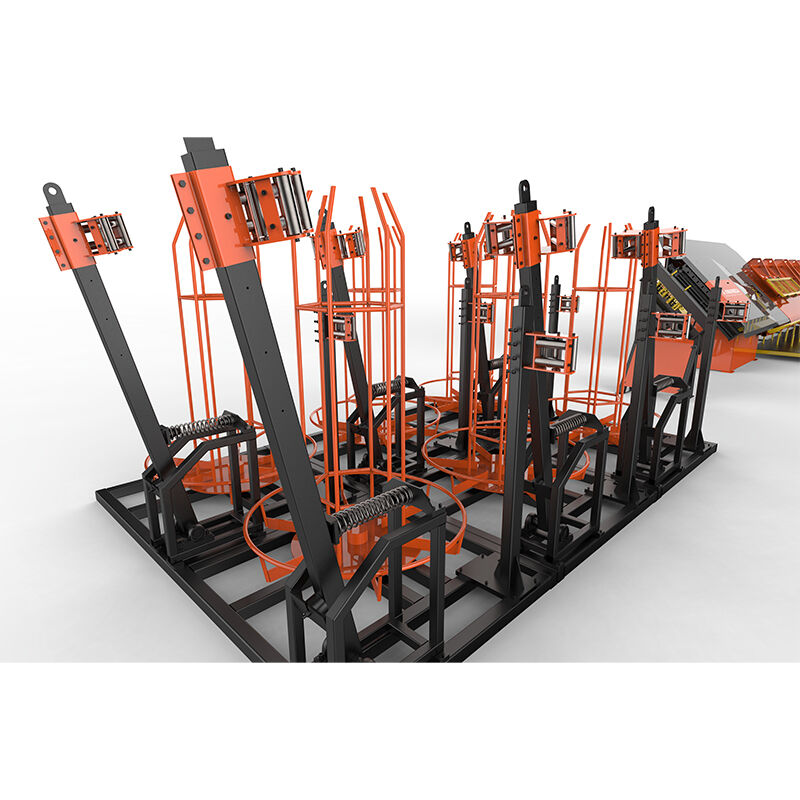
Efficiency in metal fabrication operations directly impacts production costs, project timelines, and competitive positioning in the construction and manufacturing sectors. When evaluating equipment for rebar processing, understanding which features genuinely enhance productivity in a steel bar bending lathe becomes essential for procurement decisions. This comprehensive analysis examines the specific technical characteristics, design elements, and operational capabilities that distinguish high-efficiency machines from conventional alternatives, providing decision-makers with actionable criteria for equipment selection.
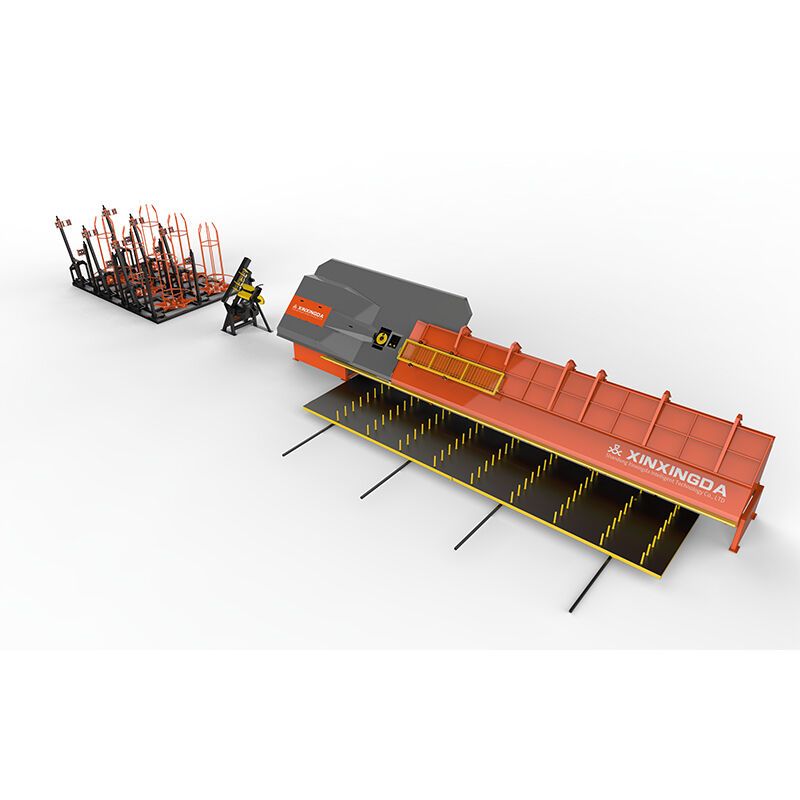
The question of what features improve efficiency in a steel bar bending lathe requires examining both mechanical engineering principles and practical operational demands within industrial environments. Modern equipment design incorporates numerous technological advancements that reduce cycle times, minimize material waste, decrease operator intervention, and extend operational uptime. From servo-driven positioning systems to intelligent control interfaces, each feature contributes differently to overall throughput and cost-effectiveness, making it crucial to understand their individual and combined impacts on production workflows.
Automation Capabilities That Accelerate Production Cycles
Computer Numerical Control Integration
The implementation of CNC technology represents one of the most significant efficiency improvements in contemporary steel bar bending lathe design. Computer numerical control systems eliminate manual measurement and positioning steps that traditionally consumed substantial setup time between operations. By digitally programming bend angles, spacing intervals, and sequential operations, CNC-equipped machines execute complex bending patterns with minimal operator input, reducing per-piece processing time by as much as sixty percent compared to manually operated alternatives.
These control systems store unlimited bending programs in digital memory, enabling instant recall of frequently used configurations without manual recalibration. When fabricating standardized reinforcement components for repetitive construction applications, this programmability allows operators to switch between different product specifications within seconds rather than minutes. The precision of CNC positioning also reduces trial-and-error adjustments, as servo motors position bending mechanisms to exact coordinates with repeatability tolerances typically under half a millimeter.
Advanced CNC interfaces on modern steel bar bending lathe equipment feature graphical programming environments where operators input dimensional specifications through intuitive touchscreen menus rather than complex G-code syntax. This accessibility reduces training requirements and allows less experienced personnel to operate sophisticated equipment effectively, distributing operational capability across broader workforce segments and reducing dependency on specialized technicians for routine production tasks.
Automatic Bar Feeding Mechanisms
Manual bar feeding represents a significant bottleneck in traditional bending operations, requiring operators to physically position each workpiece before processing can commence. Automated feeding systems integrated into efficient steel bar bending lathe designs utilize motorized rollers or chain conveyors that advance bar stock to predetermined positions without manual handling. These mechanisms synchronize with the bending cycle, automatically advancing material immediately after each bend completes, eliminating the dead time between operations that accumulates across hundreds of daily cycles.
Sophisticated feeding systems incorporate length measurement sensors that track material consumption in real-time, automatically adjusting feed distances to account for material springback and ensuring dimensional accuracy across entire production runs. This sensor integration prevents cumulative positioning errors that would otherwise require periodic manual correction, maintaining consistent product quality without operator intervention. In high-volume operations processing thousands of identical components, automatic feeding reduces labor requirements by enabling single-operator supervision of multiple machines simultaneously.
The efficiency gains from automatic feeding extend beyond speed improvements to encompass safety enhancements and ergonomic benefits. By eliminating repetitive manual material handling, these systems reduce operator fatigue and minimize workplace injury risks associated with lifting and positioning heavy rebar sections throughout extended production shifts. This combination of productivity and safety improvements contributes substantially to the total cost of ownership advantages that automated steel bar bending lathe equipment delivers over conventional manually-fed alternatives.
Mechanical Design Elements Supporting High-Speed Operations
Rapid Traverse Positioning Systems
The mechanical speed at which bending components move between positions directly determines maximum achievable cycle rates in steel bar bending lathe operations. High-efficiency machines incorporate rapid traverse systems that accelerate bending heads and positioning mechanisms at rates significantly exceeding those found in economy equipment. Linear motor drives and optimized mechanical linkages enable positioning speeds reaching several meters per second during non-working movements, dramatically reducing the time required to reposition tooling between successive bends.
These rapid positioning capabilities become particularly valuable when processing complex shapes requiring multiple bends at various locations along a single bar length. Traditional machines with slower traverse rates spend disproportionate time moving between bend locations compared to actual forming operations, creating a speed limitation unrelated to bending force capacity. By minimizing transit time, rapid traverse systems ensure that productive bending operations consume the majority of each cycle, maximizing the utilization of installed forming capacity.
Engineering considerations in rapid traverse design balance acceleration rates against mechanical stress and positioning accuracy requirements. Advanced steel bar bending lathe equipment employs servo control algorithms that optimize acceleration profiles, rapidly reaching maximum velocity while minimizing vibration and overshoot that could compromise positioning precision. This sophisticated motion control maintains dimensional accuracy even at maximum operating speeds, eliminating the traditional trade-off between production rate and quality consistency.
Multi-Station Tooling Configurations
Single-station bending machines require sequential processing of each bend location, inherently limiting throughput regardless of control system sophistication. Multi-station configurations address this limitation by incorporating multiple bending mechanisms positioned along the machine bed, enabling simultaneous or overlapping operations on different sections of the workpiece. This parallel processing capability effectively multiplies production capacity without proportionally increasing equipment footprint or energy consumption.
In practical application, multi-station steel bar bending lathe designs allow one bending head to form a bend at the leading end of a workpiece while subsequent stations simultaneously process intermediate locations or prepare for upcoming operations. This coordination reduces total processing time for complex shapes from the sum of individual bend times to periods approaching the duration of the longest single bend in the sequence. For components requiring six or more bends, this architectural advantage can reduce cycle times by forty percent or more compared to single-station alternatives.
The efficiency benefits of multi-station configurations extend beyond raw speed improvements to encompass enhanced flexibility for product mix scenarios. Independent control of each station allows different bending angles and radii at various positions without tooling changes, supporting greater product variety without setup delays. This versatility proves particularly valuable in custom fabrication environments where production runs include numerous different component specifications rather than extended runs of identical pieces.
Control Intelligence and Operator Interface Optimization
Adaptive Bending Algorithms
Material variations in steel bar stock, including differences in yield strength, surface condition, and dimensional tolerances, create inconsistencies in bending behavior that traditionally required operator compensation through trial bends and manual adjustments. Modern steel bar bending lathe equipment incorporates adaptive control algorithms that automatically compensate for these material variations by monitoring actual bending force and angle during operations, comparing measured values against programmed targets, and adjusting process parameters in real-time to achieve specified outcomes.
These intelligent systems utilize force transducers and angle encoders to create closed-loop control that responds dynamically to material behavior rather than executing predetermined motion sequences regardless of actual workpiece response. When encountering bar stock with higher-than-nominal yield strength, adaptive algorithms automatically increase bending force or adjust overbend angles to compensate for greater springback, ensuring dimensional accuracy without operator intervention or production interruptions for manual correction.
The efficiency impact of adaptive control becomes most apparent in operations processing material from multiple suppliers or different production lots with varying mechanical properties. Where conventional machines would require frequent setup adjustments and quality verification checks as material characteristics change, adaptive steel bar bending lathe systems maintain consistent output quality across material variations, reducing scrap rates and eliminating the productivity losses associated with quality-related production stoppages and rework operations.
Intuitive Programming Interfaces
The accessibility and efficiency of the control interface directly influences both setup time for new production runs and the learning curve for operator training. Modern steel bar bending lathe equipment features graphical programming environments that represent bending sequences visually rather than requiring abstract numerical parameter entry. Operators input component specifications by manipulating graphical representations of the finished part, with the control system automatically calculating required machine movements, bend sequences, and process parameters from the visual design.
These intuitive interfaces dramatically reduce programming time compared to traditional parameter-based systems, particularly for complex components with numerous bends at varying angles and positions. Visual programming environments also minimize input errors by providing immediate graphical feedback that allows operators to identify specification mistakes before initiating production. This error prevention capability eliminates the material waste and time loss associated with producing incorrect components due to programming mistakes, contributing significantly to overall operational efficiency.
Advanced control systems incorporate connectivity features that enable program transfer from office-based design software, allowing engineering personnel to develop production programs off-line without occupying machine time. This capability proves particularly valuable in job-shop environments processing numerous custom specifications, as it enables concurrent program development while machines continue producing previously programmed components, eliminating the productivity gap that occurs when machines sit idle during manual program entry.
Material Handling Integration and Workflow Optimization
Automatic Part Ejection Systems
Completing the automation cycle requires efficient removal of finished components from the working area to prevent accumulation that would interrupt continuous operation. High-efficiency steel bar bending lathe designs incorporate automatic ejection mechanisms that discharge completed parts into collection bins or conveyors immediately upon cycle completion. These systems synchronize with the bending sequence, activating discharge mechanisms during the brief interval while the next workpiece advances into position, maintaining continuous workflow without manual intervention.
Sophisticated ejection systems accommodate various part geometries through adjustable guides and supports that prevent tangling or jamming of complex bent shapes during discharge. This adaptability eliminates the need for manual part removal even when processing irregular configurations with multiple bends or asymmetric forms. By maintaining fully automatic operation regardless of component complexity, these systems enable sustained high-speed production across diverse product mixes without operational interruptions.
The efficiency benefits of automatic ejection extend to downstream operations through integration with automated sorting and bundling systems. When steel bar bending lathe equipment discharges parts onto smart conveyors equipped with identification systems, finished components can be automatically routed to appropriate storage locations or assembly stations based on specifications, creating seamless material flow from raw stock to finished inventory without manual sorting or handling steps that traditionally consumed significant labor resources.
Integrated Quality Verification Systems
Traditional quality control approaches require periodic removal of sample parts from production for dimensional verification using external measurement equipment, creating interruptions in continuous operation and introducing delays between defect occurrence and detection. Modern steel bar bending lathe equipment incorporates inline measurement systems that verify critical dimensions on every produced component without interrupting production flow. Vision systems or contact probes measure bend angles, leg lengths, and overall geometry immediately after forming, comparing actual dimensions against programmed specifications.
These integrated verification systems provide immediate feedback when dimensional drift occurs due to tool wear, material property changes, or other process variations. Automated quality monitoring enables rapid corrective response, often triggering automatic parameter adjustments that restore dimensional conformance without manual intervention. This real-time quality assurance prevents the production of large quantities of defective components that would only be discovered during batch inspection, eliminating the material waste and rework costs associated with delayed defect detection.
The documentation capabilities of integrated quality systems contribute substantially to operational efficiency in regulated industries requiring traceability and quality records. Automated measurement data collection creates digital quality records for every produced component without manual documentation effort, satisfying compliance requirements while eliminating the administrative burden and production interruptions associated with manual inspection documentation. This combination of quality assurance and administrative efficiency represents a significant operational advantage in industries with stringent quality management requirements.
Power Systems and Energy Efficiency Considerations
Servo-Electric Drive Technology
The transition from hydraulic to servo-electric drive systems represents a fundamental advancement in steel bar bending lathe efficiency, affecting both energy consumption and operational performance. Servo-electric actuators consume power only during active bending operations, eliminating the continuous energy draw of hydraulic pumps that must maintain system pressure even during idle periods. This on-demand power consumption reduces energy costs by forty to sixty percent in typical production scenarios with intermittent operation cycles.
Beyond energy efficiency, servo-electric drives deliver superior motion control precision compared to hydraulic alternatives. The direct mechanical coupling between electric motors and bending mechanisms eliminates the compliance and response lag inherent in hydraulic fluid systems, enabling more accurate positioning and faster cycle times. This precision advantage becomes particularly significant when processing tight-tolerance components where dimensional accuracy directly impacts assembly fit and structural performance in final applications.
Maintenance requirements differ substantially between servo-electric and hydraulic steel bar bending lathe systems, with electric drives eliminating the fluid leaks, seal failures, and contamination issues that plague hydraulic equipment. The absence of hydraulic components reduces scheduled maintenance intervals and eliminates unexpected downtime from fluid system failures, contributing to higher equipment availability and more predictable production capacity. This reliability advantage compounds efficiency gains from faster cycle times and lower energy consumption, creating comprehensive operational cost advantages.
Regenerative Braking Systems
Advanced servo drive implementations in high-efficiency steel bar bending lathe equipment incorporate regenerative braking capability that recovers kinetic energy during deceleration phases and returns it to the power supply system. When rapid traverse mechanisms decelerate after positioning movements, or when bending forces release following plastic deformation, regenerative systems convert this mechanical energy into electrical power rather than dissipating it as heat through resistive braking.
The energy recovery potential of regenerative systems varies with operating cycle characteristics, typically recapturing ten to twenty percent of consumed energy in applications with frequent acceleration and deceleration cycles. While this percentage might appear modest, the absolute energy savings become substantial in high-volume production environments operating equipment for extended shifts. Over multi-year operational periods, regenerative braking can reduce energy costs by thousands of dollars annually per machine, contributing meaningfully to total cost of ownership advantages.
Beyond direct energy cost savings, regenerative braking reduces heat generation within electrical cabinets and drive components, potentially extending electronic component service life and reducing cooling system requirements. This secondary benefit contributes to overall equipment reliability and maintenance cost reduction, demonstrating how individual efficiency features create cascading advantages throughout the entire steel bar bending lathe system architecture.
FAQ
How does CNC control specifically reduce cycle time in steel bar bending operations?
CNC control reduces cycle time by eliminating manual measurement, positioning, and adjustment steps between operations. Digital programming allows instant recall of bending sequences without setup, while servo-driven positioning moves components to precise locations without trial-and-error adjustments. For complex parts with multiple bends, CNC systems coordinate sequential operations automatically, maintaining continuous workflow without operator intervention between steps. The combination of precise positioning, automated sequencing, and programmable operation typically reduces per-piece processing time by fifty to seventy percent compared to manually controlled alternatives.
What material diameter range benefits most from automatic feeding systems?
Automatic feeding systems deliver greatest efficiency advantages with bar diameters between ten and forty millimeters, where material weight creates significant manual handling burden but remains within practical limits for motorized feeding mechanisms. Lighter bars below ten millimeters can be manually positioned with minimal effort, reducing the relative advantage of automation, while bars exceeding forty millimeters often require specialized heavy-duty feeding equipment with substantial cost implications. Within the optimal range, automatic feeding eliminates repetitive lifting and positioning effort that accumulates to hundreds of kilograms of material handling per shift, substantially reducing operator fatigue and enabling single-person operation of multiple machines.
Can adaptive bending algorithms compensate for variations in material yield strength?
Adaptive algorithms effectively compensate for yield strength variations within typical commercial tolerance ranges, generally handling strength differences up to fifteen percent from nominal specifications. These systems monitor actual bending force during operations and automatically adjust overbend angles to account for material springback characteristics, maintaining dimensional accuracy despite property variations. However, extreme material deviations exceeding twenty percent may require manual parameter adjustment or material substitution. The adaptive capability proves most valuable when processing material from multiple suppliers or different production lots, where moderate property variations occur frequently but remain within the compensation range of intelligent control systems.
What maintenance requirements affect the operational efficiency of a steel bar bending lathe?
Regular maintenance requirements that directly impact operational efficiency include tooling inspection and replacement, mechanical alignment verification, and control system calibration. Worn bending pins or forming dies produce dimensional inaccuracies requiring increased quality verification and potential rework, while misalignment creates uneven loading that reduces positioning precision. Servo-electric systems require periodic lubrication of mechanical components but eliminate the fluid maintenance, leak repair, and contamination control demands of hydraulic alternatives. Preventive maintenance schedules typically recommend daily visual inspections, weekly lubrication of moving components, and monthly dimensional verification checks, with major component replacement intervals extending to thousands of operating hours when equipment operates within design specifications and recommended duty cycles.
Table of Contents
- Automation Capabilities That Accelerate Production Cycles
- Mechanical Design Elements Supporting High-Speed Operations
- Control Intelligence and Operator Interface Optimization
- Material Handling Integration and Workflow Optimization
- Power Systems and Energy Efficiency Considerations
-
FAQ
- How does CNC control specifically reduce cycle time in steel bar bending operations?
- What material diameter range benefits most from automatic feeding systems?
- Can adaptive bending algorithms compensate for variations in material yield strength?
- What maintenance requirements affect the operational efficiency of a steel bar bending lathe?