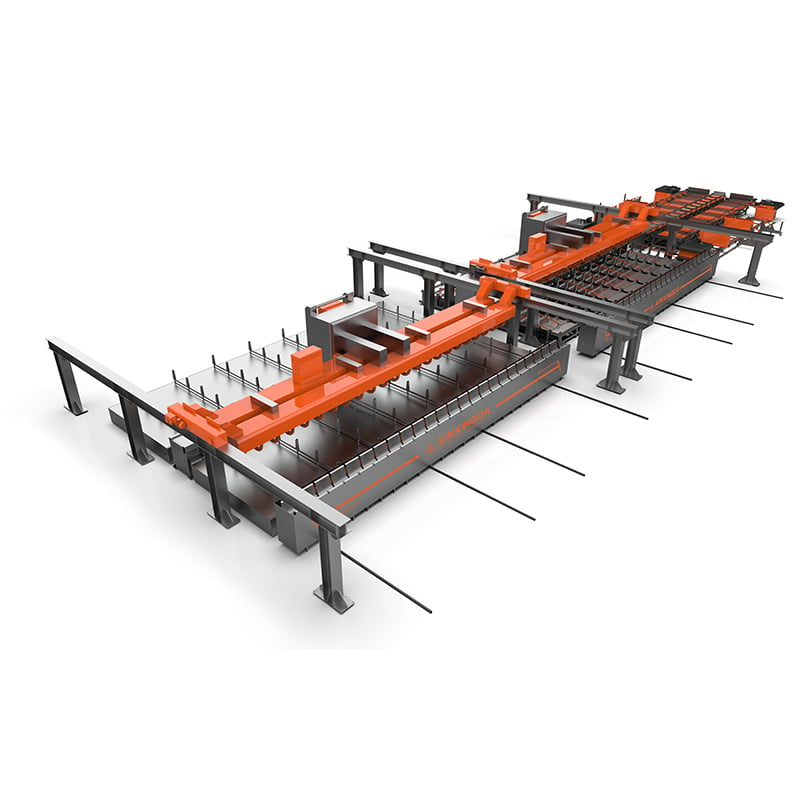
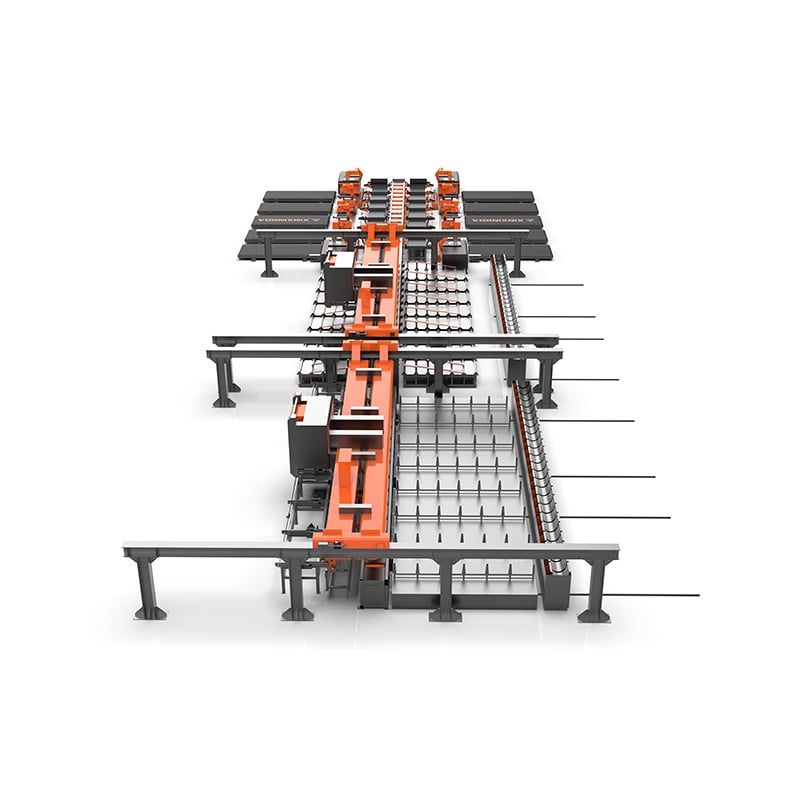
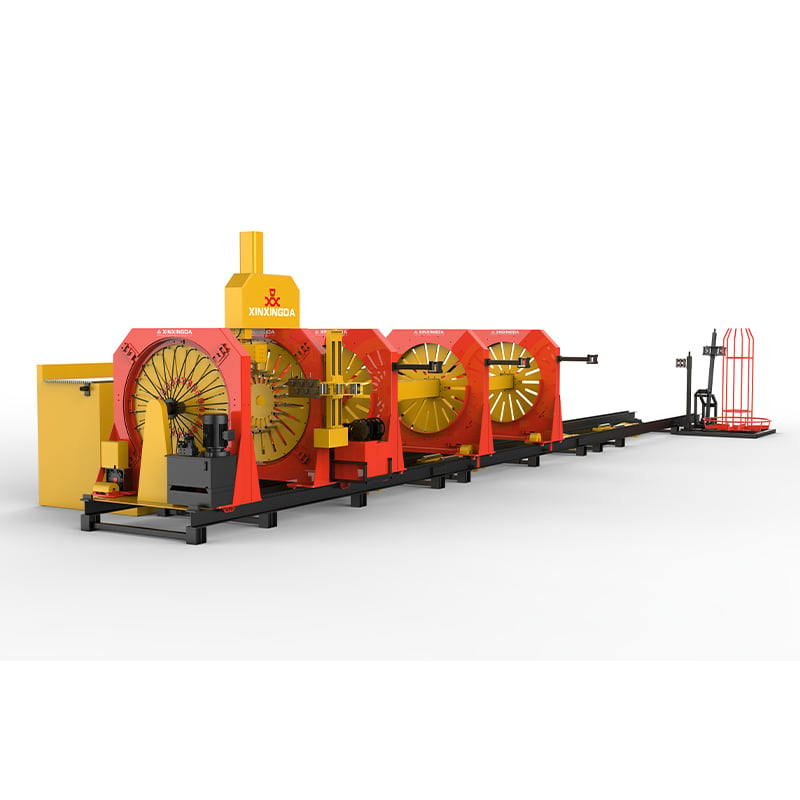
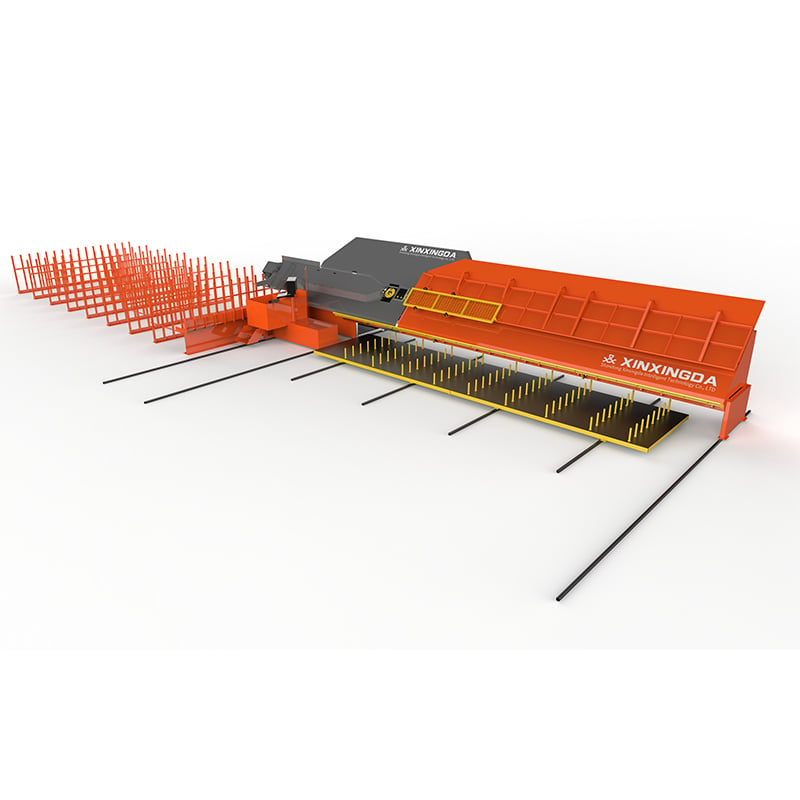
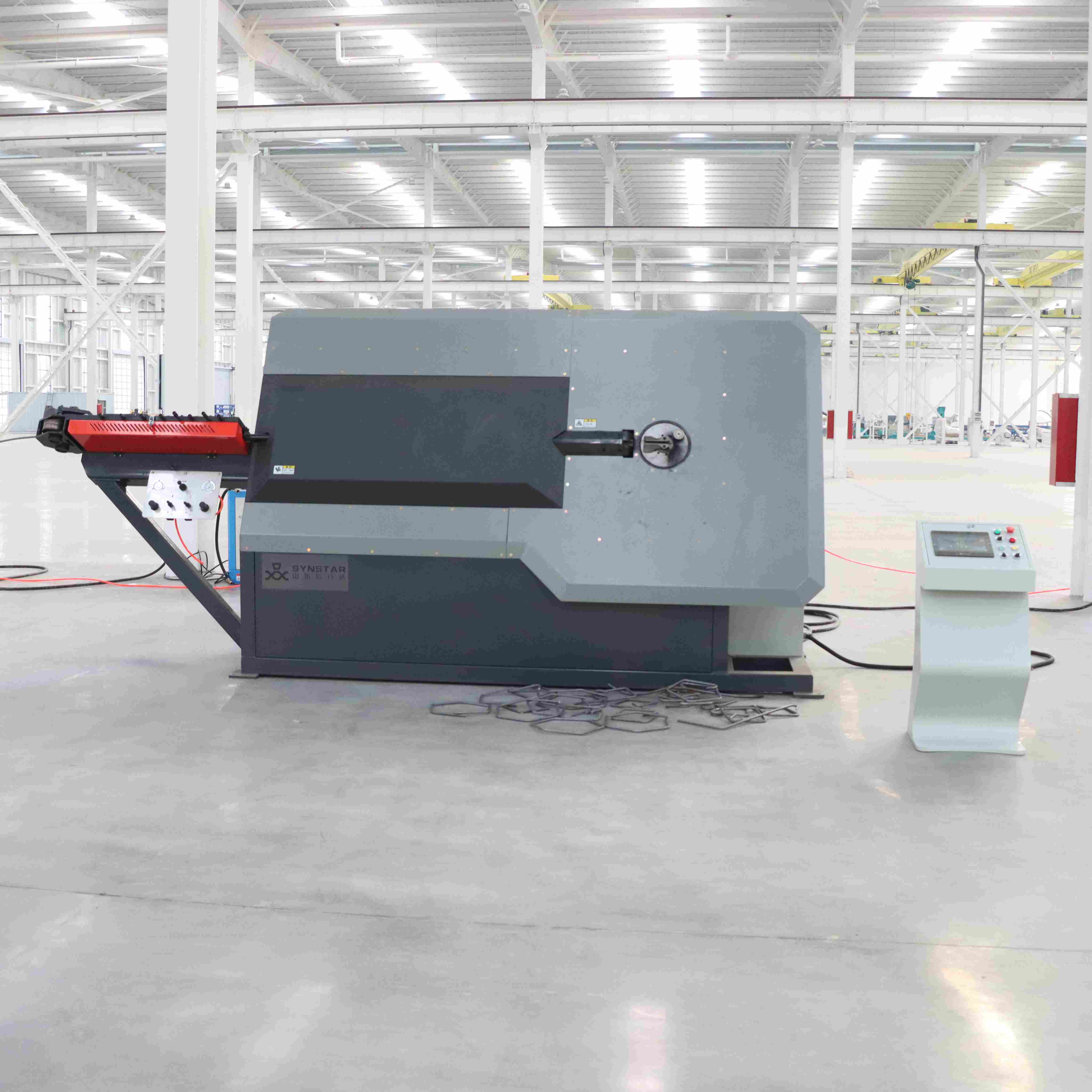
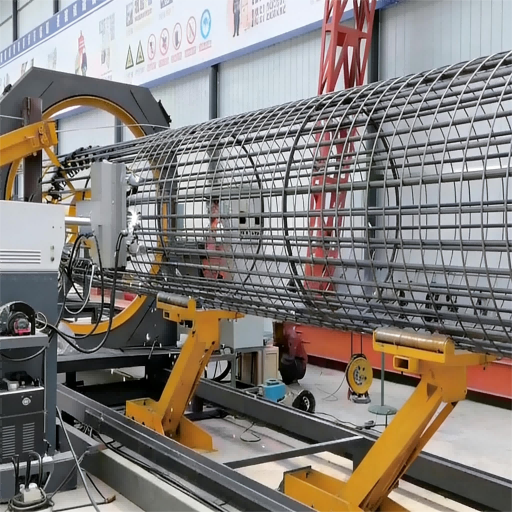
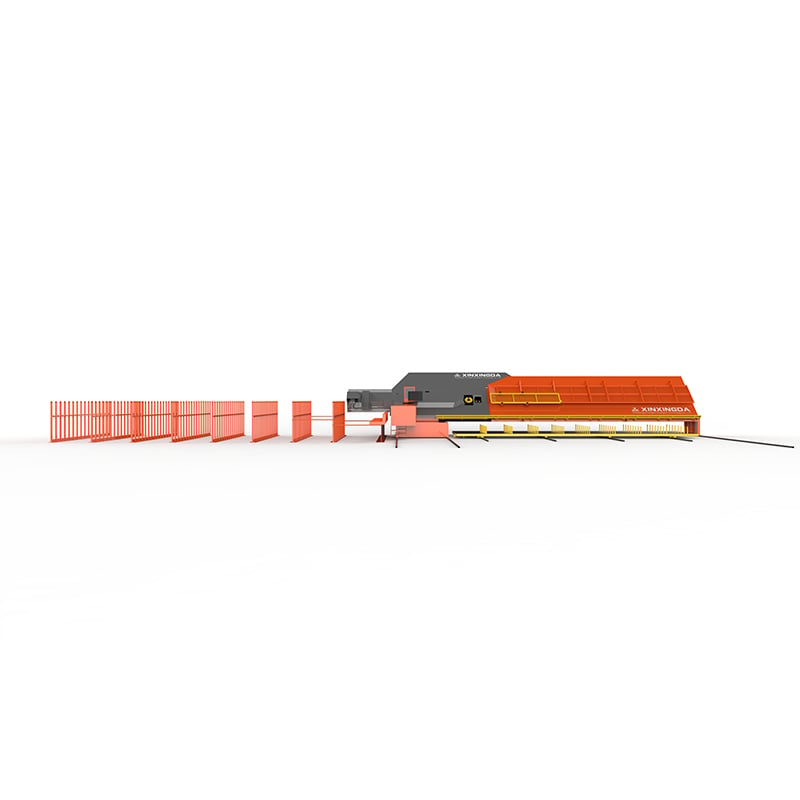
Het horizontale wapeningbuigcentrum is een belangrijke geautomatiseerde machine in de productie en bewerking van wapening voor grootschalige infrastructuur. Dit artikel bevat geen daadwerkelijke merk- of bedrijfsinformatie, maar neemt op basis van algemene normatieve principes de belangrijkste parameters uit het gepubliceerde vakgebied mee om de efficiëntieprestaties structureel te analyseren. Het onderzoek toonde aan dat het horizontale wapeningbuigcentrum, via de samenwerking van dubbele motoren, servoregelingsystemen en digitale grafische bibliotheken, een gemiddeld dagelijks verwerkingsvolume van 5.000 tot 8.000 staven per persoon kan bereiken, met een productiecapaciteit van het bedrijf die 8 tot 12 keer hoger ligt dan die van traditionele handmatige buigtechnieken. De lengteafwijking bij de productiebewerking bedraagt maximaal ±1 mm en de hoekafwijking maximaal ±1°. Het product integreert een grondstofaanvoertafel, transportrails, een buighoofdunit en een systeem voor het lossen van afgewerkte producten. De benodigde vloeroppervlakte voor het bedrijf bedraagt slechts 20 tot 30 vierkante meter en het totale energieverbruik is ongeveer 12 tot 15 kW·h. Dit efficiëntievoordeel is gebaseerd op drie kerntechnologieën: tandheugeltransmissie en nauwkeurige positionering met servomotoren garanderen zowel nauwkeurigheid als snelheid; de dubbele motoren werken onafhankelijk of synchroon om in één keer vast te zetten en aan beide zijden te vormen; de numerieke besturing via een grafische gebruikersinterface elimineert de tijd die normaal gesproken nodig is voor proefbuigen en herwerk. Dit artikel heeft tot doel een onpartijdige technische referentie te bieden voor de keuze van wapeningbewerkingsmodellen en de algehele planning van productielijnen.
Horizontaal buigcentrum voor wapening; productie- en fabricage-efficiëntie; CNC-draaibankbewerking; samenwerking van twee motoren; precisiebesturing
I. Inleiding
In diverse gewapende betonconstructies, zoals bruggen, hogesnelheidstreinvoertuigen, ondergrondse nutsleidingstunnels en meerlaagse gebouwen, zijn gebogen staalstaven een sleutelcomponent van het draagstructuurframe. Traditionele bewerkingsmethoden voor het buigen van staalstaven zijn voornamelijk gebaseerd op handmatige bediening van kolomvormige staalstaafbuigmachines of eenvoudige mallen, wat drie systematische nadelen met zich meebrengt: ① Hoge arbeidsintensiteit, waardoor werknemers snel vermoeid raken, wat leidt tot schommelingen in de efficiëntie; ② Slechte consistentie van de eindproducten, waarbij lengte- en hoekafwijkingen bij grootschalige productie oncontroleerbaar zijn; ③ Lage bewerkingsrendementen, waarbij constante aanpassingen materiaalverspilling veroorzaken. Met name bij de bewerking van staalstaven met een grote diameter (22 mm of meer) is het bij handmatige methoden vrijwel onmogelijk om snelheid en nauwkeurigheid te combineren.
Het horizontale wapeningbuigcentrum (ook bekend als het horizontale wapeningbuigcentrum of het CNC-machine hellingbuigcentrum) heeft het traditionele buigproces revolutionair veranderd op het gebied van rationele indeling, aandrijving en besturing. De term "horizontaal" in de naam geeft aan dat de wapeningstaven horizontaal worden geplaatst en langs de verticale richting van het gehele machineframe worden gesneden, terwijl "buigcentrum" de geïntegreerde constructie benadrukt van twee onafhankelijke buigmotoren die samenwerken. In dit artikel wordt op structurele wijze geanalyseerd welke efficiëntie-implicaties deze machine heeft, uitgaande van vier dimensies: productiecapaciteitsindicatoren, belangrijkste precisieprestaties, energieverbruik en benodigde vloeroppervlakte, en werking. Het betreft geen specifiek merk of commercieel model, maar er worden uitsluitend algemene parameters uit de branche gebruikt als basis voor de bespreking.
2. Belangrijke efficiëntie-indicatoren: productiecapaciteit, precisie en bronnenbenutting
2.1 Capaciteitsindicatoren: Onder standaard werkomstandigheden (wapeningdiameter 12–20 mm, buighoek 90° of 135°) kan één horizontaal buigcentrum door één persoon worden bediend om alle processen uit te voeren, waaronder het invoeren van materiaal, de bediening en de voorbereiding van het materiaal. Het gemiddelde dagelijkse productievolume ligt meestal tussen de 5.000 en 8.000 stuks. Dit is 8 tot 12 keer zo veel als bij handmatige bewerking (één persoon produceert gemiddeld 500–800 stuks per dag).
Het is opmerkelijk dat het specifieke productievolume afhankelijk is van de volgende factoren:
Wapeninggatdiameter: Bij kleine diameters (Φ6–Φ16) kunnen meerdere parallelle buigbewerkingen worden uitgevoerd, waarbij tegelijkertijd 6 tot 8 stuks worden geplaatst, wat de equivalente circuitverwerkingstijd per stuk aanzienlijk vermindert; bij grote diameters (Φ25 en hoger) wordt over het algemeen één-op-één buigen toegepast, maar de machine- en uitrusting kan nog steeds servomotoren gebruiken voor snelle en nauwkeurige positionering om het ritme per stuk te optimaliseren.
Buigcomplexiteit: De productie- en bewerkingscyclus voor eenvoudige enkelzijdige buiging (zoals het omvormen van rechte wapening naar L-vormige wapening) kan worden ingekort tot 3 tot 5 seconden per stuk; bij buiging met verschillende hoeken aan beide zijden (zoals U-vormige wapening) zijn twee motoren vereist die samenwerken, waardoor de cyclus wordt verlengd tot 8 tot 12 seconden per stuk.
Frequentie van batchnummerwijzigingswerkzaamheden: regelmatig wijzigen van de specificaties en modellen van wapening of van buigpatronen vereist opnieuw activeren van de programmaflow en aanpassen van het positioneringsmechanisme, wat ook de algehele efficiëntie verlaagt.
Zelfs rekening houdend met een bezettingsgraad van 80% (inclusief materiaalbeheer, spaanafvoer en eenvoudig onderhoud) kan het dagelijkse productievolume nog steeds 4.000 tot 6.400 stuks bedragen, wat aanzienlijk beter is dan traditionele bewerkingsmethoden.
2.2 Precisie-indexwaarden: ±1 mm lengteafwijking en ±1° hoekafwijking. De waarde van het staalstaafbuigproject wordt niet alleen weerspiegeld in 'snel', maar ook in 'nauwkeurig'. Praktijkervaring toont aan dat wanneer de buiglengteafwijking meer dan ±5 mm bedraagt of de hoekafwijking meer dan ±2° bedraagt, het moeilijk is om de staalstaaf correct te positioneren in het frame, waardoor werknemers ter plaatse laserbewerking of verwarmingscalibratie moeten uitvoeren. De tijd die nodig is voor elke reparatie kan meerdere malen langer zijn dan bij normale bewerking.
Het horizontale buigcentrum vermindert de afwijking tot ±1 mm voor lengteafwijking en ±1° voor hoekafwijking via het volgende ontwerp:
Tandheugeltransmissie: Vervanging van de traditionele ketting- of wrijvingsaandrijving, waardoor afwijkingen en speling worden geëlimineerd; de positieafwijking bij verplaatsing bedraagt minder dan 0,5 mm/m.
De positie en draairichting van de buigmotor worden in realtime teruggekoppeld door het servoregelsysteem. De positioneringsnauwkeurigheid van het buispindellager bedraagt minder dan 0,1°.
Zachte klemming en lineaire geleidingsrails: Wanneer meerdere wapeningsstaven naast elkaar worden geplaatst, verhoogt het positioneringsmechanisme de evenwichtige werkingsdruk om te voorkomen dat de wapeningsstaven tijdens het buigproces gaan trillen of verdraaien.
Het bereiken van dit precisieniveau betekent: "het eerste monster voldoet aan de norm en er is geen steekproefcontrole vereist voor partijnummers", wat niet alleen de tijd voor kwaliteitscontrole verkort, maar ook verspilling en herwerkzaamheden als gevolg van afmetingsfouten voorkomt – dit is eveneens een potentieel, maar wel kwantificeerbaar onderdeel van efficiëntie.
2.3 Netwerkbronnenbezetting: energieverbruik en ruimte-efficiëntie
Traditioneel handmatig buigproces: Het horizontale buigcentrum neemt in totaal een oppervlakte van ongeveer 60 tot 80 vierkante meter in, inclusief het gebied voor grondstoffen, het uitrichtgebied, het laser-snijgebied en het buiggebied. De gehele installatie is geïntegreerd en neemt ongeveer 20 tot 30 vierkante meter in. Het totale aantal operators bedraagt 3 tot 5 (inclusief transport, buigen en stapelen). Het specifieke energieverbruik bedraagt 1 tot 2 kW·h (uitsluitend voor verlichting en gereedschap) en 12 tot 15 kW·h (inclusief servoaandrijvingen en hydraulische systemen). De bewerkingskost bedraagt ongeveer 92% tot 95% (vanwege het materiaalverlies door segmentaal buigen) en ongeveer 98% tot 99% (bij continu aanvoeren en nauwkeurig snijden). Het nominale vermogen van de installatie bedraagt over het algemeen 25 tot 35 kW, maar bij daadwerkelijk onderbroken werken bedraagt het gemiddelde energieverbruik 12 tot 15 kW·h. Gebaseerd op 8.000 stuks per dag en een totale lengte van 2 meter per stuk, bedraagt het energieverbruik per kubieke meter staal minder dan 0,001 kW·h, wat vrijwel verwaarloosbaar is. Belangrijker nog is dat de buis-snijfunctie van de installatie het materiaalverlies voorkomt dat bij het traditionele productieproces ontstaat wanneer eerst wordt gesneden en daarna gebogen. Dit alleen al kan 1% tot 3% besparen op de staalkosten.
III. Technische ondersteuning voor efficiëntie: Drie belangrijke constructieontwerpen
3.1 Samenwerking van twee motoren: Éénmalig vastzetten voor buigen aan beide zijden
Bij de traditionele versie met één motor van het kopbuigsystem moet, bij het bewerken van wapening die aan beide zijden gebogen moet worden (zoals U-vormige staven en paardenvoetstukken), eerst het ene uiteinde gebogen worden, waarna de staaf wordt omgedraaid en het andere uiteinde wordt gebogen. Dit vereist twee vastzetbewerkingen, wat leidt tot grote cumulatieve fouten en lange laad- en lostijden. Het horizontale buigcentrum maakt gebruik van meerdere onafhankelijke buigmotoren, die aan beide zijden van het machineframe zijn geplaatst. Tijdens de werking wordt de wapening automatisch aangevoerd door de aanvoer- en afvoerorganisatie, terwijl de bovenste en onderste motoren gelijktijdig of achtereenvolgens buigen, zonder dat de staaf hoeft te worden omgedraaid.
Het efficiëntiewinst van dit ontwerp komt op twee manieren tot stand:
Het ritme wordt met ongeveer 40% verminderd: de dubbele buigbewerking van twee klemoperaties naar één klemoperatie, en de laad- en lostijd (klemmen, losmaken en omkeren) wordt ingekort.
Nauwkeurigheidsverbetering: Beide zijden worden gebogen en nauwkeurig gepositioneerd volgens dezelfde norm, waardoor cumulatieve lengteafwijkingen door omkeren worden voorkomen.
3.2 CNC-machinegereedschap grafische bibliotheek: Van "proefbuigen" naar "directe aanpassing en onmiddellijk gebruik". In het traditionele buigproductieproces moeten werknemers bij het wijzigen van het type wapening of de buigvorm handmatig de eindstops aanpassen, de mallen vervangen en proefbuigen uitvoeren. Het proefbuigproces leidt vaak tot veel afval. Het CNC- of PLC-automatisch besturingssysteem dat wordt gebruikt in het horizontale buigcentrum heeft meestal een ingebouwde grafische database die honderden standaardvormen kan opslaan (zoals hoofdbars, achthoekige bars, grote boogbars, enz.). Werknemers hoeven alleen de diameter, omtrek en hoek van de wapening in te voeren, waarna het systeem automatisch de bewerkingscode genereert.
De "eerste steekproef die aan de normen voldoet" is inmiddels de norm geworden. Neem als voorbeeld een typisch technisch project: bij de productie van een nieuw type omslagbalkwapening duurt het slechts 2 minuten vanaf het importeren van de belangrijkste parameters tot de productie van het eerste kwalitatief goede product, terwijl de traditionele methode 15 tot 20 minuten vereist (inclusief markeren, proefbuigen en aanpassen van de matrijs). Dit efficiëntievoordeel komt vooral goed tot stand bij de productie en bewerking van meerdere producten en kleine series geprefabriceerde onderdelen.
3.3 Tandheugel- en tandwiel-aandrijving met servomotor: De combinatie van hoge snelheid en hoge positioneringsnauwkeurigheid
Veel gereedschapmachines offeren nauwkeurigheid op voor hoge snelheid of verlagen de snelheid wanneer nauwkeurigheid vereist is. De tandheugel- en tandwieltransmissie gecombineerd met servoaandrijving, zoals toegepast in het horizontale buigcentrum, lost deze tegenstelling op:
De stijfheid van de rail elimineert de compressievorming en afwijking van de aandrijfriem of kettingaandrijving, waardoor de reissnelheid van de buigmotor 60 tot 80 m/min kan bereiken, terwijl de nauwkeurige positioneringsnauwkeurigheid binnen ±0,5 mm wordt gehandhaafd.
De servoregelaar is uitgerust met een remfunctie. Het lager van de bugas activeert onmiddellijk het remsysteem zodra de hoogtesnelheidspositie is bereikt, om overbelasting van de kijkhoek te voorkomen. De rotatietraagheid bij buigen kan 30°/s bedragen en de verdwijningafwijking mag 0,2° niet overschrijden.
Dit betekent dat de machine 'snel en nauwkeurig' kan werken zonder dat de snelheid hoeft te worden verlaagd om precisie te behouden.
4. Waarde van de efficiëntieprojecttoepassing: Van afzonderlijke machine naar productielijn – De efficiëntie van het horizontale buigcentrum is niet beperkt tot de productiecapaciteit van een enkele machine. In diverse staalstaafproductiefabrieken of prefab-balkenparken wordt deze machine vaak gekoppeld aan machines voor het rechten en snijden van staalstaven, lasproductielijnen voor staalgaas, robots voor het lassen van hoofdwapening, enzovoort, om zo een geïntegreerde productielijn te vormen. Op dat moment fungeert het buigcentrum als oplossing voor het ‘knelpuntproces’: bij traditionele handmatige processen is de buigfase meestal het langzaamste onderdeel van de gehele productielijn, maar het horizontale buigcentrum kan het tempo verhogen zodat het aansluit bij de andere processen, waardoor de algehele lijnefficiëntie niet langer wordt beperkt door de buigfase.
Bovendien hebben de volledig automatische afstandsbuis, het automatisch tellen en de geïntegreerde materiaalrekken voor eindproducten in dit product de tijd voor het hanteren, laden en lossen, en verificatie verminderd. Sommige van de hoogwaardigere machines zijn bovendien uitgerust met digitale functies zoals externe onderhoudsvoorzieningen en analyse van productiegegevens, wat leidinggevenden in staat stelt om de systeemefficiëntie in realtime te bewaken en de productieplanning te optimaliseren.
V. Conclusie en Uitschouw
De efficiëntievoordelen van het horizontale staalstaafbuigcentrum zijn gebaseerd op de systematische integratie van het constructieve ontwerp, en niet op de eenvoudige stapeling van afzonderlijke technologieën. Vanuit een dataperspectief kan de productiecapaciteit meer dan tien keer hoger zijn dan bij handmatige bediening, met een nauwkeurigheid die binnen het ideale bereik van ±1 mm / ±1° voor technische projecten wordt gehandhaafd. De grondoppervlakte die door het bedrijf wordt ingenomen en het energieverbruik zijn aanzienlijk lager dan bij de traditionele meervoudige asopstelling. Technisch gezien vormen de samenwerking van twee motoren, de grafische bibliotheek van de numerieke besturing (CNC) en het tandheugel-servomotortransmissiesysteem een 'gouden driehoek' van efficiëntie.
Met het oog op de toekomst zullen horizontale buigcentra, dankzij de daling van de sensorprijzen en de ontwikkeling van het industriële internet, evolueren naar een hoger intelligentieniveau: volledig automatische centrering op basis van visie, slijtagevoorspellingsanalyse via big data en externe productieplanning op basis van cloudgebaseerde orderallocatie zullen het begrip "efficiëntie" uitbreiden van het productie- en bewerkingsritme naar het gehele levenscyclusbeheer. Voor de staalstaafproductie- en -bewerkingsindustrie zijn horizontale buigcentra niet langer een "optionele keuze", maar juist een "verplichte keuze" om te voldoen aan de bouwvoortgang en kwaliteitsnormen van middelgrote en grote projecten.
 Actueel nieuws
2026-05-27
2026-05-18
2026-05-12
2026-05-08
2026-05-01
2026-04-27
Copyright © 2026 Shandong Synstar Intelligent Technology Co., Ltd. Alle rechten voorbehouden. - Privacybeleid
 EN
EN