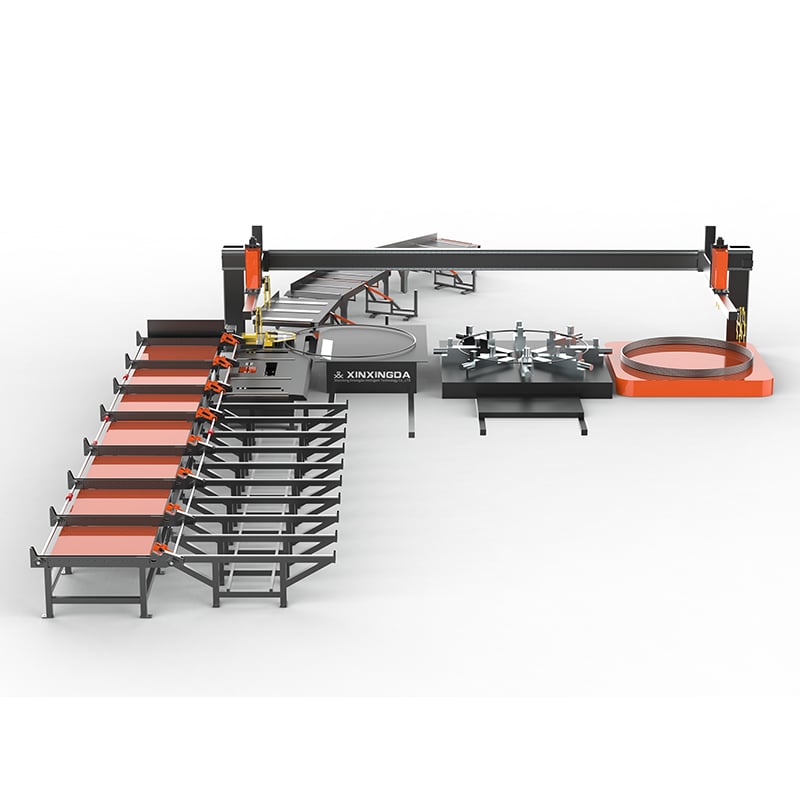
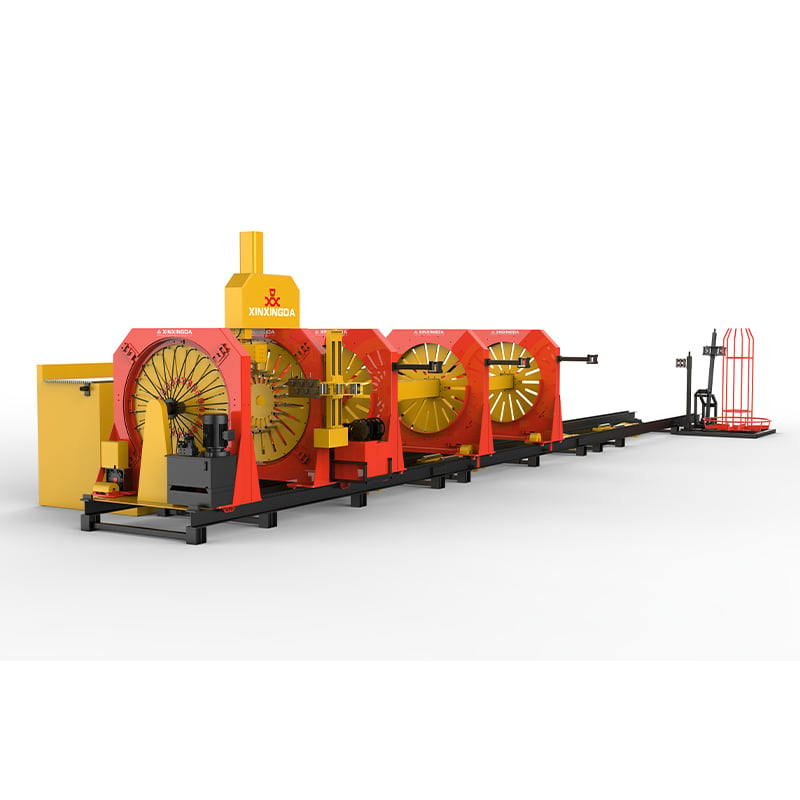
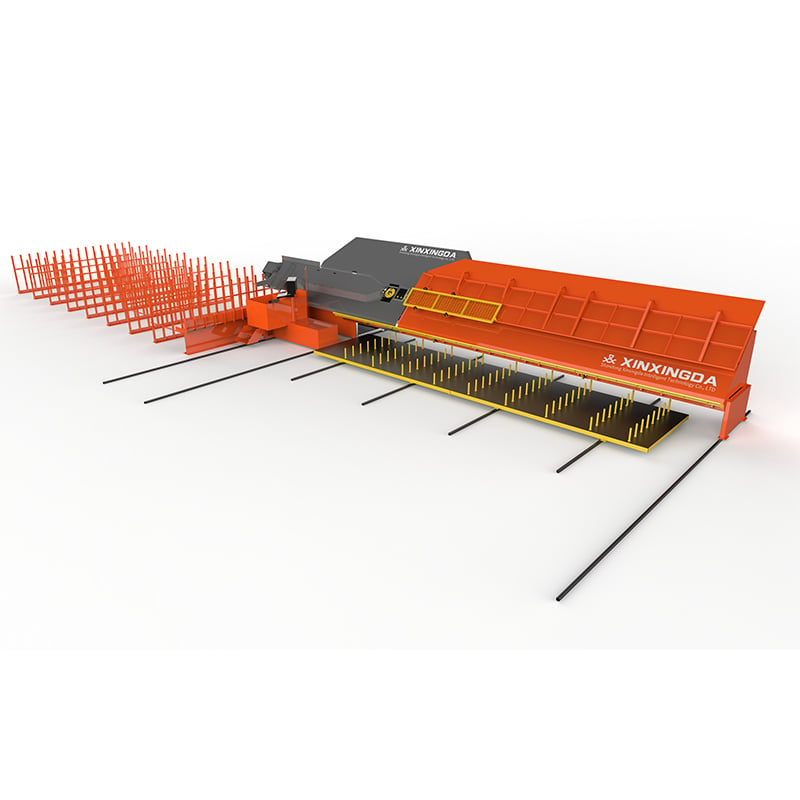
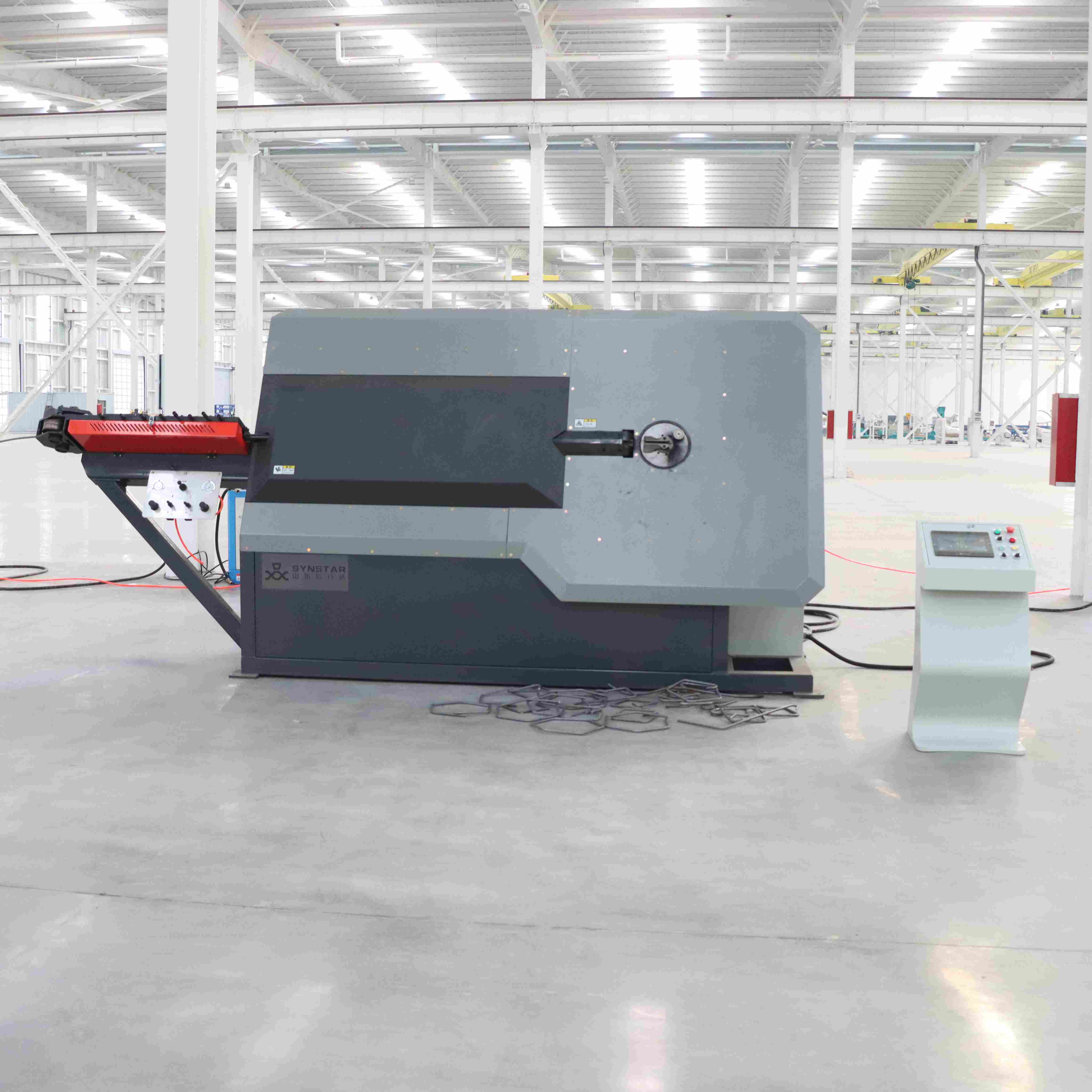
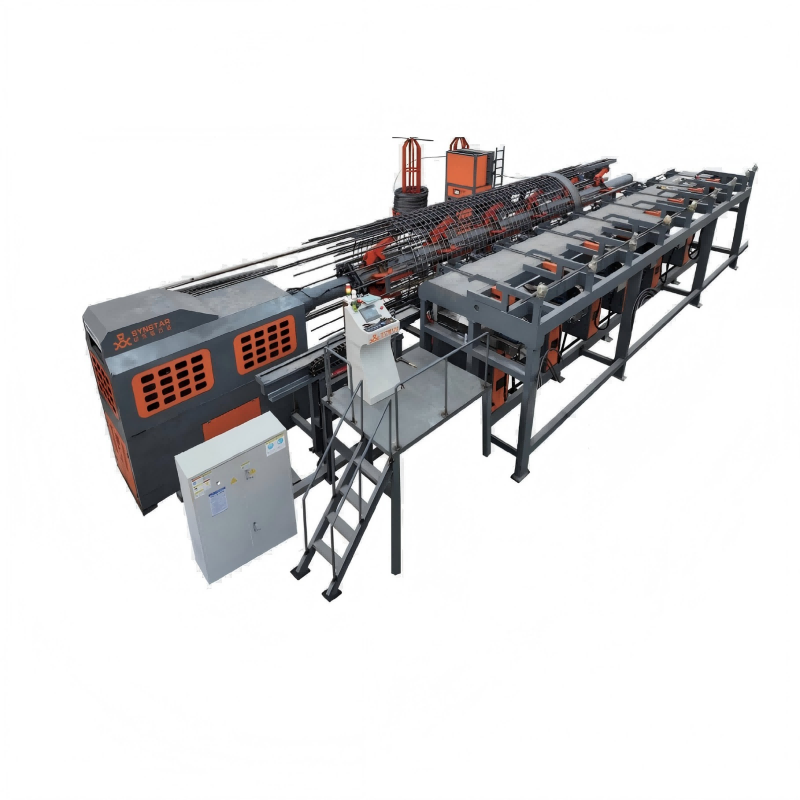
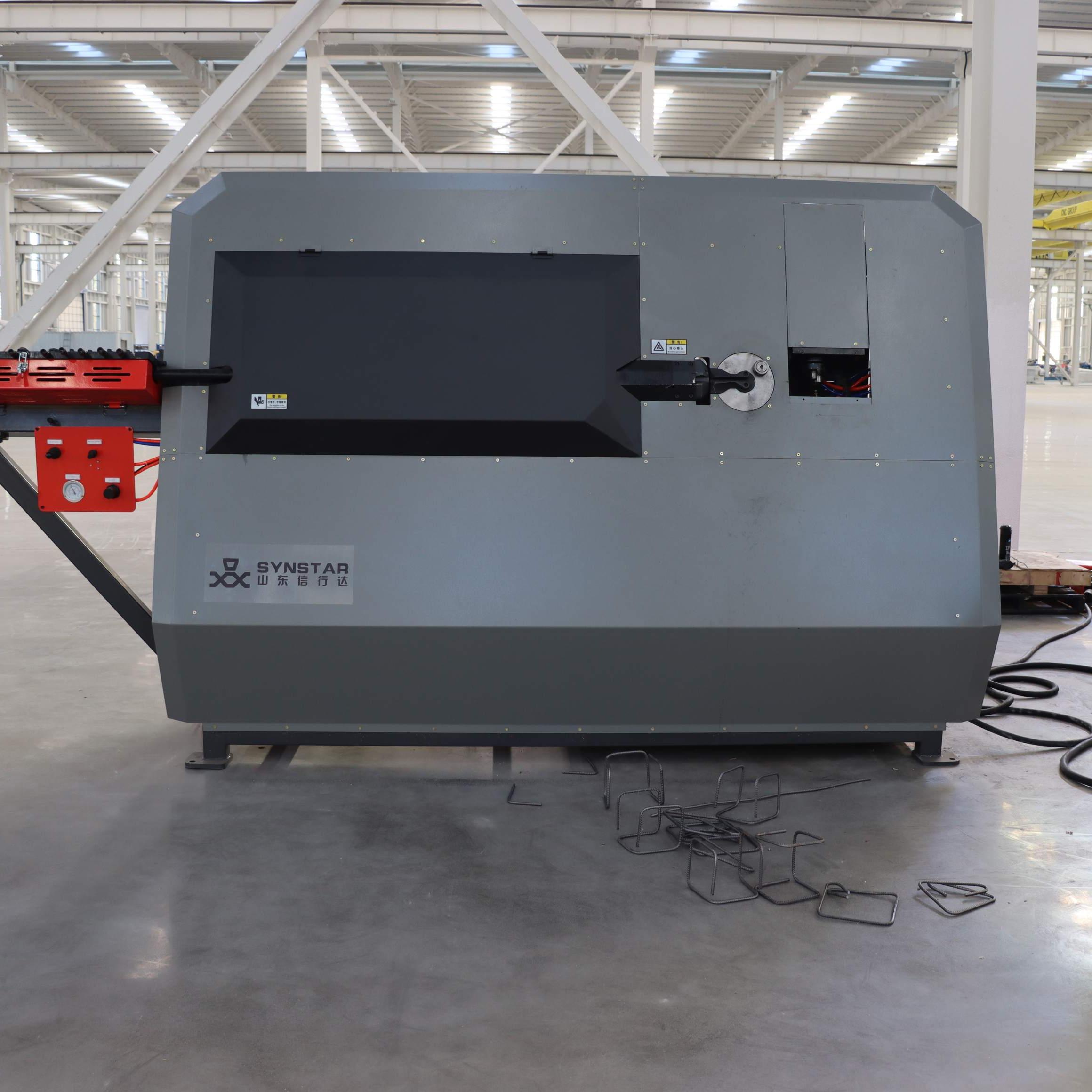
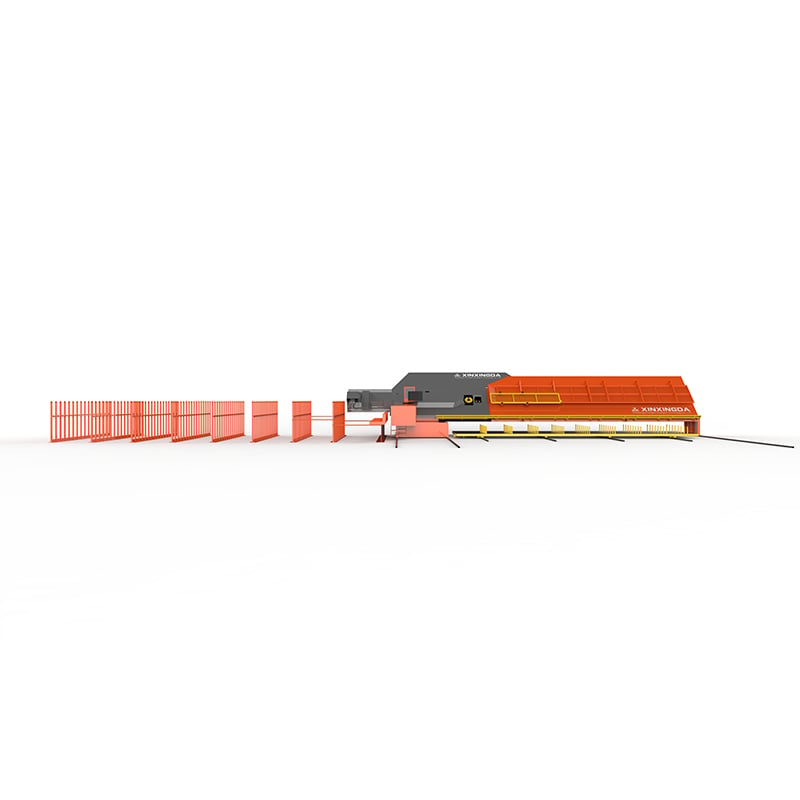
Amidst the roar of machinery and the flashing of welding sparks, a force is reshaping the underlying philosophy of modern infrastructure. It doesn't manifest itself in the curtain walls of skyscrapers or the magnificent spans of underwater tunnels, but quietly lays the foundation for all infrastructure projects. This is the rebar cage rolling welding machine – a "basic construction sub-machine" that fuses the flexibility of steel with the precision of technology, driving the construction industry from labor-intensive traditional work into a new era of automation and automated production.
I. Changing Tradition: A Silent Production Line Revolution
Previously, the on-site production of rebar cages was a different scene: in a noisy site, workers, armed with binding hooks, would move among the crisscrossing reinforcing bars, meticulously performing the tedious and complex binding work using their experience and physical strength. This method was not only inefficient and labor-intensive, but also failed to guarantee consistent specifications and complete quality control. The birth of the rebar cage rolling welding machine ended this era of relying on "carpet bombing" and "manual labor."
Through precise electromechanical design, it integrates the accurate feeding of main reinforcing bars, the uniform winding of coiled bars, and the millisecond-level control of welding timing into a seamless automated process. Like a tireless "steel tailor," it uses a pre-set intelligent blueprint as a guide, and uses scorching welding as stitches to weave standardized rebar cages with unquestionable length, diameter, and spacing. This revolution is silent but profound, moving rebar processing machinery from outdoor construction sites to standardized factories, and transforming manual labor into a technology-driven process.
II. Hardcore Strength: A Balanced Triangle of Precision, Strength, and Speed
The core competitive advantage of the rebar cage rolling welding machine lies in its ability to achieve the perfect unification of seemingly contradictory goals in engineering construction:
Improved Precision: The intelligent automatic control system ensures that every rebar cage is a perfect reproduction of the design drawings. The spacing deviation of the main reinforcing bars can be controlled to the millimeter level, and the tooth pitch is uniform, laying a geometric foundation for the uniform load-bearing capacity of the subsequent concrete. This level of precision is unattainable and cannot be quickly replicated by manual labor. Ensuring the Fundamental Guarantee of Compressive Strength: Fully automatic welding (generally using CO2 gas shielded welding or resistance welding machines) ensures that every welding current, voltage, and time parameter is in the optimal state. The result is strong, high-strength, and highly consistent welds, completely eliminating quality risks such as incomplete welds and false welds common in manual electric welding, thus fundamentally safeguarding the compressive strength of the building's structural framework.
Leapfrogging in Production Scale and Speed: The production efficiency of a single medium-sized roll welding machine is typically several times that of dozens of skilled workers working simultaneously. It can operate continuously for 24 hours, producing at a stable pace, directly responding to the stringent requirements of modern large-scale construction projects for foundation engineering progress, becoming a key accelerator in reducing overall construction time.
III. Intelligent Transformation: Digital Driving and the Factory of the Future
Today's rebar cage roll welding machines are no longer just mechanical equipment terminals. They are gradually evolving into an intelligent node in the "future factory" of the construction industry:
Data Becomes the New Raw Material: The new generation of intelligent roll welding machines is deeply integrated with BIM (Building Information Modeling) and CIM (City Information Modeling) systems. Design data can be directly transmitted to the equipment, achieving "design equals manufacturing." At the same time, key production data (such as welding parameters, consumable usage, and equipment operating status) are automatically collected, analyzed, and fed back to the management system, enabling quality traceability, process optimization, and data-driven decision-making.
Responsive and Flexible Production: To meet the needs of non-standard or complex shaped rebar cages, high-quality models with multi-axis linkage and advanced shortest path algorithms have emerged. They can automatically adjust according to the input model, processing cages of varying sizes, conical shapes, and those with reinforcing components, demonstrating extremely high production flexibility.
Towards Intelligent Dark Factories: In advanced prefabricated component production facilities, roll welding machines are seamlessly integrated with automated powder conveying systems, robotic arms, and intelligent warehousing systems, forming a fully automated production line. From steel bar feeding to the stacking and shipment of finished cages, the entire process requires no direct human intervention, outlining the future of the construction manufacturing industry. IV. Beyond Specialized Tools: A Cornerstone for Industrial Structure Upgrading and Green Construction
The rise of rebar cage welding machines represents a value far exceeding the technological innovation of a single piece of equipment. It is a powerful cornerstone that leverages the transformation and upgrading of the entire industrial chain and construction methods:
Promoting Industrialized Construction: This is one of the core pieces of equipment for achieving "integrated design and factory production" of prefabricated foundation components, driving the transformation of the construction industry from a decentralized, extensive model to a centralized, lean manufacturing industrial model.
Implementing Green Building: Large-scale centralized production significantly reduces environmental pollution from noise, dust, and organic waste gas; precise cutting reduces the consumption of construction steel; and high efficiency reduces overall energy and construction time consumption, aligning with the demands of sustainable development.
Restructuring Labor Value: This frees workers from high-intensity, repetitive manual labor, shifting them to equipment operation, maintenance, and supervision, promoting the transformation and upgrading of skilled personnel into a learning-oriented workforce.
Conclusion
The rebar cage welding machine, a complex network composed of steel, power circuits, and code, is a tangible manifestation of contemporary construction ambitions and high-end manufacturing capabilities. Beneath its cold, hard surface lies a burning core of improving engineering quality and reshaping the industrial ecosystem. From individual reinforcing bars to towering century-long projects, the welding machine provides precision and reliability at the starting point. It is not only the creator of the "skeletal structure" of construction projects, but also a solid and shining landmark in China's infrastructure development, marking the transition from "manufacturing" to "intelligent manufacturing." In the future, with the surging tide of intelligence, this "steel weaver" will continue to embrace more sensitive "senses" and a more intelligent "brain," weaving together the dreams of people building their lives, creating a more robust and efficient foundation.
 Hot News
2026-05-27
2026-05-18
2026-05-12
2026-05-08
2026-05-01
2026-04-27
Copyright © 2026 Shandong synstar Intelligent Technology Co., Ltd. All rights reserved. - Privacy Policy
 EN
EN