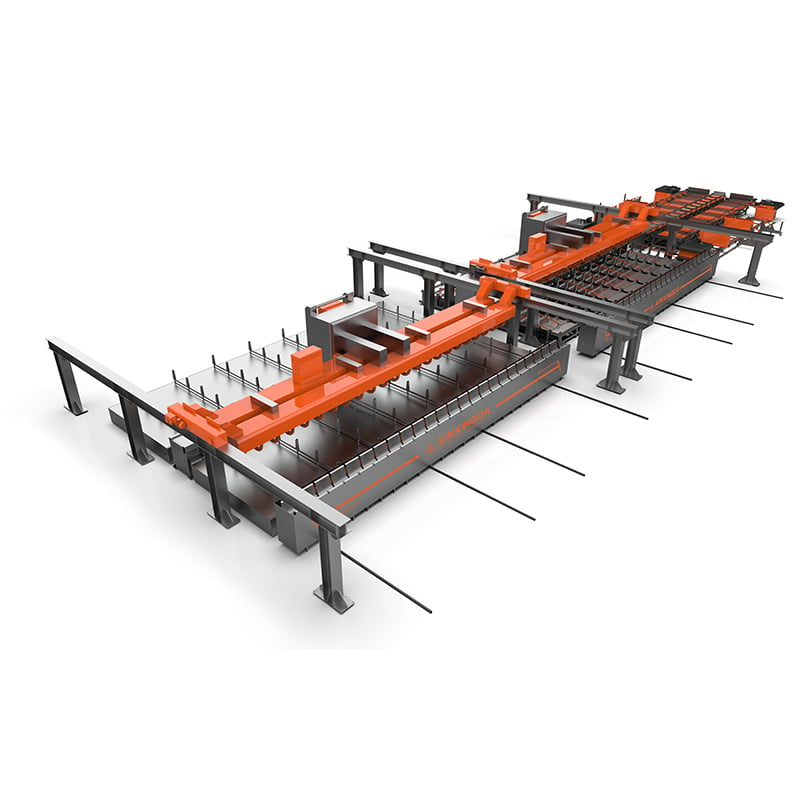
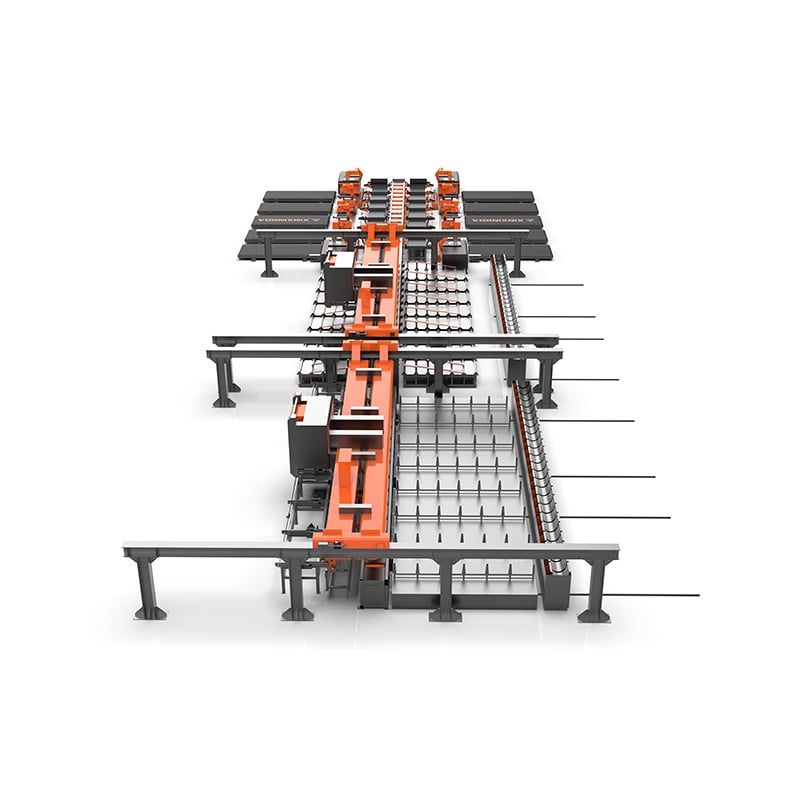
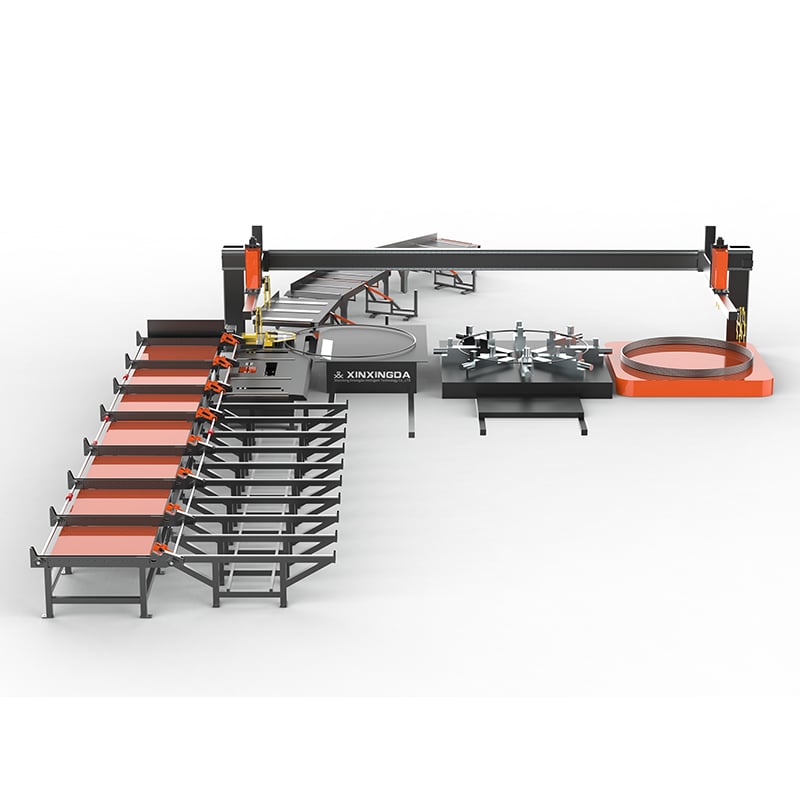
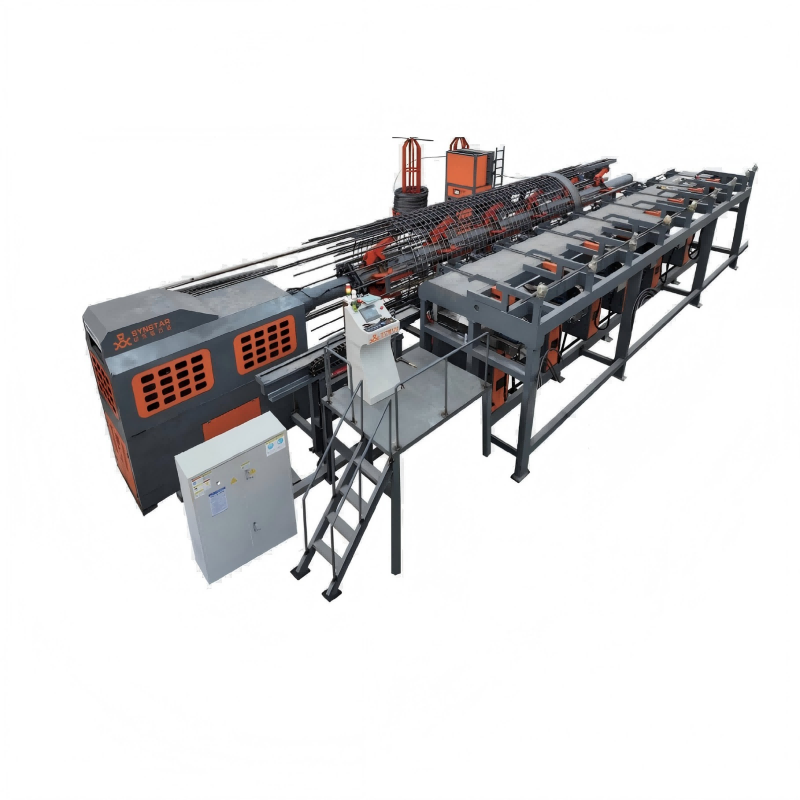
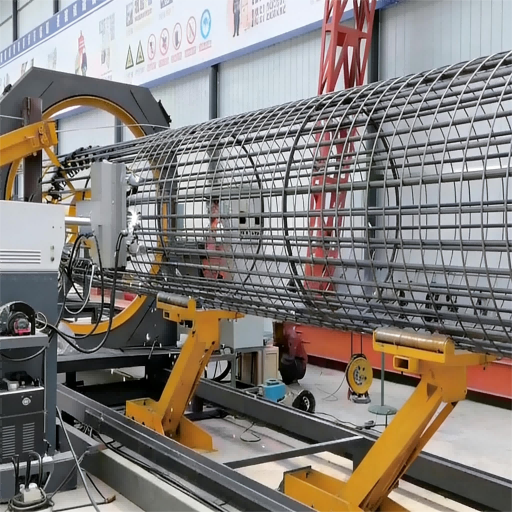
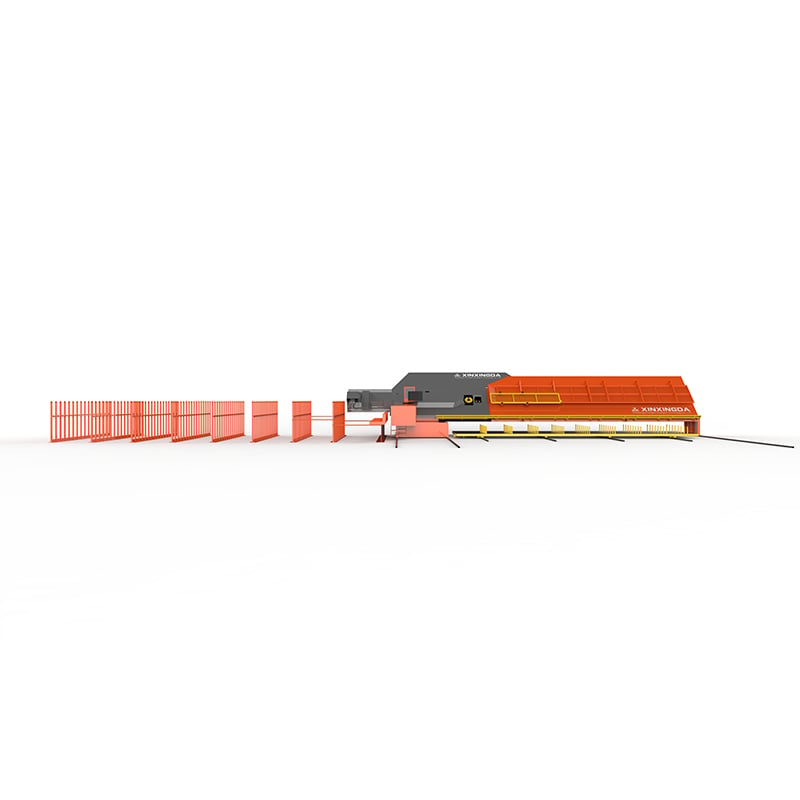
The steel cage rolling welding machine, as the core automated equipment in modern pile foundation construction, its cost does not merely refer to the expenditure at the moment of equipment purchase, but is a comprehensive system throughout the entire life cycle of the equipment. For construction enterprises, a thorough understanding of this cost composition can help make more accurate investment decisions and achieve cost reduction and efficiency improvement. This article will decompose the cost elements of the steel cage rolling welding machine from multiple dimensions.
I. Equipment Purchase Cost: Initial Investment
The cost of purchasing the equipment itself is the starting point of the investment. Its level depends on various technical parameters and commercial factors, rather than just the price tag.
Model and processing capacity: The processing diameter range, length, main bar diameter and number of bars of the equipment directly determine its application scope and complexity. Equipment capable of processing larger diameters and more main bar roots usually implies higher structural strength and a more complex control system, and its cost is naturally at a higher level.
Automation and CNC level: From semi-automatic to fully automatic CNC, the differences in control systems significantly affect costs. High-end equipment that is controlled by PLC (Programmable Logic Controller), equipped with a touch screen operation interface, and featuring functions such as automatic feeding, automatic welding, and automatic precise cutting, has a higher technical integration level and thus requires a greater investment.
Brand and technology source: Domestic brands and imported brands (such as European brands) have significant cost differences due to factors such as R&D investment, manufacturing processes, and brand premium. Imported brands usually imply higher initial investment, but may have advantages in terms of precision, stability, and lifespan.
Core component configuration: The brands and grades of key components such as servo motors, reducers, guide rails, screws, and welding machines used in the equipment directly affect the performance and durability of the equipment. Choosing components from well-known brands will increase manufacturing costs, but it can reduce the failure rate in the later stage.
II. Labor and Operating Costs: Continuous Expenditures
This is the largest daily expense after the equipment is put into use, and it is the key point that distinguishes it from the traditional manual production method.
Personnel allocation cost: The CNC roll welding machine replaces a large number of manual binding and welding operations with mechanical operations. Usually, a roll welding machine production line only requires a few operators per shift (including main machine operation, auxiliary loading, ring installation, etc.), which can significantly reduce the number of workers compared to the traditional manual production mode, thereby greatly reducing labor costs, management costs, and other related costs such as social security.
Operational skills requirements: Although the number of operators has decreased, the skill requirements have changed. The main operator needs to have basic computer operation and knowledge of CNC equipment maintenance. Their skill level affects the efficiency of the equipment and the waste rate, thereby influencing the overall cost.
Energy consumption cost: The main consumption of electricity occurs during the operation of the equipment. The size of the total installed power, the actual operating duration, and whether energy-saving technologies are equipped all determine the level of electricity expenses. Reasonable production processes and standby management can effectively control this cost.
Cost of consumables:
Welding consumables: Carbon dioxide gas shielded welding is adopted, which requires the consumption of welding wire and carbon dioxide gas. The consumption amount per unit processing volume is closely related to the welding parameters and the quality requirements of the weld.
Electrodes and conductive nozzles: Components that are prone to damage during the welding process and should be replaced regularly.
Lubrication and cooling media: The equipment guide rails, transmission components, etc. require regular lubrication. The hydraulic system needs hydraulic oil, and these all fall under the category of daily consumables.
III. Maintenance and Repair Costs: Ensuring Equipment Lifespan
The long-term stable operation of equipment cannot be achieved without continuous maintenance investment.
Replacement of vulnerable parts: Components such as the traction device, straightening mechanism, and welding gun head of the roll welding machine are prone to wear and tear. The frequency and cost of their replacement are important parts of daily maintenance.
Regular maintenance: This includes cleaning, tightening, and lubricating of mechanical components, inspection of the electrical system, and maintenance of the air circuit system, etc. The cost of this part is usually represented by labor costs and necessary maintenance material expenses.
Fault repair: During the long-term use of the equipment, various faults may occur. The labor costs and spare parts costs (such as motors, sensors, circuit boards, etc.) required for repair constitute unforeseen costs. The quality reliability of the equipment directly determines the amount of such expenditures.
IV. Supporting and Auxiliary Costs: Forming a Complete Production Line
The steel cage rolling welding machine usually cannot complete all processes independently and requires the investment of supporting equipment and tooling.
Auxiliary equipment: Such as the steel bar bending machine used for processing the inner reinforcement ring, the lifting equipment (gantry crane, forklift) used for hoisting raw materials and finished cages, and the steel bar welding machine (used for extending the main bars) etc. The purchase or rental costs of these equipment need to be included in the overall consideration.
Specialized tooling molds: For different specifications of steel reinforcement cages (such as variations in main steel bar diameter and quantity), corresponding templates, conduits, and straightening wheels need to be replaced. This part of the tooling molds is a necessary supporting investment, and it increases with the diversification of processing specifications.
Foundation and Site: Equipment installation requires a concrete foundation. There must be sufficient areas for raw material storage and temporary storage of finished cages on the site. The investment in site hardening, factory construction (if necessary), and supporting facilities (power supply, gas supply) is also an important initial cost that cannot be ignored.
V. Capital Costs and Depreciation: Financial Impact
From the perspective of enterprise financial management, the funds occupied for equipment purchase and the depreciation of assets should also be included in the cost.
Capital occupation cost: Whether it is invested with own funds or borrowed from banks, the funds themselves have time value. If it is a loan, interest needs to be paid; if it is own funds, there is an opportunity cost.
Depreciation expense: As an asset, the equipment needs to be depreciated according to accounting standards during its useful life. This depreciation amount is allocated to each accounting period and reflected in the financial statements, thereby affecting the unit cost of the product (reinforcing cage).
VI. Implicit Costs and Comprehensive Benefits
In addition to the aforementioned explicit costs, there are two other "soft" factors that have a significant impact on the overall cost:
Quality cost: The standard dimensions of the reinforced concrete cages produced through mechanical processing, along with the stable weld quality, can significantly reduce the costs associated with rework, scrapping, and re-inspections by the supervisory authorities due to quality issues. Good quality can also bring the benefit of "exemption from inspection", thereby accelerating the construction progress.
Construction period cost: The high production efficiency of the roll welding machine can significantly shorten the production cycle of the steel reinforcement cage, thereby providing time for the subsequent pile foundation construction and indirectly saving the overall project's construction period cost and management expenses.
Safety cost: Automated operations have reduced the direct contact between workers and reinforcing bars as well as the heavy physical labor, lowering the probability of workplace accidents. As a result, it has reduced the potential costs and risks associated with handling safety incidents. Analysis of Cost Components of Steel Bar Cage Rolling Welding Machine
 Hot News
2026-05-27
2026-05-18
2026-05-12
2026-05-08
2026-05-01
2026-04-27
Copyright © 2026 Shandong synstar Intelligent Technology Co., Ltd. All rights reserved. - Privacy Policy
 EN
EN