All Categories

Get a Free Quote

Our representative will contact you soon.
Email
Name
Company Name
Mobile
Message
0/1000
rebar bender price-1

Home > 

rebar bender price

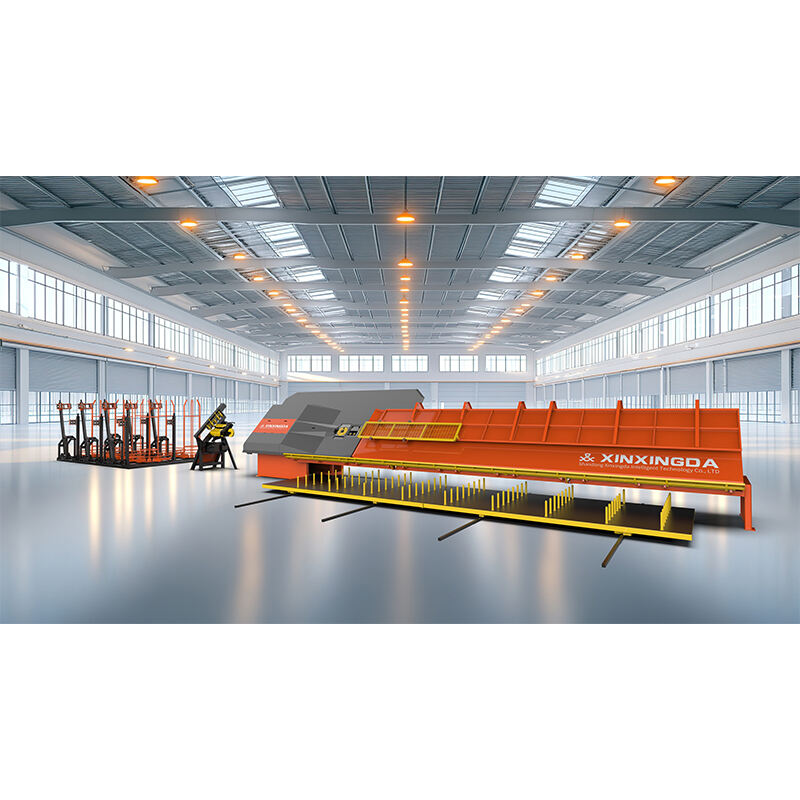
Rebar bender price considerations encompass a comprehensive range of factors that influence the overall investment in construction equipment. Modern rebar benders combine advanced technology with practical functionality, offering various bending capabilities from 4mm to 32mm depending on the model and price point. The price spectrum typically ranges from $800 for basic manual models to $15,000 for advanced automatic systems. These machines feature digital control panels, adjustable speed settings, and precise angle configurations, ensuring accurate bends from 0 to 180 degrees. Price variations reflect factors such as motor power, bending capacity, automation level, and manufacturing quality. Entry-level models offer essential bending functions suitable for small construction projects, while premium-priced units include features like memory functions, automatic angle calculation, and higher processing speeds. The investment consideration should account for production volume requirements, labor costs, and long-term maintenance expenses. Most modern units include safety features such as emergency stop buttons and overload protection, with higher-priced models offering additional safety mechanisms and diagnostic systems. The price also factors in durability components like hardened steel bending pins and reinforced frames, which contribute to the machine's longevity and reliability in demanding construction environments.

New Product Recommendations

The strategic pricing of rebar benders presents several compelling advantages for construction businesses and contractors. First, the varied price points allow companies to select equipment that precisely matches their operational scale and budget constraints. Entry-level models provide an accessible starting point for small contractors, while premium options offer advanced features that justify their higher cost through increased productivity and precision. The price structure typically reflects a clear correlation with labor savings, as more expensive automated models can significantly reduce manual labor requirements and associated costs. Additionally, modern rebar benders at different price points incorporate energy-efficient technologies that help minimize operational expenses over time. The investment in quality rebar bending equipment, regardless of price tier, typically results in improved project timelines and reduced material waste. Higher-priced models often include comprehensive warranty packages and readily available spare parts, ensuring long-term value and minimal downtime. The pricing also accounts for enhanced safety features and ergonomic designs that reduce operator fatigue and workplace incidents. Multiple payment and financing options are usually available, making these essential tools accessible to businesses of various sizes. The price structure often includes after-sales support, training, and technical assistance, adding value beyond the initial purchase. For larger operations, the higher-priced automatic models demonstrate their worth through consistent bending quality, reduced error rates, and the ability to handle high-volume production efficiently. The investment in a well-priced rebar bender ultimately translates to improved project efficiency, better quality control, and enhanced workplace safety, making it a crucial consideration for construction operations of any scale.

Practical Tips

How Can a Steel Cage Roll Welding Machine Reduce Labor Costs on Site

24

Sep

How Can a Steel Cage Roll Welding Machine Reduce Labor Costs on Site

Revolutionizing Construction Efficiency Through Automated Welding Technology The construction industry is witnessing a remarkable transformation as innovative technologies reshape traditional practices. At the forefront of this evolution stands the s...
View More
Which Construction Equipment Offers the Best Value for Large Contractors

19

Sep

Which Construction Equipment Offers the Best Value for Large Contractors

Maximizing ROI Through Strategic Equipment Investment The construction industry's landscape continues to evolve, with equipment decisions playing a pivotal role in a contractor's success. Making informed choices about construction equipment value req...
View More
How to Extend the Lifespan of a Large-Scale Bending Machine

24

Sep

How to Extend the Lifespan of a Large-Scale Bending Machine

Importance of Maintaining a Large-Scale Bending Machine A large-scale bending machine is a critical piece of equipment in modern manufacturing. It plays an essential role in shaping metal sheets, pipes, and other materials with precision and efficien...
View More
What Applications Benefit Most from Steel Cage Rolling Welding Machine

24

Sep

What Applications Benefit Most from Steel Cage Rolling Welding Machine

Contribution of Steel Cage Rolling Welding Machine to Infrastructure A steel cage rolling welding machine plays an essential role in modern infrastructure projects. It is specifically designed to automate the fabrication of reinforced steel cages use...
View More

Get a Free Quote

Our representative will contact you soon.
Email
Name
Company Name
Mobile
Message
0/1000

rebar bender price

Cost-Effective Automation Solutions

Cost-Effective Automation Solutions

Modern rebar benders offer varying levels of automation at different price points, providing cost-effective solutions for construction businesses of all sizes. Entry-level automated systems, typically priced between $3,000 and $5,000, deliver essential automation features that significantly reduce labor requirements while maintaining reasonable initial investment costs. These machines incorporate basic programmable controls and consistent bending capabilities, making them ideal for small to medium-sized projects. Mid-range models, priced from $5,000 to $8,000, offer enhanced automation features including multiple memory settings, faster processing speeds, and improved precision controls. Premium automated systems, while commanding higher prices above $8,000, justify their cost through advanced features like fully automated processing, multi-angle programming, and integrated production management systems. The automation capabilities at each price point are designed to optimize workflow efficiency, reduce human error, and increase overall productivity, making them valuable investments for construction operations looking to streamline their rebar processing activities.
Price-Performance Value Proposition

Price-Performance Value Proposition

The price-performance ratio of modern rebar benders delivers exceptional value across different market segments. Basic models starting at $800 provide reliable manual bending capabilities suitable for small-scale operations and occasional use. The mid-range segment, priced between $3,000 and $7,000, offers an optimal balance of features and performance, including semi-automatic operation, digital controls, and moderate production capacity. These machines typically deliver excellent return on investment through improved efficiency and reduced labor costs. High-end models, while requiring a larger initial investment of $8,000 or more, provide advanced features such as automatic feed systems, precision angle control, and high-speed operation capabilities. The performance value is further enhanced by durable construction, using high-grade materials that ensure longevity and reliable operation even under demanding conditions. This tiered pricing structure ensures that businesses can select equipment that best matches their operational requirements and budget constraints while maintaining high standards of performance and reliability.
Long-term Cost Benefits

Long-term Cost Benefits

The strategic pricing of rebar benders reflects significant long-term cost benefits that extend beyond the initial purchase price. Investment in quality equipment, particularly in the mid to high-price range, typically results in reduced maintenance requirements and longer service life, minimizing the total cost of ownership. Machines priced between $5,000 and $10,000 often incorporate features that contribute to cost savings, such as energy-efficient motors, wear-resistant components, and automated maintenance alerts. These features help prevent unexpected breakdowns and reduce routine maintenance expenses. Higher-priced models also typically include comprehensive warranty coverage and readily available spare parts, ensuring minimal downtime and maintenance costs. The advanced technology in premium models contributes to material savings through precise bending angles and reduced waste, while their superior processing speed significantly improves project completion times. The long-term financial benefits are further enhanced by reduced labor costs, improved safety features that minimize workplace incidents, and increased production capacity that allows for better project scheduling and resource allocation.

Get a Free Quote

Our representative will contact you soon.
Email
Name
Company Name
Mobile
Message
0/1000