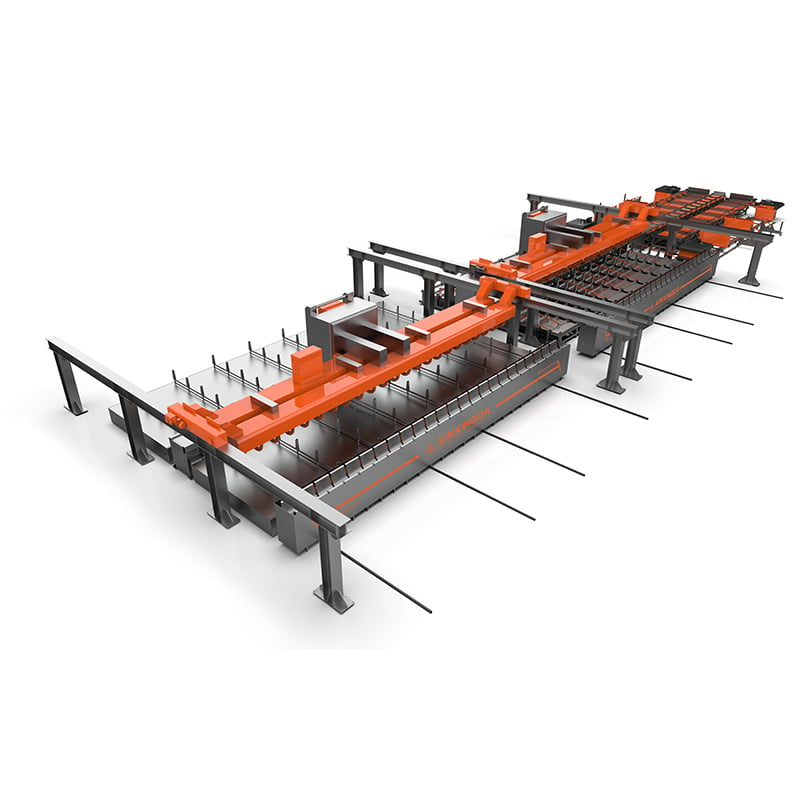
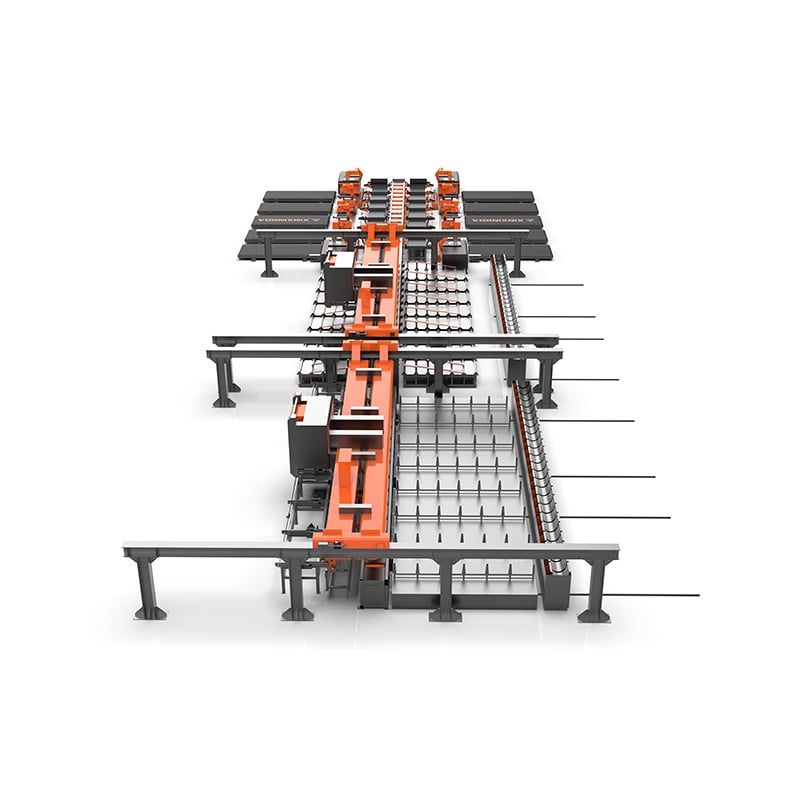
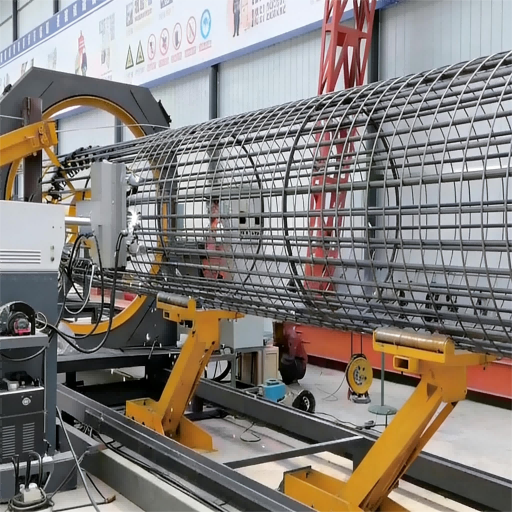
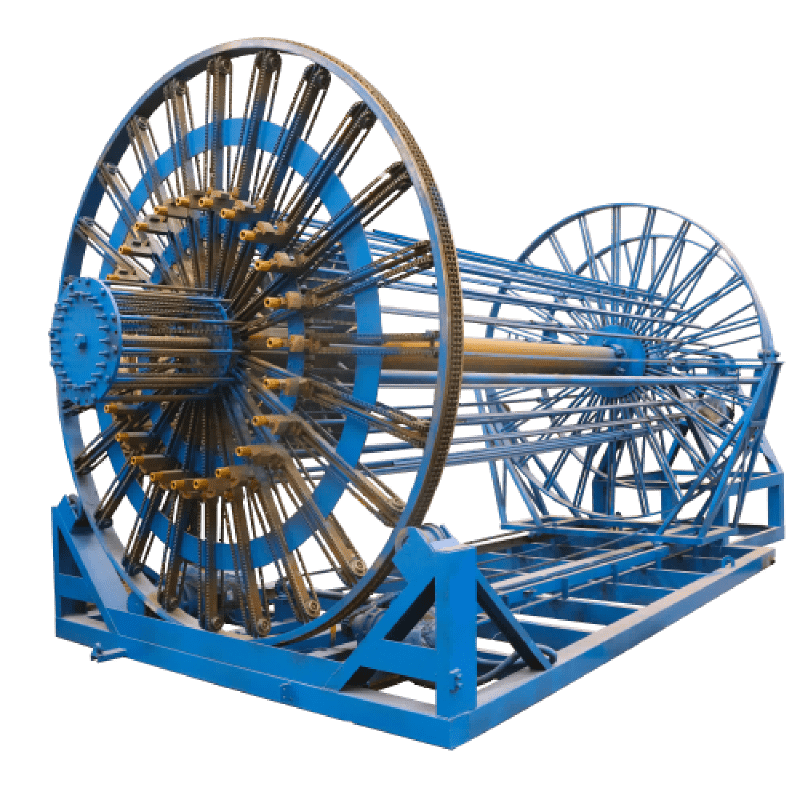
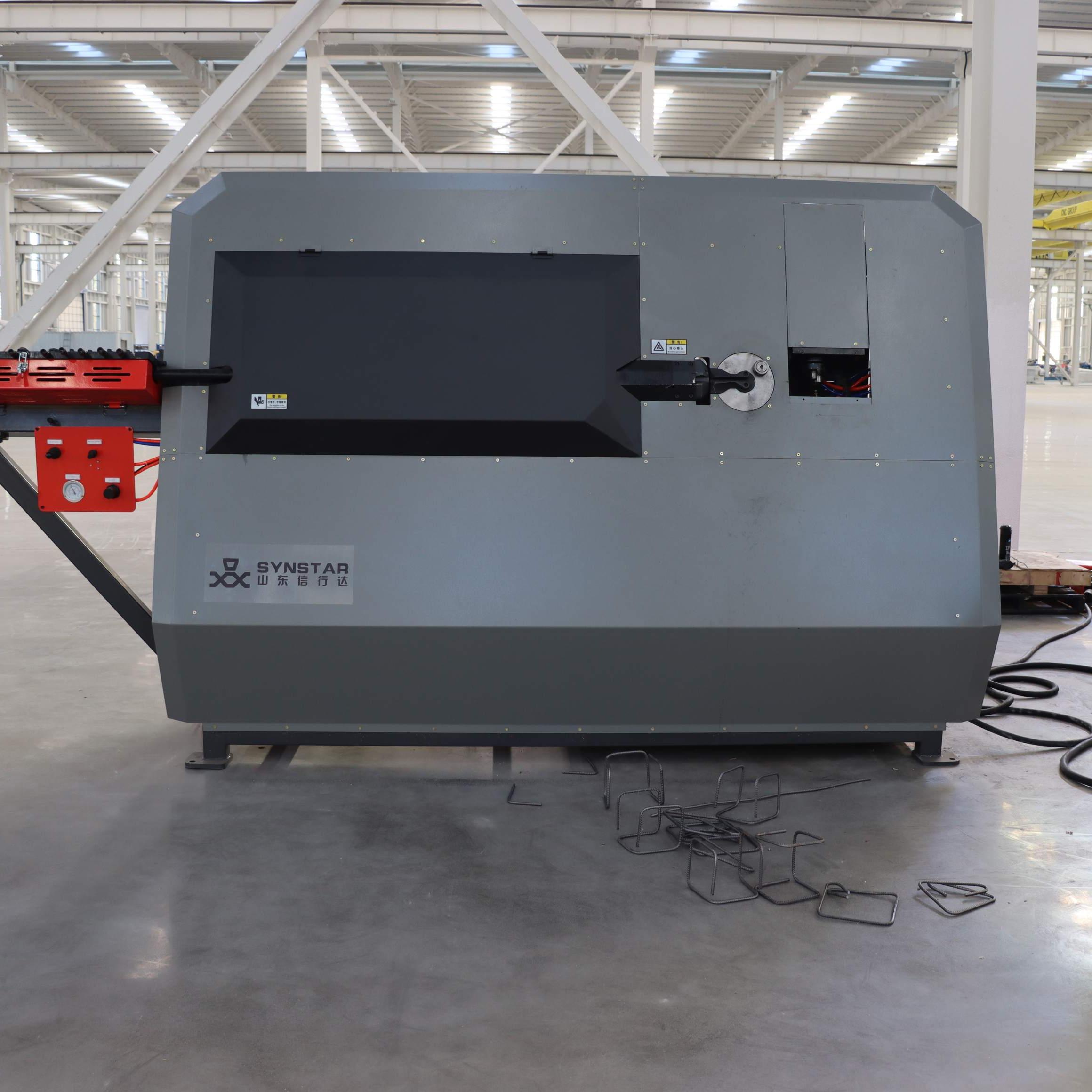
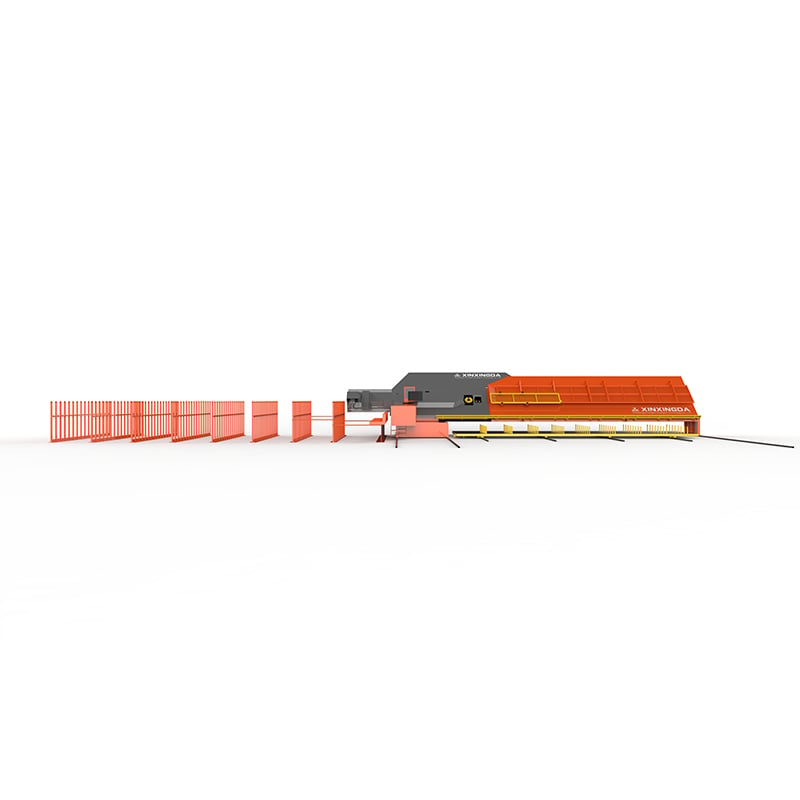
In infrastructure construction industries such as engineering, highway bridges, and tunnel construction, rebar processing is an indispensable and crucial link. Traditional manual methods of bending reinforcing steel bars are not only labor-intensive and inefficient, but also lack precision, and material waste is common. With the wave of intelligent manufacturing sweeping through industrial applications, CNC rebar bending machines, as representative equipment for automated and information-based rebar processing technology, are gradually attracting the attention of many construction companies and processing plants. However, faced with the substantial initial investment, many leaders can't help but ask: Is a CNC rebar bending machine really worth buying?
To answer this question, we should move beyond a simple "yes" or "no" and consider it objectively from multiple dimensions.
I. Irreplaceable Core Advantages: Why is it so popular? Perfect efficiency and a leap in production capacity: This is the most obvious appeal of CNC rebar bending machines. A small to medium-sized machine can produce hundreds or even thousands of main bars or bent bars of different shapes per hour, averaging several to tens of times faster than skilled workers. For projects with tight deadlines and high demand for reinforcing steel, it can effectively address production capacity shortcomings and guarantee project progress.
Millimeter-level precision and consistent quality: Controlled by a computer system, the equipment strictly adheres to the design drawings during processing, ensuring high consistency in angles and specifications. This greatly improves the quality of prefabricated components, providing a guarantee for the overall structural safety of the project, while reducing on-site construction difficulties and rework caused by dimensional errors.
Significantly reduced production costs:
Labor costs: Intelligent production reduces the reliance on many skilled rebar workers; 1-2 operators can manage the entire production line, resulting in significant long-term labor cost savings.
Raw material costs: By adjusting the layout design and precise cutting, the amount of rebar waste can be minimized (generally controlled within 1%), directly saving raw materials.
Management costs: Standardized and traceable production processes optimize enterprise production management and quality control. Coordination capabilities to handle complex requirements: By simply typing or enabling new program flows in the control system, it's possible to quickly switch between different rebar processing tasks with varying diameters and shapes (such as square, circular, and irregular shapes). This is ideal for diversified, small-batch orders and adapts to the increasingly complex design requirements of modern engineering projects.
Improved efficiency and safety: It frees employees from high-intensity physical labor and the inherent risks of cuts and crushing injuries, transforming them into equipment operators and monitors, aligning with the trend of industrial upgrading and humanized services.
II. Essential practical considerations: Challenges and high initial investment: The price of a domestic mid-range CNC rebar bending machine is usually between hundreds of thousands and millions of RMB, and foreign brands may be even more expensive. This is a significant expense that requires careful consideration for small and medium-sized construction teams or start-up manufacturers.
Technical and maintenance requirements: The equipment integrates machinery, electrical equipment, and software, requiring operators and maintenance personnel with a certain level of education and electromechanical knowledge. Although operation is becoming increasingly "simplified," basic troubleshooting, daily maintenance procedures, and adjustment capabilities are still indispensable.
Suitable for large-scale production: The efficiency advantages of the equipment are best realized in continuous, large-volume production plans. If order volume is unstable, or if production is mainly sporadic and small-scale, the equipment may be underutilized, and the return on investment period will be extended.
Power and site requirements: Compared to traditional workshops, CNC equipment requires a relatively stable power supply and a relatively clean and sturdy installation site.
III. Key decision point: Is it right for "you"? Determining whether a CNC rebar bending machine is worth buying ultimately comes down to "your" specific situation:
For large construction companies, professional rebar processing and distribution centers, and contractors that undertake large-scale infrastructure projects: The answer is usually a resounding yes. The high efficiency, quality, and cost-effectiveness advantages brought by the equipment can quickly translate into strong market competitiveness and substantial economic returns, making it a crucial investment for improving core productivity.
For small and medium-sized enterprises or growing manufacturers: Careful calculation is necessary. If order volume continues to grow and there is a relatively stable source of orders, purchasing a cost-effective machine can be the key to overcoming bottlenecks and achieving transformation and upgrading. Financing options such as installment payments and leasing can help alleviate financial pressure.
For small construction teams or companies with very sporadic business: further consideration is needed. It might be worthwhile to first assess the possibility of collaborating with nearby CNC machining centers for outsourcing, or consider flexible methods such as the used equipment market and shared leasing, to experience the benefits of automated processing at the lowest cost, and then purchase equipment when the business scale expands.
The result: it's not just about the "equipment," but rather a forward-looking investment in a CNC rebar bending machine. In essence, it's not just buying a cold piece of steel equipment, but investing in a more efficient, accurate, and controllable production model – an investment in the company's own intelligent capabilities and future competitiveness.
In today's environment of continuously rising labor costs, increasingly stringent engineering quality requirements, and the consensus on energy saving and emission reduction, the automation and intelligentization of rebar processing is an irreversible industry trend. As a mature product in this context, the long-term value of CNC rebar bending machines is undeniable.
Therefore, the final decision formula should be: (Clear production needs + Sustainable business prospects + Rational investment analysis) (Initial investment cost + Training and management costs)
If, after evaluation, the equation holds true, then introducing a CNC rebar bending machine is not only "worthwhile," but may also be a crucial step for your company to improve efficiency, expand capacity, and gain a competitive edge. It is recommended that you conduct thorough market research, contact different suppliers, and even visit existing customers before making a decision, using detailed information to support this extremely important investment.
 Hot News
2026-05-27
2026-05-18
2026-05-12
2026-05-08
2026-05-01
2026-04-27
Copyright © 2026 Shandong synstar Intelligent Technology Co., Ltd. All rights reserved. - Privacy Policy
 EN
EN