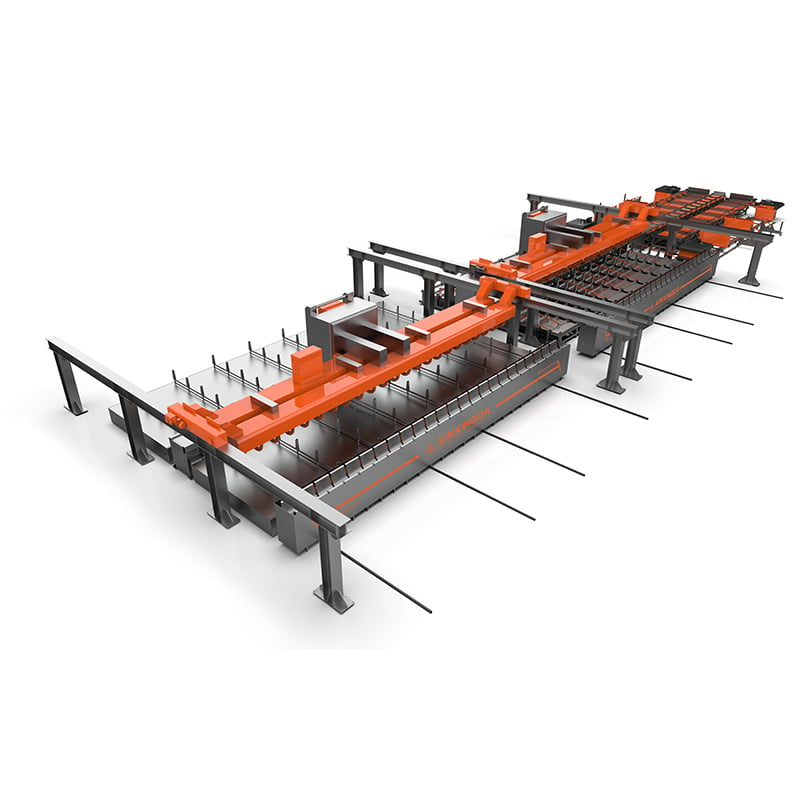
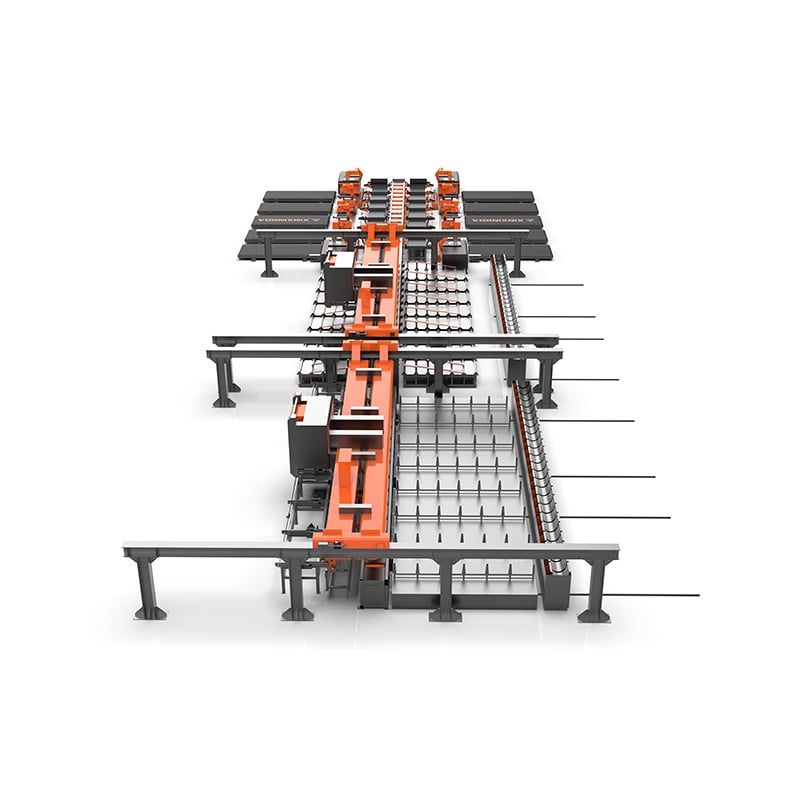
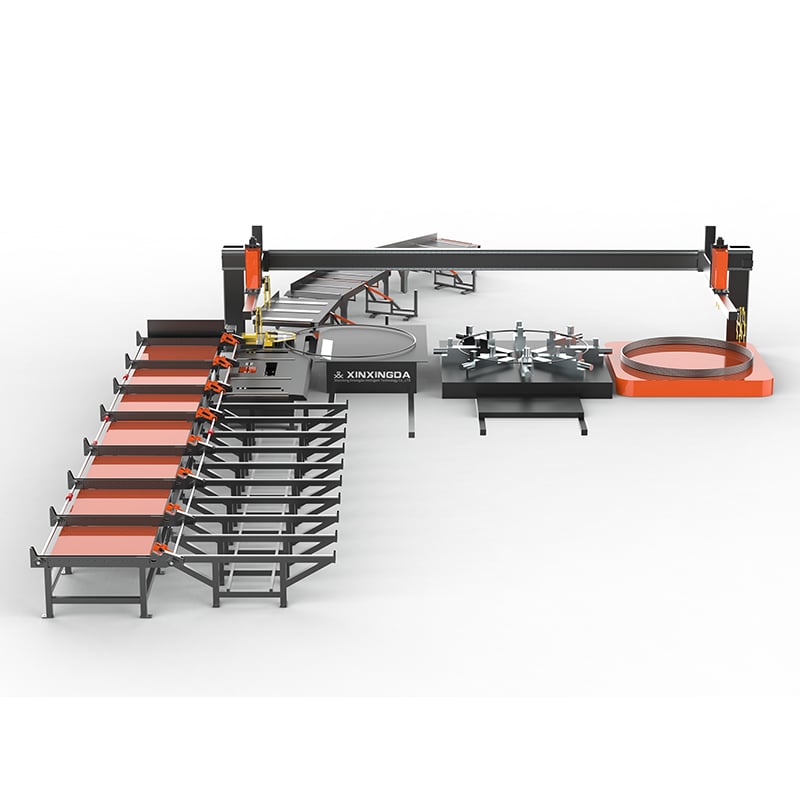
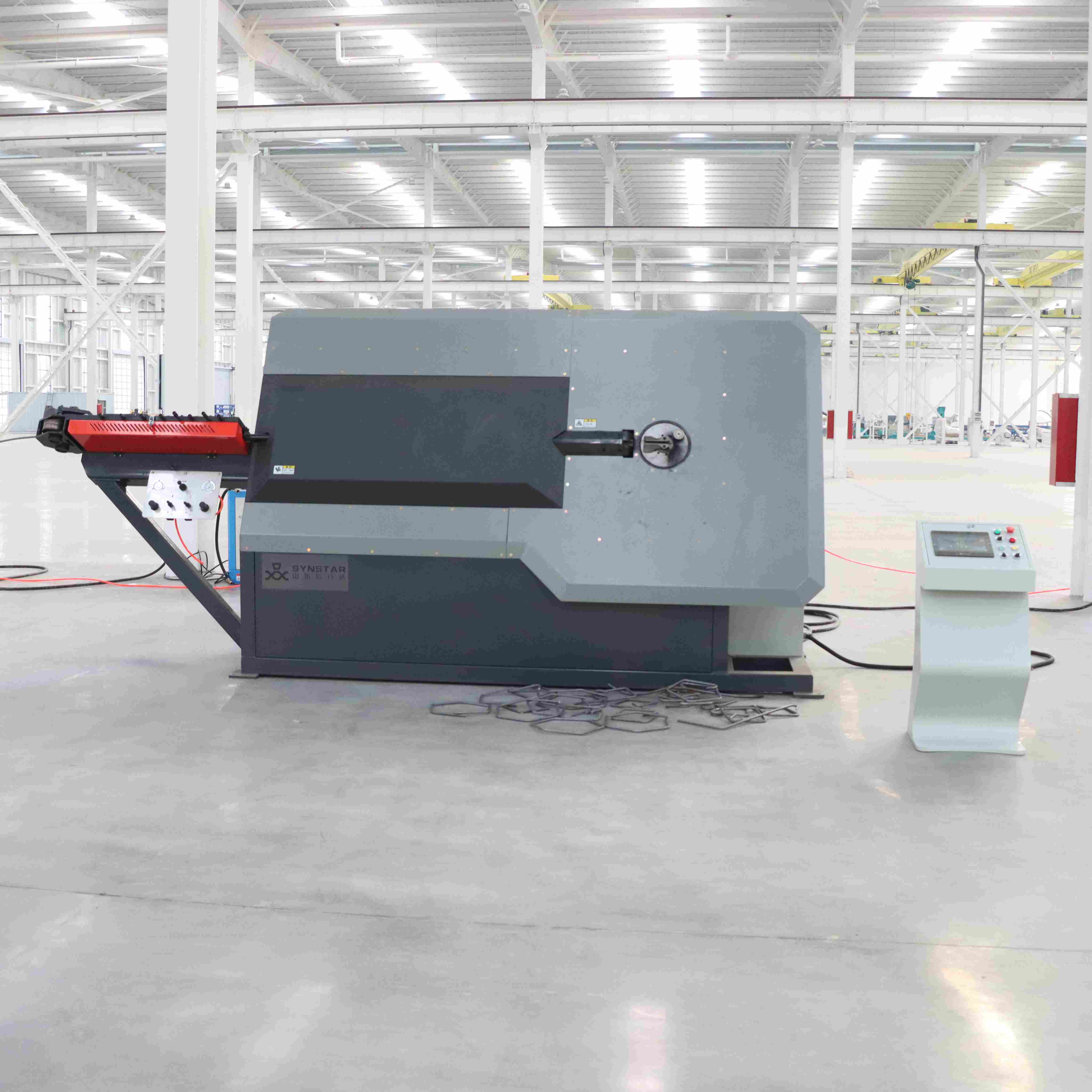
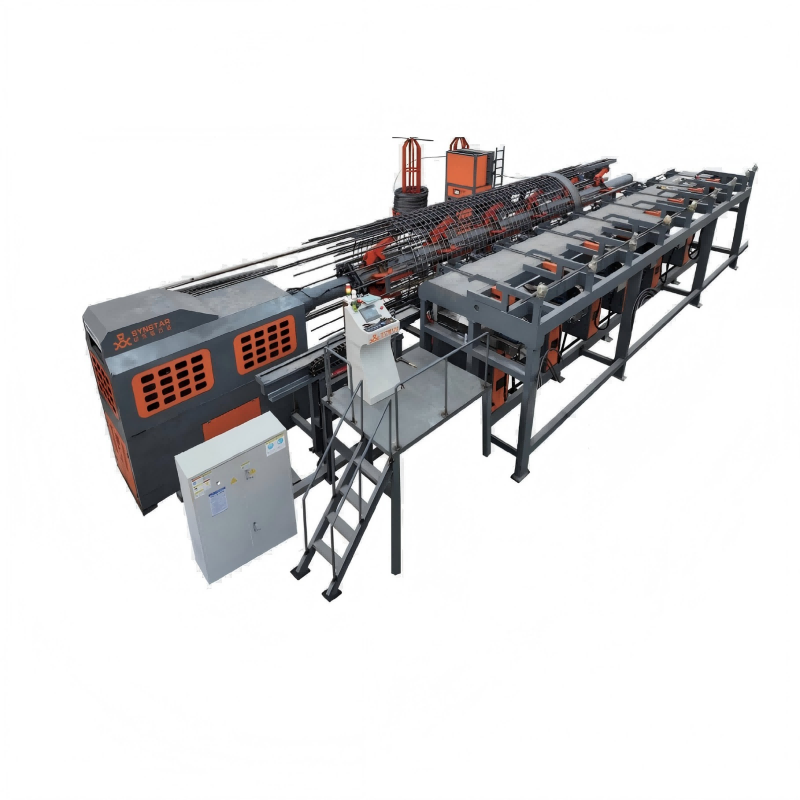
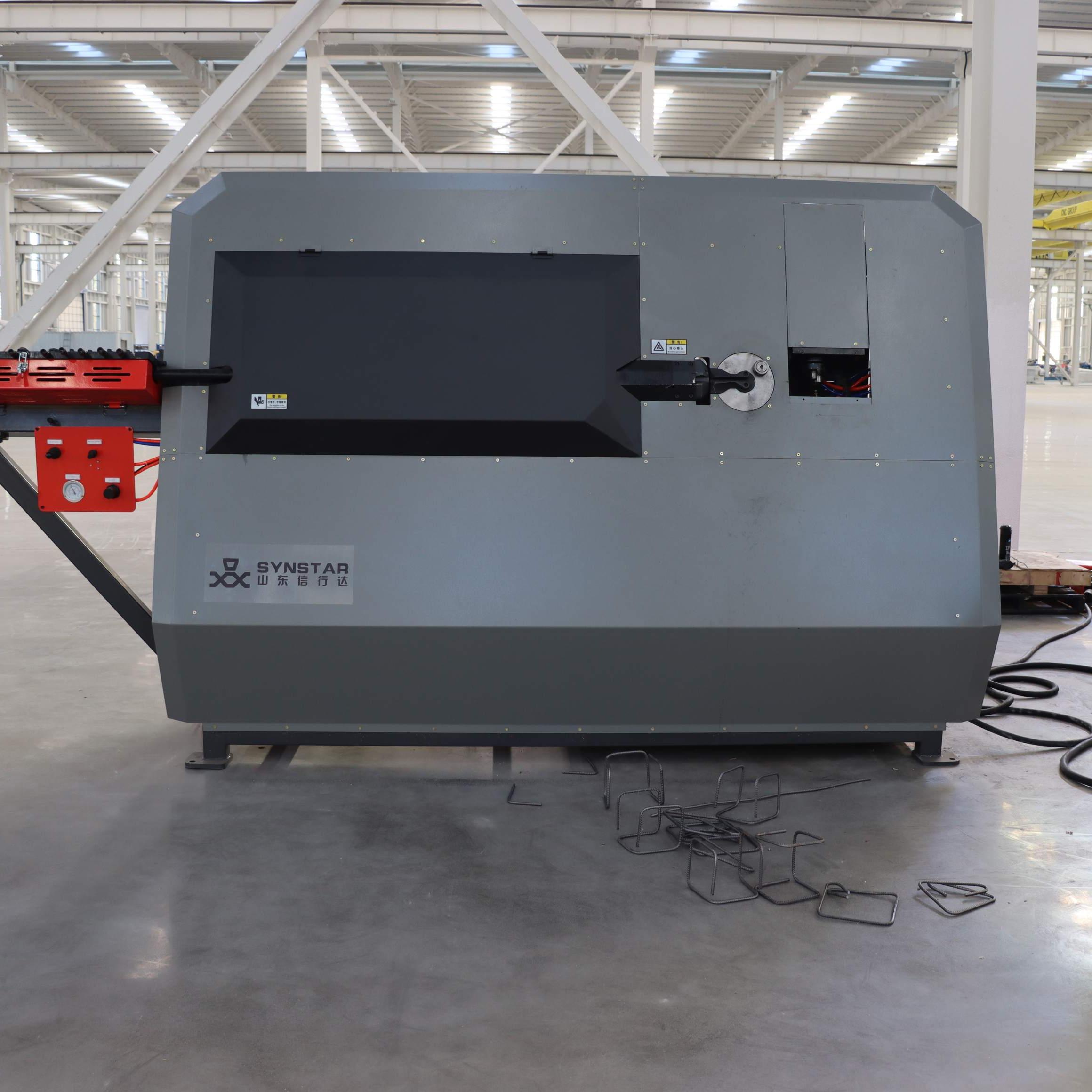
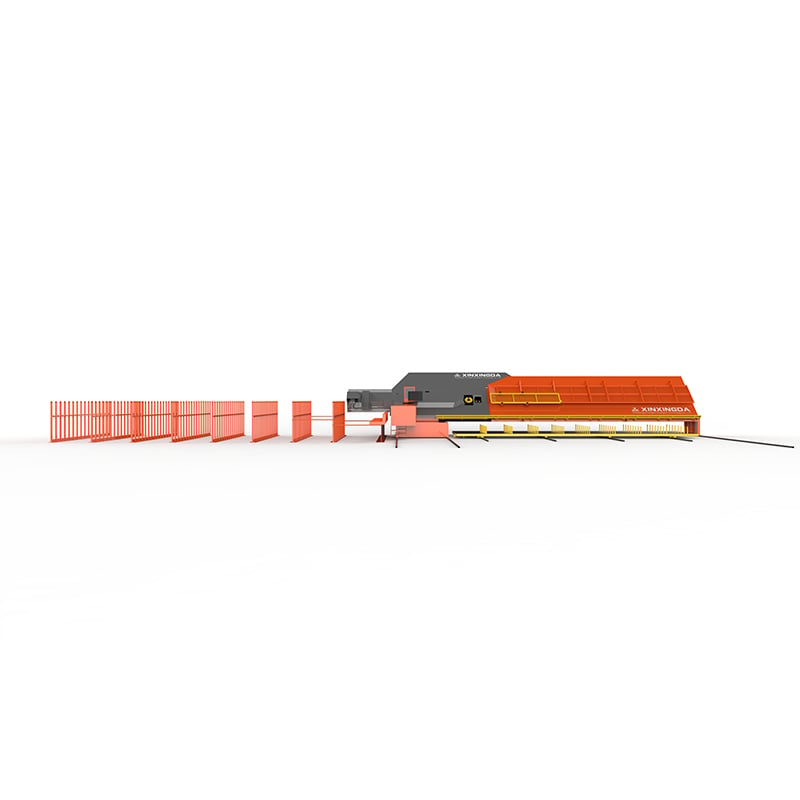
Amidst the wave of modernizing the construction industry with a focus on efficiency, precision, and sustainability, steel rebar deep processing centers have evolved from a supporting role to a critical core component. They are no longer simply facilities for basic rebar laser cutting and bending, but rather sophisticated manufacturing modules integrating automation, information technology, and precision machinery, completely reshaping the rebar production process from raw materials to customized components.
Main Functions: Accurate Transformation from "Raw Materials" to "Components"
A modern steel rebar deep processing center is primarily dedicated to the refined management, customization, and efficient processing of rebar. Key process modules include:
Automated Straightening and Cutting: Using high-speed straightening machines and CNC laser cutting systems, coiled or long-length rebar is efficiently transformed into precisely cut lengths with millimeter-level accuracy, preventing material waste from the source.
CNC Bending and Forming: Computer-controlled rebar bending centers automatically perform precise bending of complex-shaped rebar (such as main reinforcement bars, column reinforcement, and stirrups) based on input 3D graphic data, ensuring high consistency and adherence to design specifications.
High-Efficiency Welding and Assembly: Equipped with automatic welding robots or specialized welding equipment, the center can perform automated assembly and welding of rebar mesh, trusses, and cages (such as pile foundation cages and tunnel segment frames), significantly improving the integrity of structural components and production efficiency.
Threading and Coupling Nut Riveting: High-quality connectors are prepared in advance for widely used sleeve connections (such as rebar couplers), ensuring convenient on-site assembly and connection strength.
Intelligent Sorting and Bundling: Using visual recognition systems or coding systems, processed finished products are automatically sorted, marked, and bundled according to construction sequence and component type, laying the foundation for efficient logistics and transportation. Unique Advantages: Driving a Paradigm Shift in the Construction Industry
Compared to traditional on-site decentralized processing methods, centralized deep processing centers demonstrate unparalleled advantages:
Exceptional and Stable Quality: In a controlled production environment, standardized processes and precision machinery fundamentally solve the problems of large quality fluctuations, low processing accuracy, and high consumption associated with on-site processing, significantly improving the safety and stability of the main structure of engineering projects.
High Efficiency and Accelerated Construction: Automated production lines operate dozens of times faster than manual labor, enabling large-scale production in advance. This frees construction sites from the complex and arduous task of rebar processing, allowing them to focus on installation and pouring, significantly shortening the overall construction period.
Optimized Costs, Energy Saving, and Low Carbon Emissions: By improving cutting plans through big data software, overall processing costs can be reduced by over 98%, significantly reducing waste. Centralized processing also reduces on-site temporary facilities, manpower, and labor costs, and is more environmentally friendly due to the centralized and unified treatment of waste.
Digital Management and Traceability: As a key downstream implementation stage of BIM (Building Information Modeling) technology, the deep processing center enables seamless integration from modular design to processing data (BIM-to-Machine). Every rebar can be traced back to its design source, processing batch number, and usage location, providing support for lean construction and information management.
Application Areas and Future Development Trends
Deep processing centers for rebar have been widely used in various major engineering projects:
High-rise buildings and large public buildings: Addressing complex connection points and large-scale standardized component requirements.
Roads, bridges, and transportation hubs: Meeting the precise forming and connection requirements of large-diameter, high-strength rebar.
Subway tunnels and underground utility corridors: Efficient production of shield frames, continuous wall rebar cages, etc.
Standardized housing and prefabricated buildings: A crucial processing step for the precise prefabrication of rebar frames in concrete components (PC components).
Looking ahead, with the deepening of intelligent manufacturing, deep processing centers will further integrate with the Internet of Things, artificial intelligence, and cloud computing. Based on real-time data analysis, this system enables predictive maintenance, dynamic optimization of production processes, and deep collaboration with project management platforms and logistics management systems, ultimately leading to a truly automated "lights-out factory" for rebar production.
Conclusion
The rebar deep processing center is a crucial indicator of the contemporary construction industry's shift from extensive to meticulous practices, from construction sites to processing plants, and from experience-based methods to data-driven approaches. It represents not only an upgrade in processing technology but also a key infrastructure development for the modernization and transformation of the construction industry. Investing in and building high-standard deep processing centers is of paramount strategic importance for construction companies to build core competitiveness and promote sustainable industry development.
 Hot News
2026-05-27
2026-05-18
2026-05-12
2026-05-08
2026-05-01
2026-04-27
Copyright © 2026 Shandong synstar Intelligent Technology Co., Ltd. All rights reserved. - Privacy Policy
 EN
EN