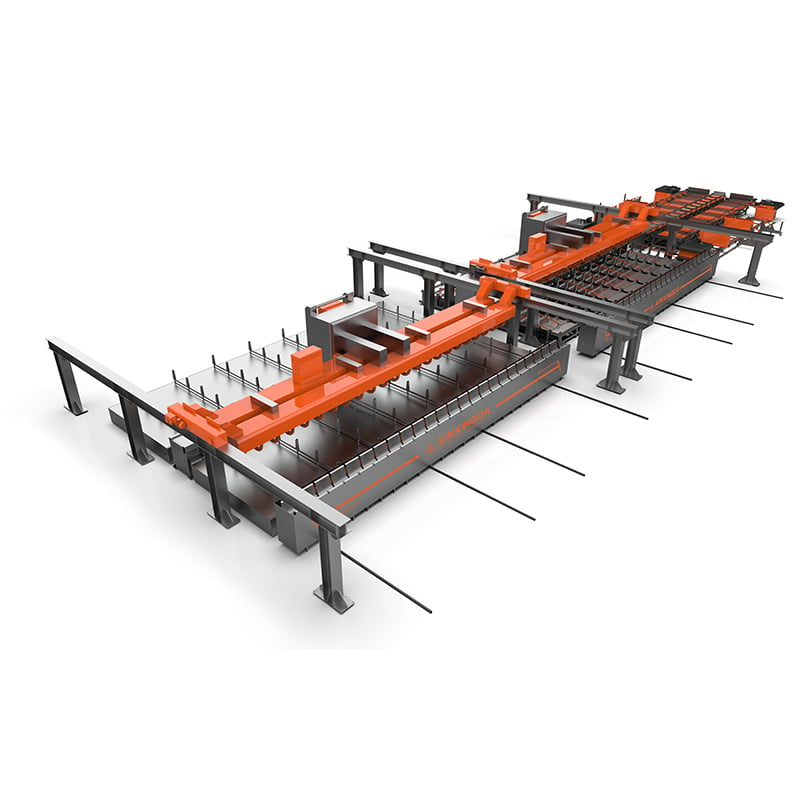
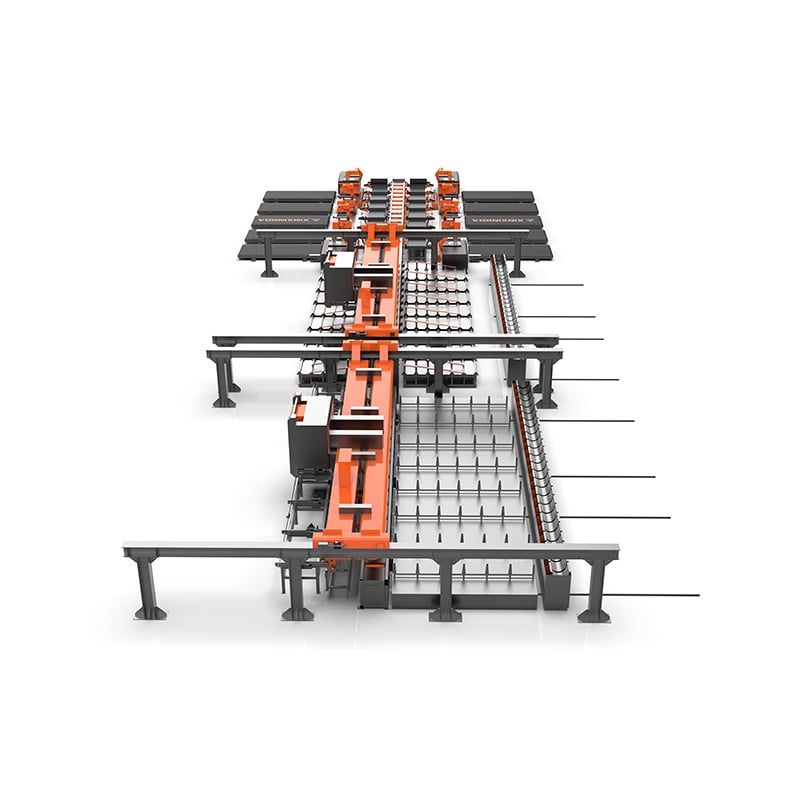
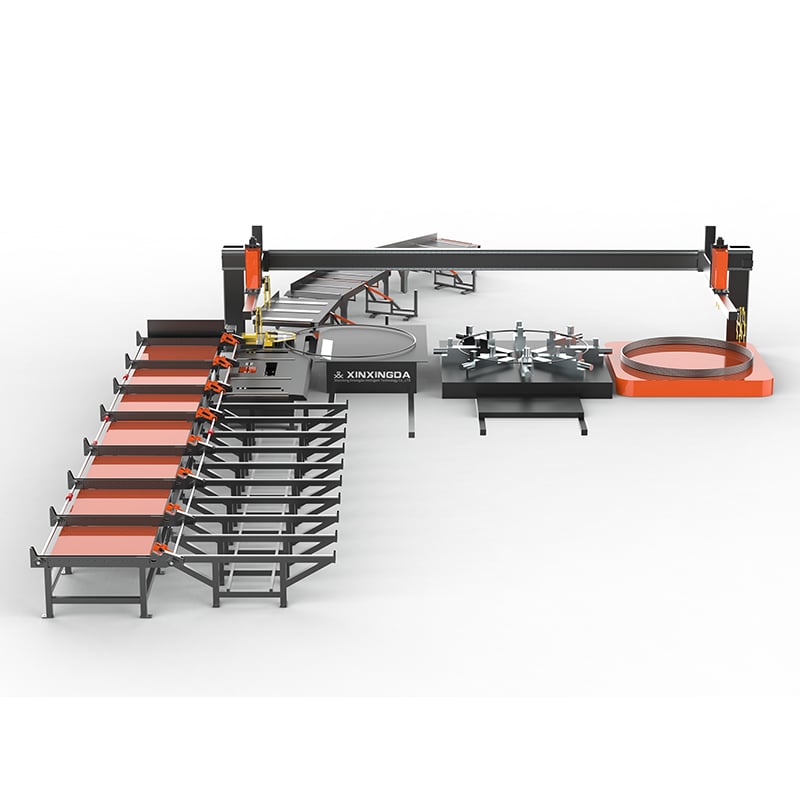
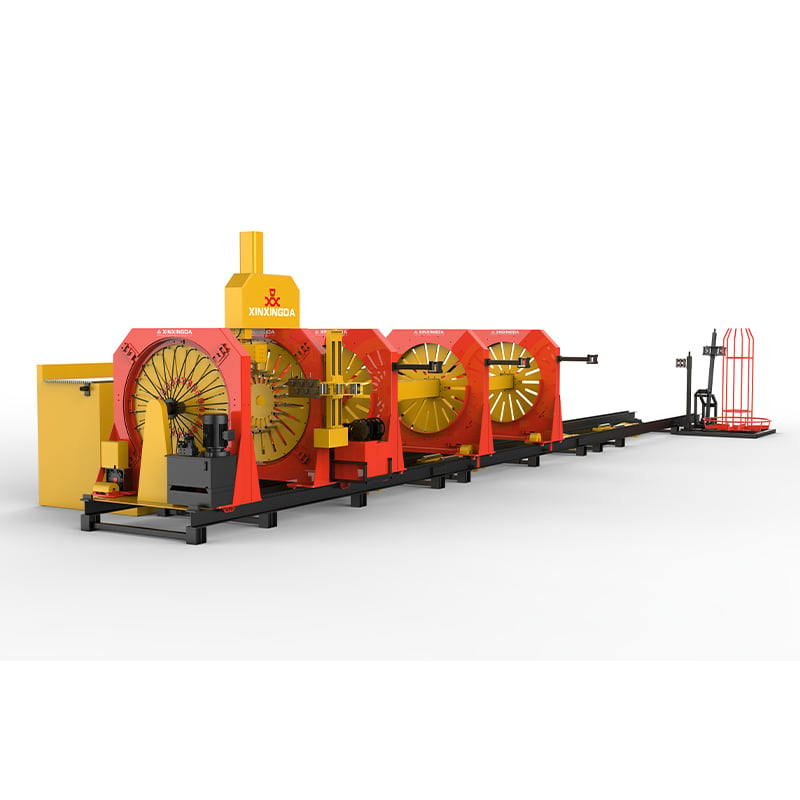
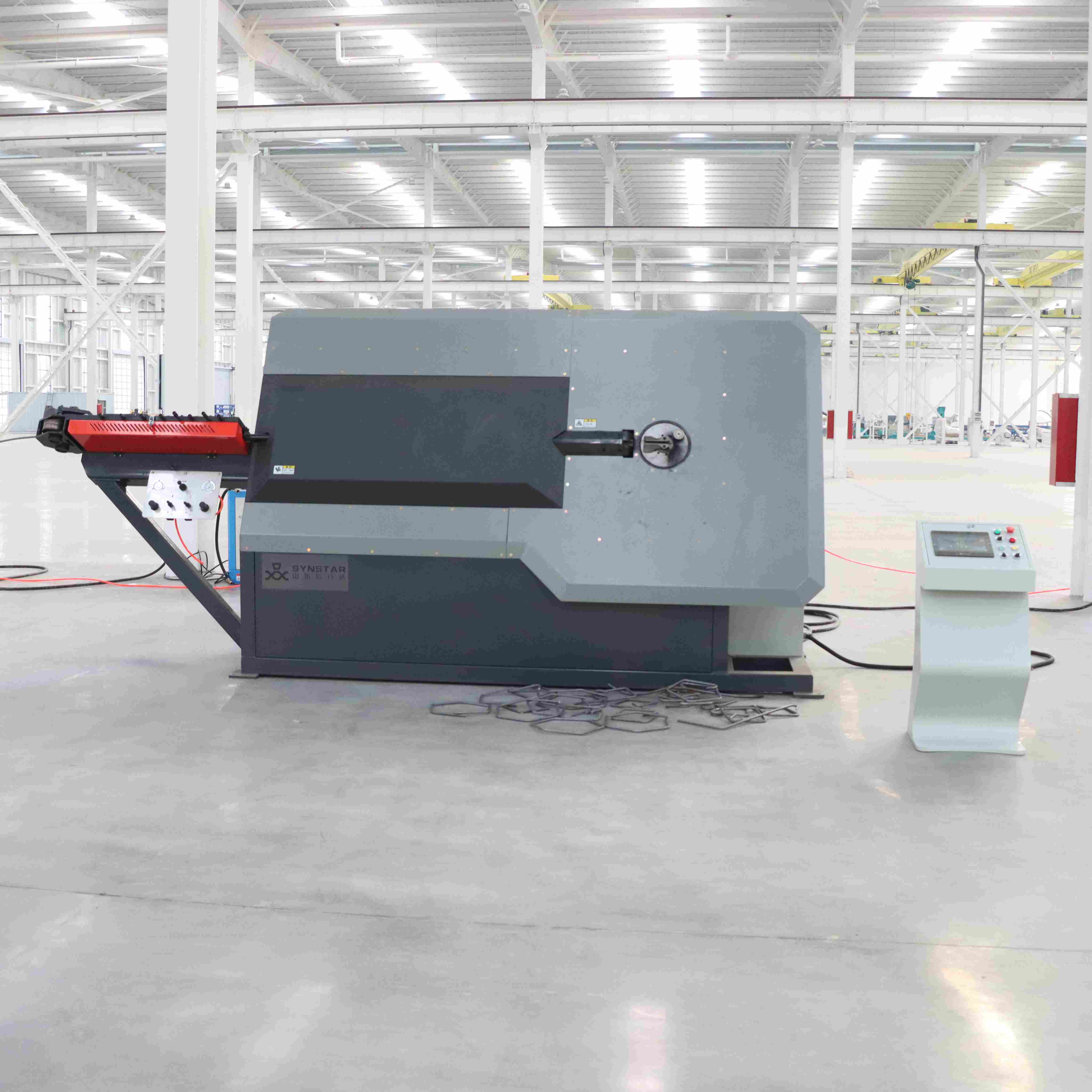
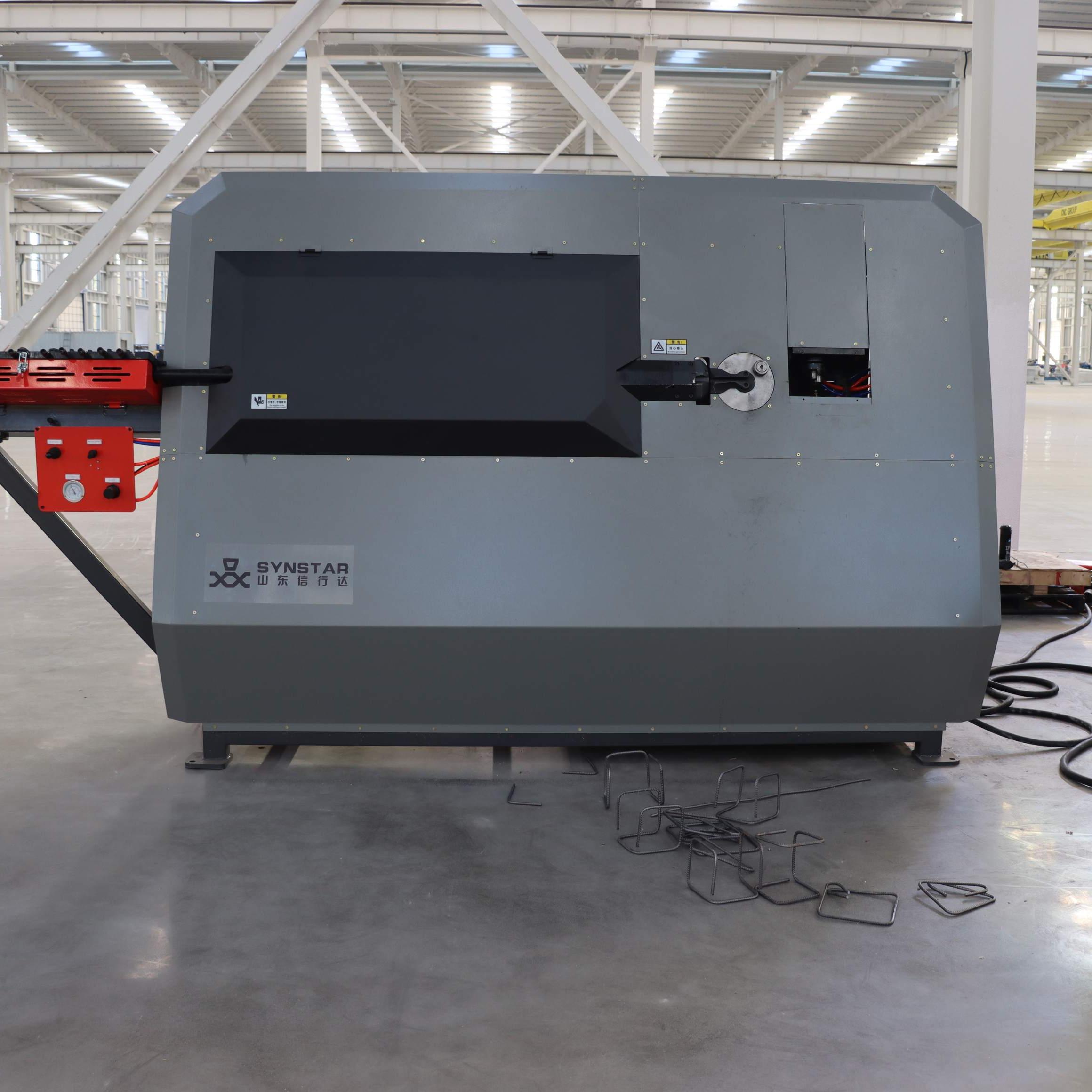
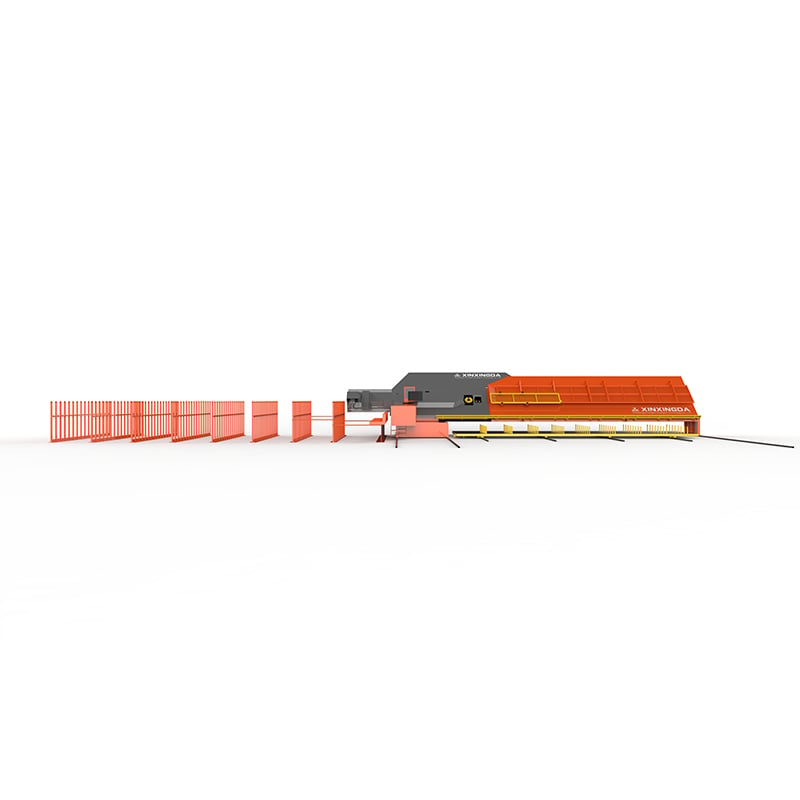
When we gaze up at a towering skyscraper or drive across a massive bridge spanning a vast chasm, we marvel at the power of human engineering. However, supporting all of this is the steel reinforcement cage, hidden within the concrete, the "skeleton" of the structure. Today, the standardized, large-scale "weaving" of these "skeletons" is performed by a silent "steel tailor"—the steel reinforcement cage rolling welding machine. Its practicality has profoundly reshaped the production logic of the modern civil engineering industry.
A Qualitative Leap from "Handicraft Workshop" to "Intelligent Factory"
Before the widespread adoption of rolling welding machines, the manufacturing of steel reinforcement cages resembled a "handicraft workshop." Workers had to fix the main reinforcing bars one by one on a fixed mold frame, then manually wrap and tighten them with wire. This process was fraught with uncertainty:
Quality Issues: Relying on the skill of the workers, inaccurate spacing, loose binding, and cage deformation were commonplace.
Efficiency Challenges: A large steel reinforcement cage required dozens of people working for several days, resulting in immense pressure on project deadlines.
Safety Concerns: The dense steel reinforcement work site presented numerous safety hazards.
The emergence of the steel reinforcement cage rolling welding machine ended all of this. It integrated a discrete, labor-intensive process into a smooth, automated production line. Coiled steel bars, like yarn on a loom, are precisely and continuously "woven" onto evenly spaced main reinforcing bars, with each weld precise and strong. This is not merely an upgrade of tools, but a shift in industrial philosophy from "construction" to "manufacturing."
A Multidimensional Perspective on Practicality: Beyond "Fast" and "Good"
Besides the obvious high efficiency and high quality, the practicality of the rolling welding machine is reflected in more dimensions:
1. The Triumph of Predictability
Modern engineering management pursues precise predictability. Through its numerical control system, the rolling welding machine transforms the product into a highly predictable "industrial manufactured product." Project managers can accurately calculate the daily output of each machine, thus precisely planning transportation, lifting, and concrete pouring schedules, greatly reducing waiting times and uncertainties at the construction site, making "lean construction" possible. 2. A Bridge to Data-Driven Processes
In the context of Industry 4.0 and intelligent construction, the rebar cage welding machine is not just a processing device, but also a data node. It can record the production parameters of each rebar cage (such as size, welding time, etc.). This data is traceable, providing irrefutable evidence for quality traceability; it can also be analyzed to optimize production processes. It is the first step for rebar processing workshops towards becoming a "transparent factory."
3. Redefining the Role of "People"
The rebar cage welding machine has not "eliminated" workers, but rather redefined their roles. Operators no longer need to perform purely manual labor, but instead require "skilled blue-collar workers" with mechanical operation, program debugging, and basic troubleshooting capabilities. This promotes the transformation and upgrading of frontline labor, attracting more young and knowledgeable talent to the industry.
4. Improved Environment and Image
A standardized processing plant using rebar cage welding machines, compared to traditional open-air rebar tying sites, is cleaner, quieter, and has less dust pollution, with materials neatly stacked. This is not only environmental protection but also a living showcase of the company's modern management level and technological strength, greatly enhancing the corporate image.
Challenges and Directions for Evolution
Of course, this "steel tailor" also faces its limitations. For example, it requires high straightness of the main and spiral rebars; it lacks flexibility when dealing with rebar cages of varying diameters or non-circular shapes; and the initial investment cost remains a barrier for small construction units.
However, technological evolution never stops. Future rebar cage welding machines are developing towards being more "intelligent" and "flexible":
Integrated Robots: Achieving automatic feeding of main and spiral rebars and automatic handling of finished products, moving towards a "lights-out factory."
Vision Inspection System: Automatically identifying welding defects, achieving 100% online quality inspection.
Modular Design: Quickly adapting to the production of rebar cages of different diameters and shapes by replacing certain components, improving equipment flexibility.
Conclusion
The practicality of the rebar cage welding machine has long surpassed the simple narrative of "machines replacing human labor." It is an efficient executor, a strict quality control officer, a precise data recorder, and a powerful engine driving the entire construction industry towards industrialization and digitalization. With its showering sparks of welding, it weaves the steel framework of the city, and with its steady roar, it announces the arrival of a new era of more efficient, safer, and more precise construction. It may be silently hidden deep within the foundations, but it is the unsung hero supporting the prosperous world beneath our feet.
 Hot News
2026-05-27
2026-05-18
2026-05-12
2026-05-08
2026-05-01
2026-04-27
Copyright © 2026 Shandong synstar Intelligent Technology Co., Ltd. All rights reserved. - Privacy Policy
 EN
EN