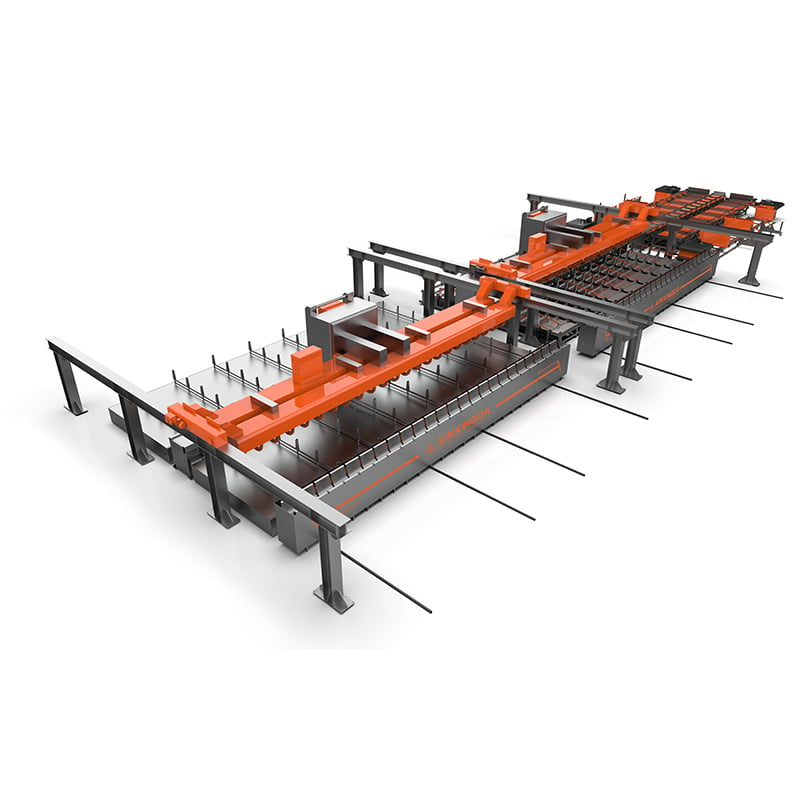
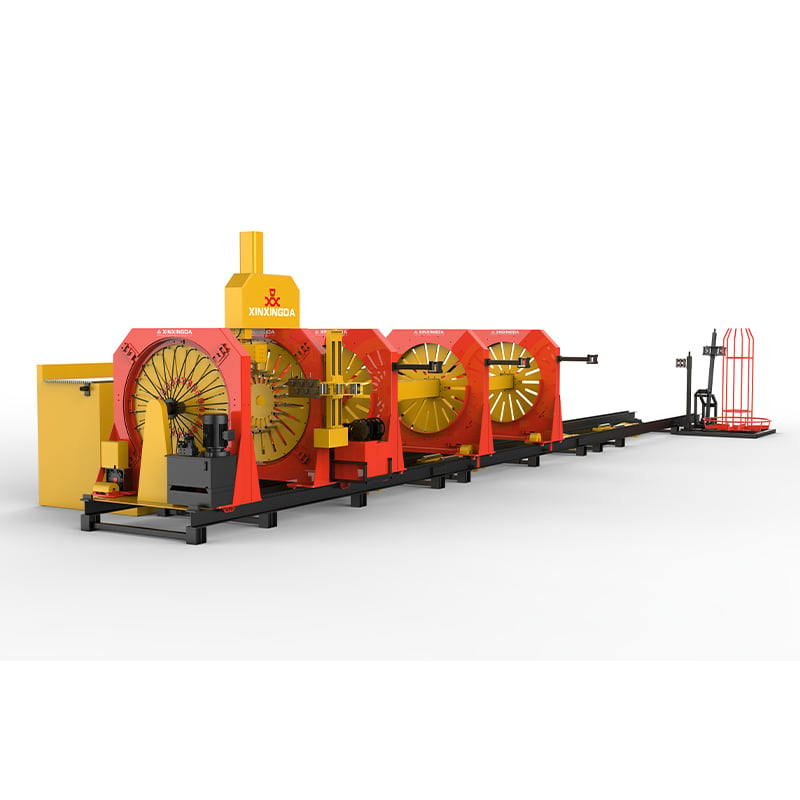
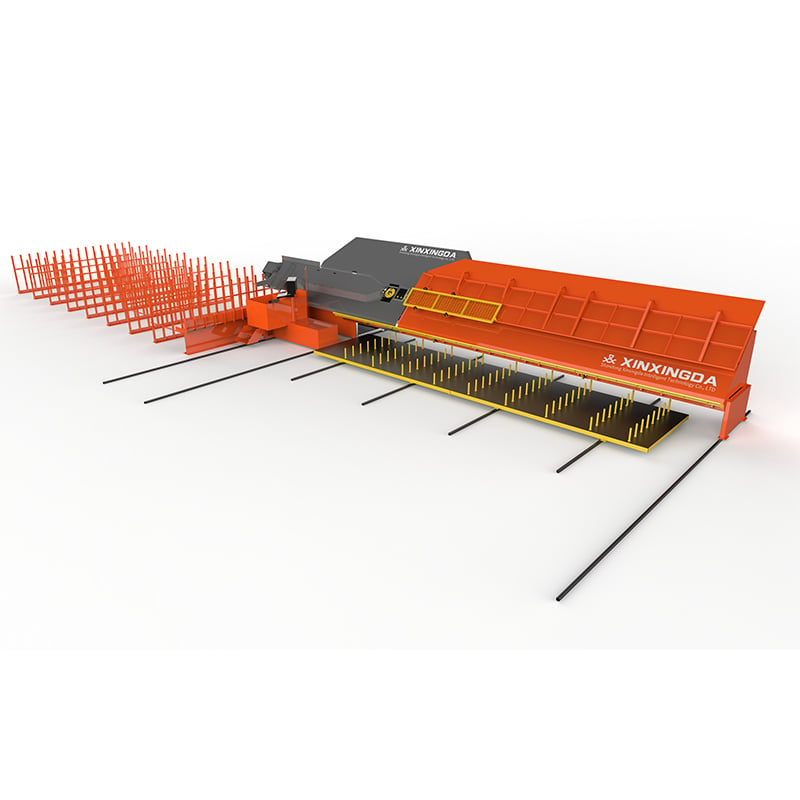
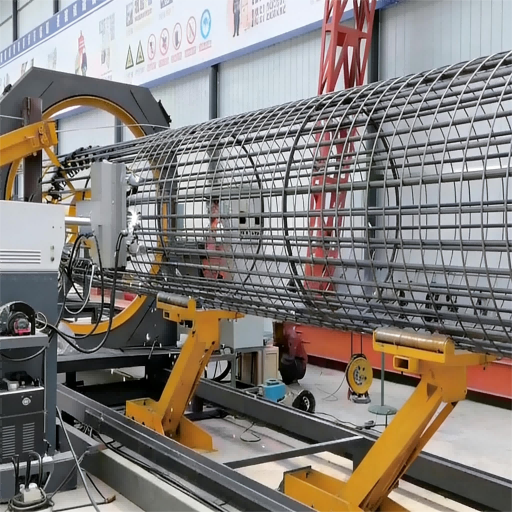
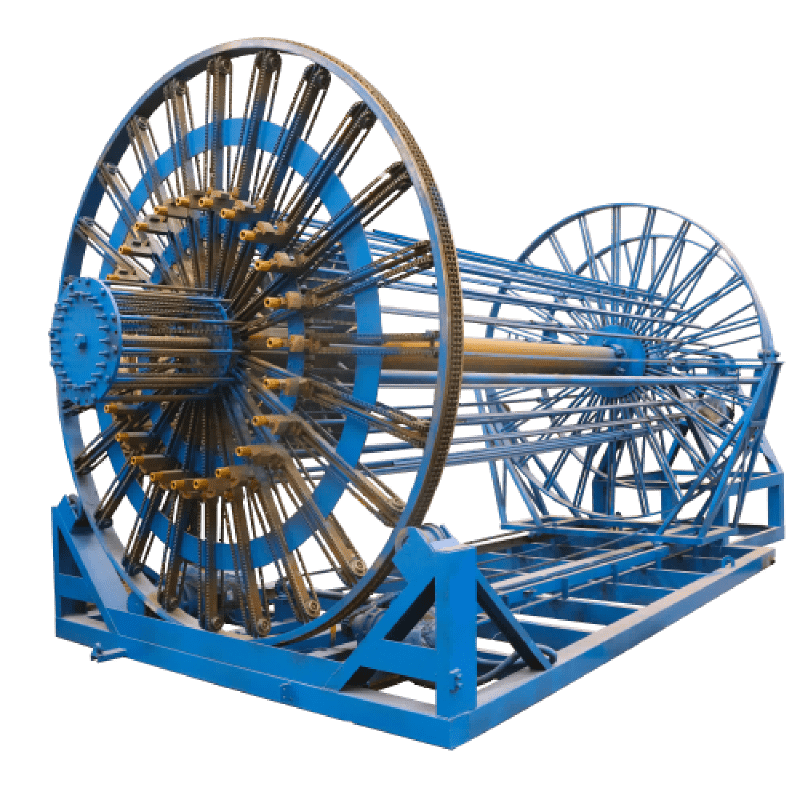
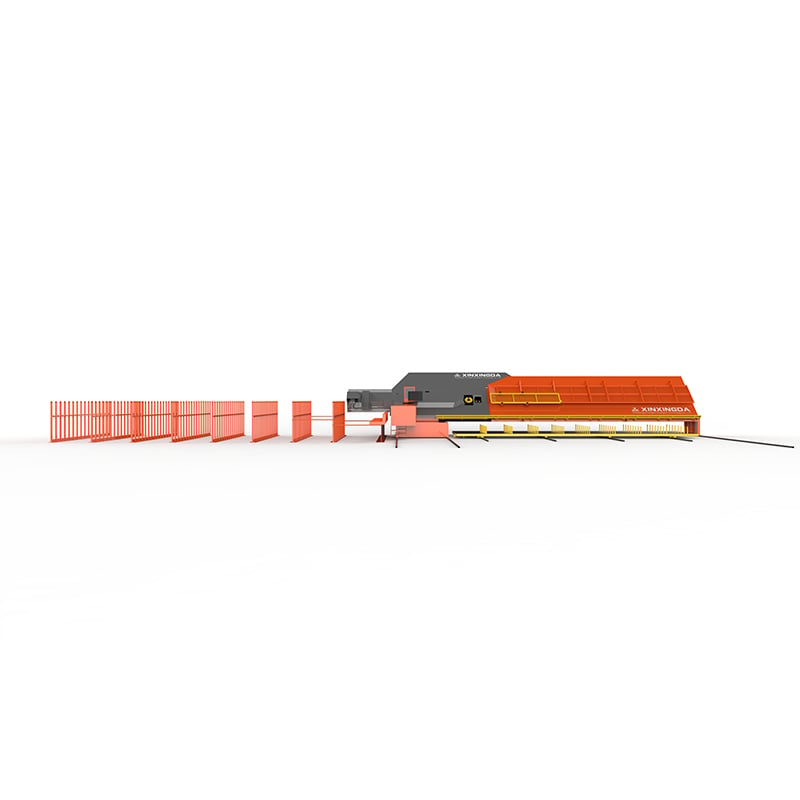
If rebar is the "bones" of a building, then the rebar bending machine, which transforms coiled or straight rebar into neatly shaped stirrups, is the ultimate shaper of these "bones." Its story is a miniature history of industrial evolution, from manual labor to electricity, from mechanics to intelligence. Today, when we delve into its intrinsic value, we find that its practicality has long surpassed the simple act of "bending rebar," profoundly impacting the process of industrialization in the construction industry.
I. Technological Evolution: The Foundation of Practicality
The practicality of the rebar bending machine is first and foremost built upon a solid foundation of continuous technological iteration.
1.0 Mechanical Era: Early bending machines relied on purely mechanical structures, such as gears and cams, to achieve bending. While this freed up some manual labor, adjusting dimensions was cumbersome, accuracy was limited, and it still heavily depended on the operator's experience.
2.0 CNC Era: This was a true revolution. The introduction of CNC systems gave the bending machine a "brain." Operators only needed to input parameters (angle, size, quantity) on the control panel, and the machine could automatically and accurately repeat the process. Accuracy and efficiency achieved a qualitative leap.
3.0 Intelligent Era: Today's high-end bending machines integrate servo motors, visual recognition, and Internet of Things technology. They can not only automatically calculate the optimal processing path to save materials but also monitor their own status in real time, predict faults, and seamlessly connect with upstream BIM design data, becoming an intelligent node in a digital factory.
Each technological leap has enriched the meaning of the bending machine's "practicality," from "being able to do it" to "doing it quickly and well," and then to "doing it intelligently and interactively."
II. Beyond Bending: A Multidimensional Analysis of Practical Value
In addition to its recognized efficiency and precision, its practicality is also reflected in more dimensions:
1. Empowering and Reshaping "People"
The bending machine does not replace workers, but rather reshapes their roles. Operators are no longer "master craftsmen" requiring extensive experience, but rather "technicians" who understand equipment principles, can program, and can perform maintenance. This lowers the entry barrier while simultaneously increasing the technical content and professional dignity of the job, cultivating a new generation of industrial workers for the construction industry. 2. Optimization and Transparency in "Management"
A single rebar bending machine is a highly efficient production unit. Its digital output (such as daily output and material loss rate) provides transparent and accurate data support for project management. Managers can clearly understand the progress of rebar processing, achieve refined material management, and make previously unquantifiable aspects clear at a glance, thus enabling more scientific decision-making.
3. Commitment to and Guarantee of "Safety"
Manual rebar bending sites, with swinging rebar and flying metal chips, are high-risk areas for safety accidents. Rebar bending machines are usually equipped with comprehensive safety guards and emergency stop devices, effectively isolating people from dangerous moving parts, fundamentally eliminating risks such as pinching and impact, and putting "safe production" into practice.
4. Agile Response to "Customization" Needs
In modern construction, irregularly shaped components are increasingly common. Whether it's spiral stirrups for curved beams or special stirrups for complex nodes, for a CNC rebar bending machine, it's just another simple program file. This "one-click switching" flexible production capability allows construction companies to calmly cope with increasingly complex design challenges.
III. Extended Scenarios: The Ubiquitous "Shaper"
Its presence is active in every scenario requiring precision and mass production:
Construction site processing center: As the core of a temporary rebar factory, directly serving the main construction.
Specialized rebar processing plant: Centralized supply of standardized stirrups for multiple projects, a typical example of construction industrialization.
Major project command center: In projects with stringent quality requirements, such as nuclear power plants and cross-sea bridges, the rebar bending machine is the best choice to ensure the consistency of component quality.
Emergency rescue and rapid deployment: In post-disaster reconstruction or military engineering, the ability to quickly produce a large number of standard components is crucial.
IV. Future Outlook: Integrating into the "Cloud" of the Industrial Internet
In the future, rebar bending machines will no longer be information islands. By connecting to the industrial internet platform, they can:
Receive cloud-based orders: Designers' drawings are directly converted into processing instructions through the cloud platform and sent to the workshop equipment.
Achieve predictive maintenance: Cloud-based analysis of operating data provides early warnings before component damage, allowing for scheduled maintenance.
Optimize production scheduling: Multiple devices work collaboratively in the cloud to achieve global efficiency optimization. Conclusion
The rebar bending machine, seemingly a cold steel box, is in fact a modern engineering tool full of intelligence and power. Its practicality is a dynamically evolving concept, progressing from the most basic "force substitution" to today's efficiency engine, embodiment of precision, management tool, and safety guardian. It works silently but steadily and precisely, constructing the most solid lifelines for every landmark of our time. Investing in it means investing in efficiency, quality, and a smarter, safer future for construction.
 Hot News
2026-05-27
2026-05-18
2026-05-12
2026-05-08
2026-05-01
2026-04-27
Copyright © 2026 Shandong synstar Intelligent Technology Co., Ltd. All rights reserved. - Privacy Policy
 EN
EN