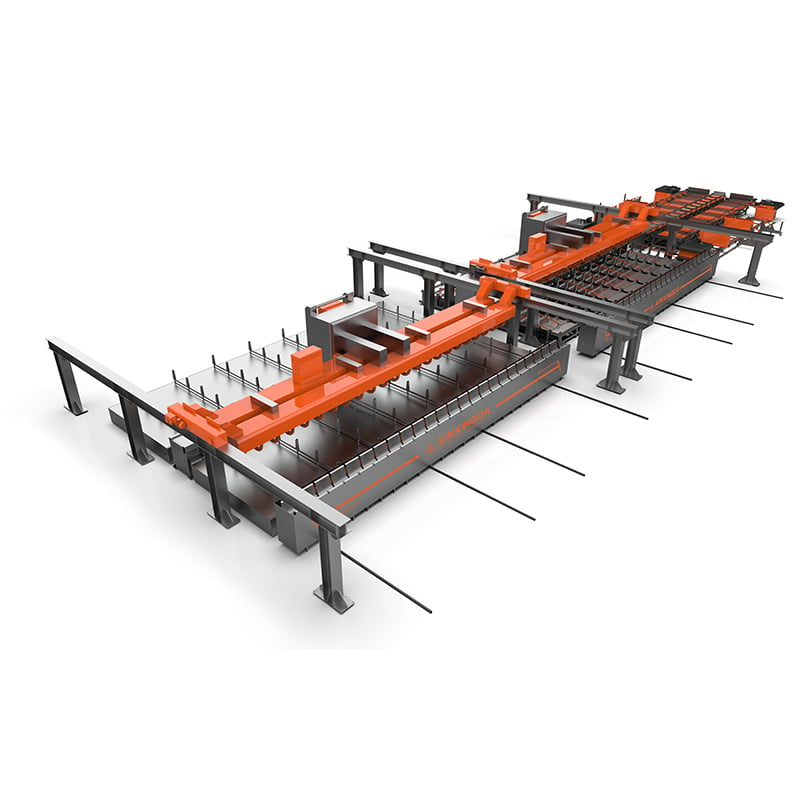
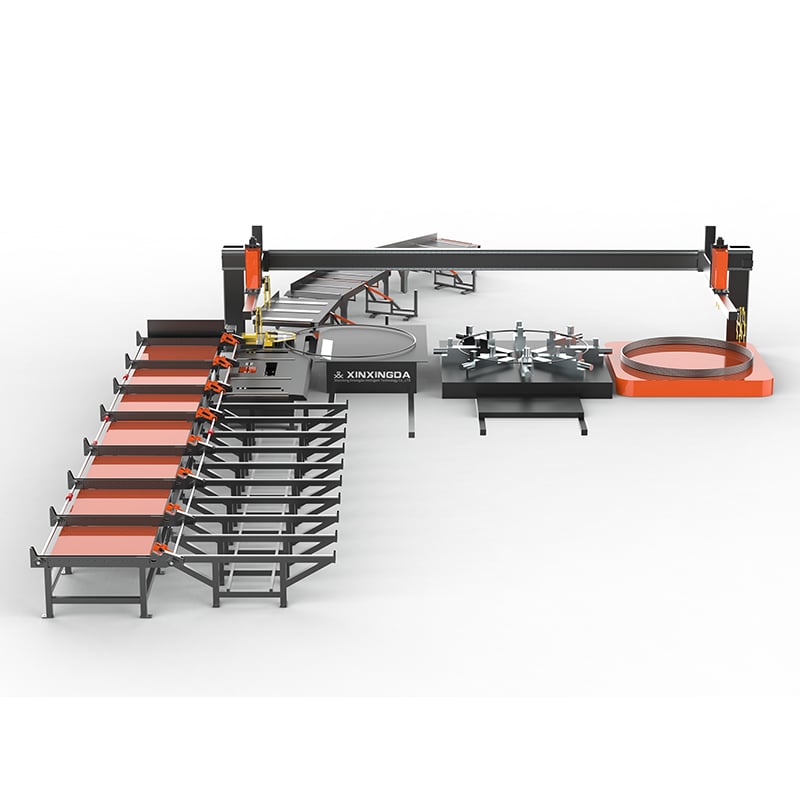
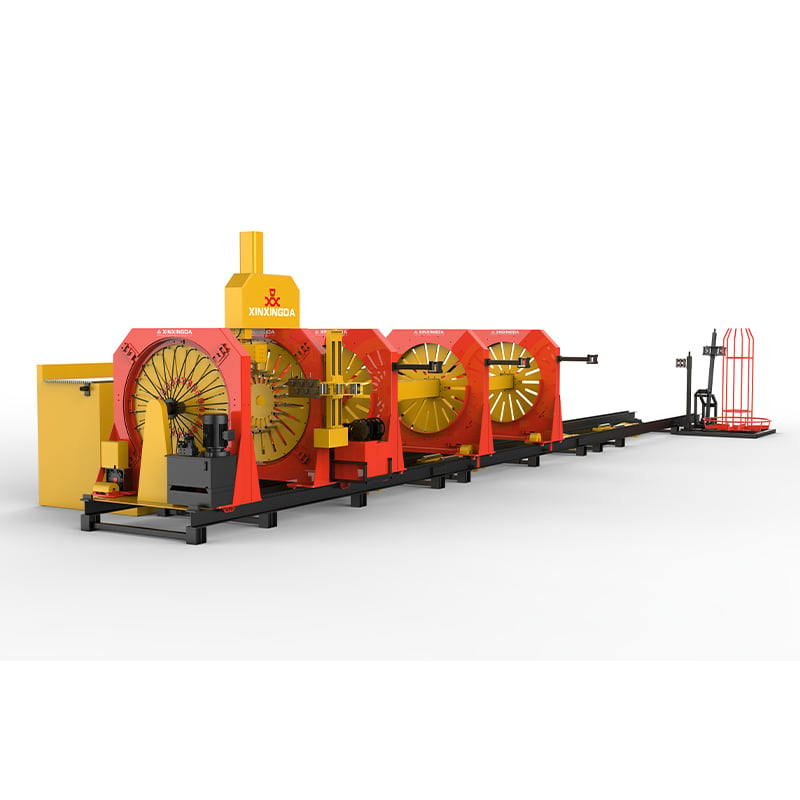
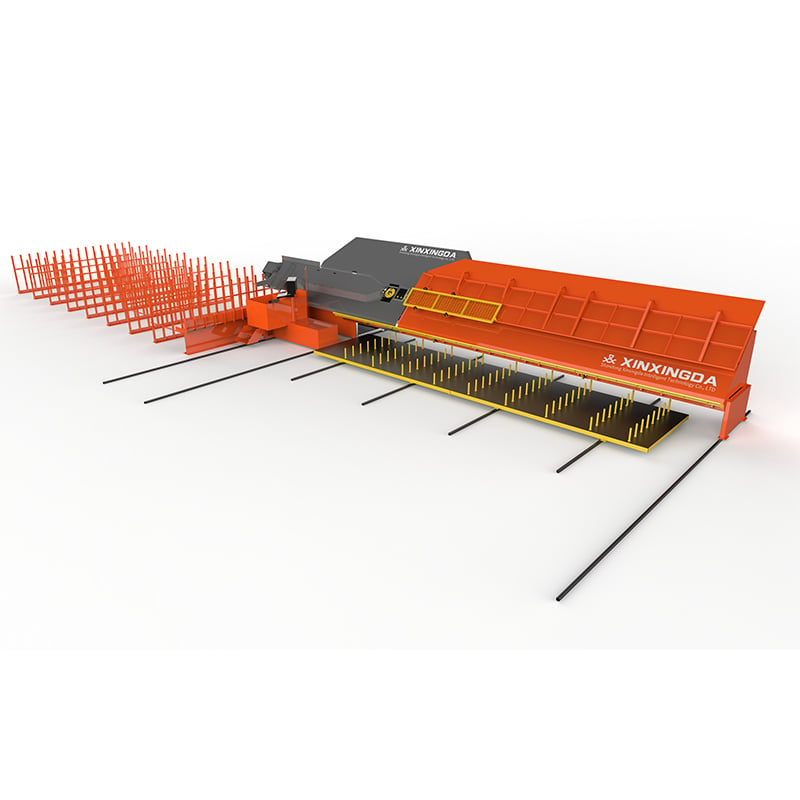
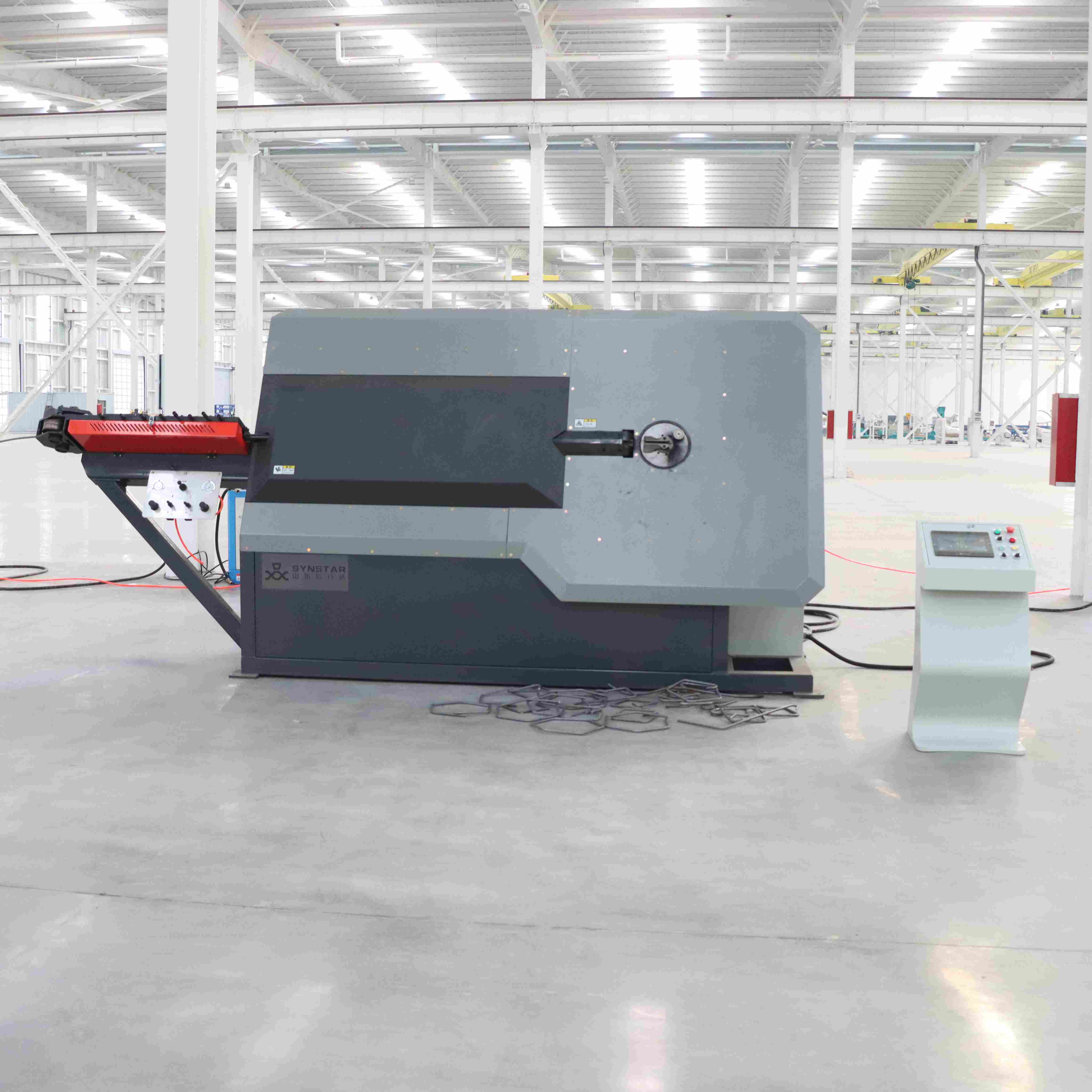
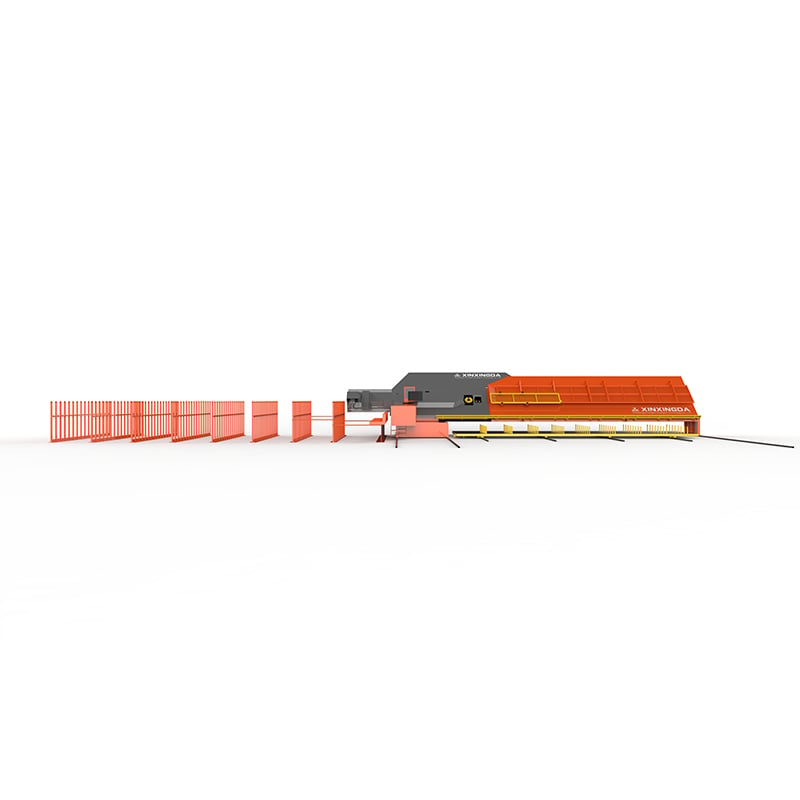
With the soaring demand for precision, high efficiency, automation, and intelligent manufacturing in the processing and manufacturing industry, traditional sheet metal bending or pipe bending equipment is increasingly unable to meet the complex and demanding processing tasks. Horizontal bending centers, as a highly integrated and intelligent advanced bending processing solution, are becoming a core piece of equipment in modern high-efficiency production lines due to their exceptional overall performance, driving the innovation direction of bending processing technology.
I. What is a Horizontal Bending Center? A horizontal bending center is a comprehensive processing module that integrates a multi-axis CNC machine tool, an automatic feeding mechanism (often a robotic arm or servo-driven feeding system), a high-rigidity horizontal main machine structure, and a multi-functional tool library. It generally uses bending methods such as mandrel bending (for thin tubes to prevent deformation) or vacuum forming (for aluminum profiles, thick-walled steel pipes, and plates), and under the control of computer language, it achieves automatic and continuous processing of workpieces from production to complex bent finished products. Its "horizontal" layout, where the main spindle and the working plane are perpendicular, provides it with many inherent advantages.
II. Unique Advantages of Horizontal Bending Centers Compared with vertical equipment and traditional single-machine versions, the advantages of horizontal bending centers are reflected in processing performance, manufacturing efficiency, operation and maintenance, and long-term value:
1. Excellent Processing Precision and Reliability
Rigid Foundation: The horizontal structure naturally has the characteristics of a low center of gravity and a large support surface, resulting in excellent overall machine rigidity and vibration resistance. When subjected to large bending torques, deformation is almost zero, providing a solid physical foundation for high repeatability (reaching ±0.1° or higher).
Reliability Assurance: The horizontal working plane makes the loading and positioning of workpieces and molds safer and more reliable, effectively reducing displacement or vibration caused by gravity, making it very suitable for continuous, multi-bend processing of long workpieces, ensuring dimensional consistency within the entire length range. Precise Control: The combination of high-resolution AC servo motors, linear guides, and excellent CNC machine tools allows for precise closed-loop control of data such as bending angle, rotation direction, and feeding distance, truly enabling the programming and processing of complex spatial curves (such as automobile mufflers, furniture frames, and aerospace hoses).
2. Extremely High Production Efficiency and Automation Level
Continuous Operation: The integrated automatic feeding system enables automatic retrieval, positioning, processing, and unloading of round bars, pipes, or pre-cut blanks, achieving intelligent continuous production and significantly reducing manual control and loading/unloading time.
Stamping Automation: Equipped with a multi-axis mold library or quick-change system, when changing processed products, the corresponding bending molds, clamping blocks, and mandrels can be automatically activated through the program, shortening the changeover time from hours on previous machines to minutes, greatly improving equipment utilization and adapting to the intelligent production requirements of small batch production and multiple products.
Synchronized Movement: Advanced CNC machine tools can centrally control the movements of various axes such as bending, feeding, rotation, and clamping, allowing for simultaneous execution of some processes and further compressing the processing cycle of individual parts.
3. Excellent Space Utilization and Material Adaptability
Compact and Efficient Layout: The horizontal feeding method allows long materials to be fed from the rear or side of the product, providing flexible feeding direction and making it easy to integrate linearly with upstream and downstream automated production lines (such as laser cutting, material warehousing systems, and welding workstations), optimizing the overall workshop logistics layout.
Strong Long Material Handling Capability: For longer pipes or profiles, the horizontal layout combined with servo motor feeding provides more convenient and stable support, effectively preventing sagging and shaking, which is difficult to achieve with vertical equipment.
Strong Material Adaptability: From non-ferrous metals (aluminum, copper) to light metals (carbon steel, stainless steel), from round pipes and square pipes to various plastic profiles, and even solid round bars and hot-rolled strips, by changing molds and optimizing process parameters, one horizontal bending center can often cover the processing requirements of multiple materials. 4. User-Friendly Operation and Maintenance
User-friendly industrial touchscreen: The operating platform is typically located on the front of the machine, conforming to ergonomic principles. Programming can be done using graphical interface offline programming software or teach pendant programming, making it intuitive and simple.
Facilitates observation and debugging: The horizontal working area offers excellent visibility, allowing operators to clearly observe the entire bending process and die engagement, facilitating initial sample debugging and process monitoring.
Convenient maintenance: Key mechanical components and parts are easily accessible, making routine maintenance and preventive maintenance more convenient and reducing long-term operating costs.
5. Improving Overall Economic Efficiency and Competitiveness
Reduced production costs: Although the initial investment is relatively high, significant returns on investment are achieved over the project lifecycle through labor savings, reduced defect rates, improved overall equipment effectiveness (OEE), and reduced delivery times.
Ensured product quality consistency: Intelligent manufacturing eliminates quality fluctuations caused by human factors, ensuring that every product meets design specifications and enhancing industry reputation.
Innovative design capabilities: Allows engineers to confidently utilize more complex, lightweight, or functionally integrated bending designs, freeing them from the constraints of traditional processing methods and improving the competitiveness of end products.
III. In summary, the horizontal bending center is not just a simple bending machine; it represents a high-precision, high-efficiency, highly flexible, and highly automated intelligent manufacturing module. Its main advantage lies in the perfect combination of stable mechanical structure design, accurate CNC machining technology, and seamless integration of automation technology, completely revolutionizing the bending process. In the era of Industry 4.0 and intelligent manufacturing, choosing a horizontal bending center is not only a crucial choice for upgrading key process equipment, but also a strategic investment for the future, building a flexible, efficient, and high-quality manufacturing system, and gaining a leading position in market competition.
 Hot News
2026-05-27
2026-05-18
2026-05-12
2026-05-08
2026-05-01
2026-04-27
Copyright © 2026 Shandong synstar Intelligent Technology Co., Ltd. All rights reserved. - Privacy Policy
 EN
EN