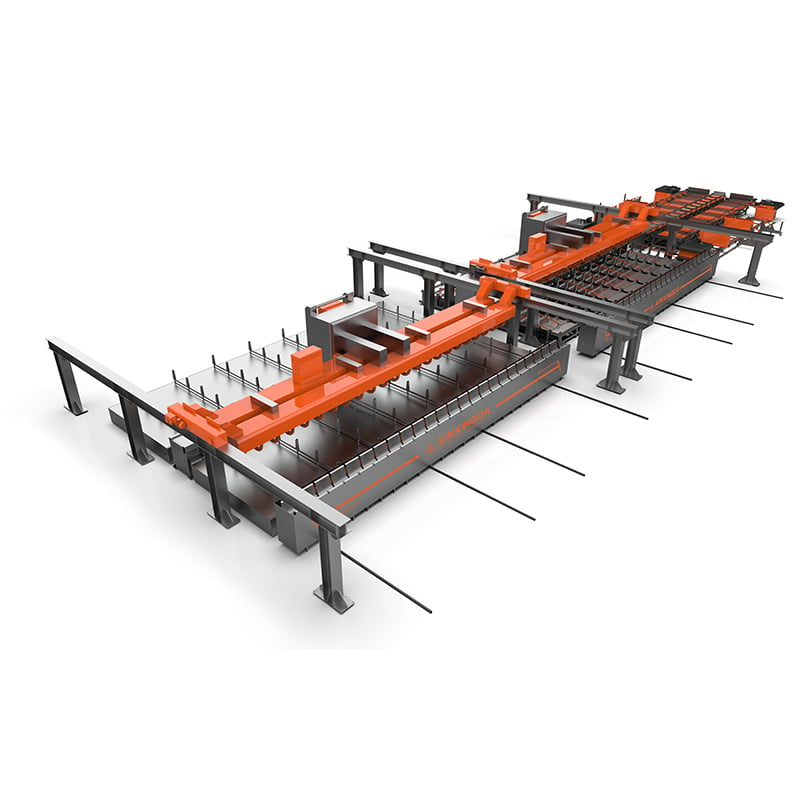
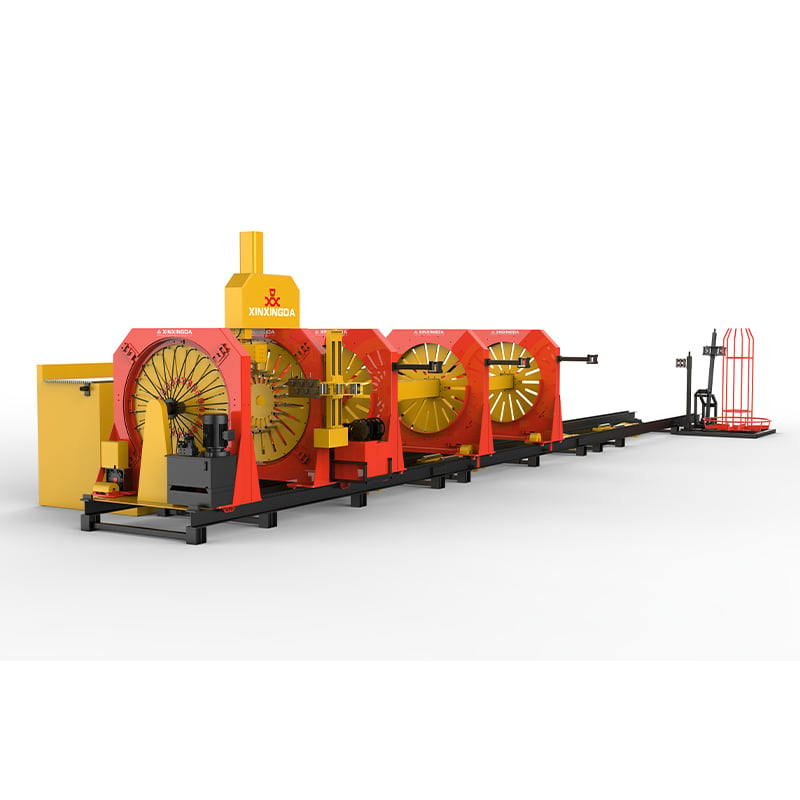
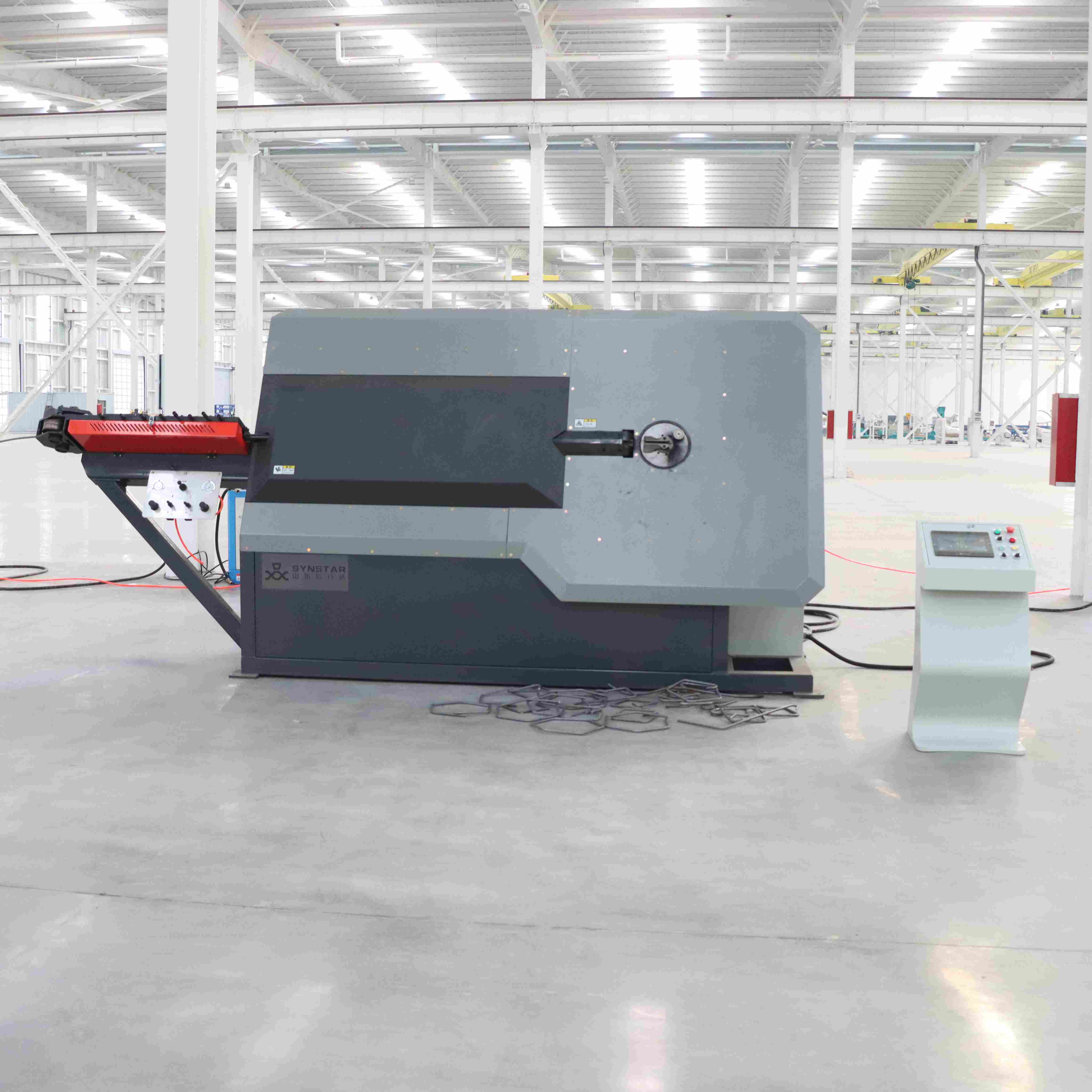
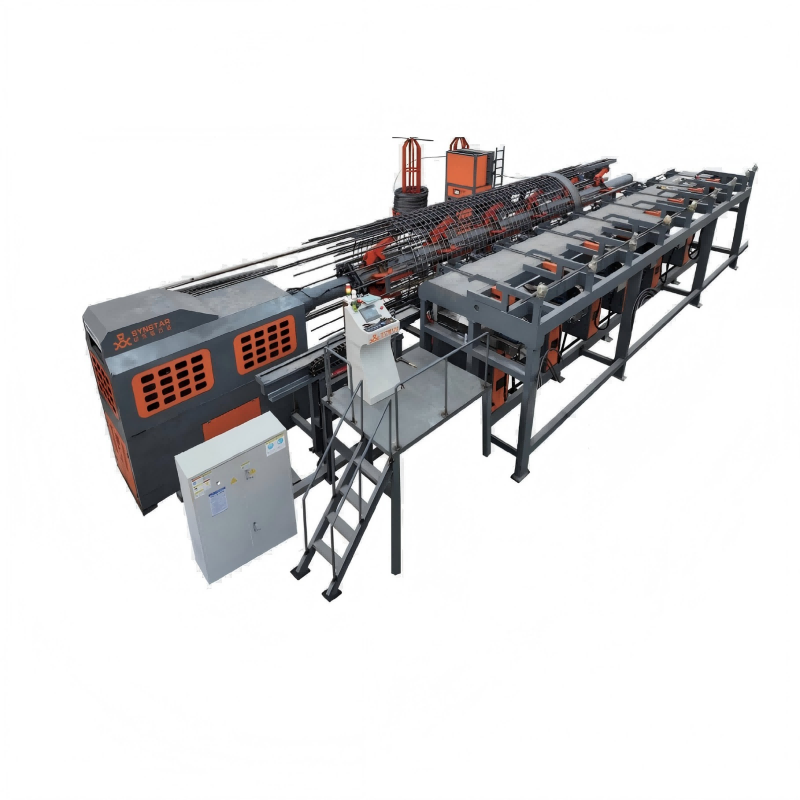
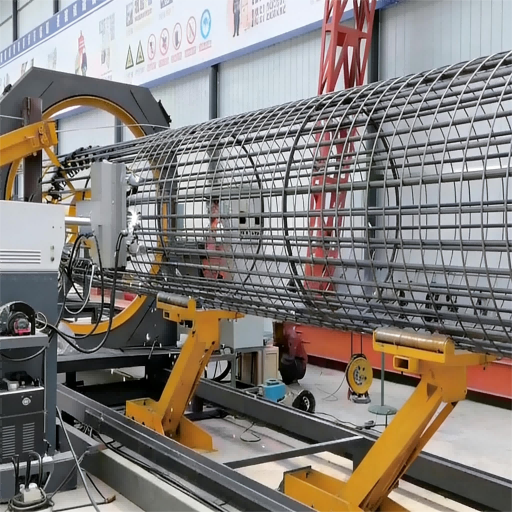
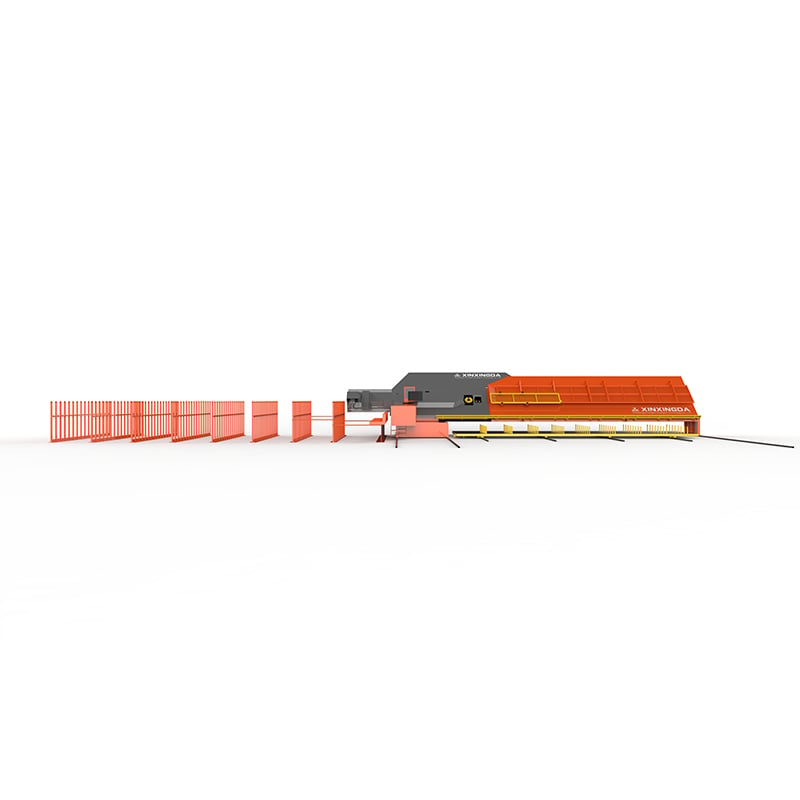
In the grand symphony of modern infrastructure construction, concrete structures form the robust skeleton of a building. The rebar cage, as a crucial main artery within this skeleton, directly impacts the project's vitality through its quality and efficiency. While the traditional method of manually binding rebar cages embodies ingenuity, it is increasingly unable to meet the demands of today's large-scale, standardized, and fast-paced construction. This is where rebar cage welding machines, with their groundbreaking automated production process, stand out, becoming a key tool for improving construction quality and efficiency. Below, we will delve into the applicable scenarios of these two "mechanical mesh weavers," revealing in which fields they can maximize their effectiveness.
I. Rebar Cage Welding Machine: Overview of Principles and Core Competitive Advantages
The rebar cage welding machine is a specialized piece of equipment controlled by a computer system, automatically performing precise positioning of the main beam reinforcement, transport of the winding reinforcement, and electric welding to form cylindrical or square rebar cages in one operation. Its main advantages are:
Superior quality and efficiency: Intelligent production ensures uniform rebar spacing and consistent, strong welds, resulting in quality far exceeding that of manual labor. Each machine can achieve a daily output efficiency dozens of times that of a manual team.
Significant cost management: Significantly reduces reliance on skilled welders, decreasing human resources and economic costs; extremely low material wastage rate, and consistent weld quality also reduces later-stage safety hazards and maintenance costs.
Highly controllable and flexible: Adjustable to different cage diameters, lengths, and stirrup standards, allowing for convenient and quick specification changes.
Improved construction environment: Frees workers from physically demanding and risky tasks, aligning with current construction safety and human-centered principles.
These very characteristics give it irreplaceable value in specific scenarios.
II. In-depth analysis of key application scenarios
The value of rebar cage welding machines is not universally applicable; they can achieve maximum efficiency in the following scenarios:
1. Large-scale standardized foundation pile engineering: This is an industry where welding machines are highly dominant. Whether it's the subsea piles for undersea tunnels, the giant foundation piles for wind power projects, or the concentrated bridge piles along high-speed rail lines, countless steel cages of relatively uniform specifications are typically required. Roll welding machines, like printing presses, can perform continuous, stable, and batch production, ensuring the uniformity of the foundation quality throughout the entire project and meeting stringent schedule targets. For example, in the construction of various wind power industrial parks, where hundreds of foundation piles are required, a roll welding machine production line is a crucial prerequisite for ensuring the project progresses on schedule.
2. Urban Underground Space Development and Foundation Pit Support: With the deepening development of urban rail transit, underground integrated pipe corridors, and underground commercial complexes, the support piles (row piles) and longitudinal load-bearing piles used extensively in foundation pit support have very high requirements for the strength, precision, and supply rate of steel cages. High-quality cages manufactured by roll welding machines ensure the reliability of the foundation pit support system. Meanwhile, in large cities, new project sites are often cramped and environmental regulations are stringent. Centralized prefabrication of components in a factory using roller welding machines, followed by on-site lifting, significantly reduces on-site workspace occupation, noise, and dust hazards, achieving green construction.
3. Long-distance water diversion tunnels, water pipes, and nuclear power plant circulating water pipes, as well as other linear infrastructure projects such as water conservancy and energy projects, require numerous large-diameter, ultra-long shield tunnel steel reinforcement cages or waterproof casing steel cages. Manual fabrication of such ultra-large cages is difficult, lacks precision, and poses safety hazards. Roller welding machines, using two-stage synchronous welding or medium-length production methods, can accurately and efficiently complete the forming of these "elite" structures, ensuring the structural integrity of these utilities.
4. Projects with special or extremely high requirements for steel cage quality: In some harsh environments, every weld point and structural dimension of the steel cage is crucial. For example:
In areas with strong seismic fortification requirements: uniform spacing and robust welding effectively improve structural ductility and energy dissipation capacity.
Corrosive natural environments (e.g., coastal areas, saline-alkali soil): Precise concrete reinforcement protective layers rely on the uniform appearance design of the reinforcement cage, which the roll welding machine product can thus provide the ultimate foundation for.
Adopting new technologies and projects: Reinforcement cages used in conjunction with "pile bottom grouting technology" require pre-embedded high-precision sleeve pipes. The neat cages manufactured by the roll welding machine facilitate the precise layout and fixation of the pipes.
III. Considerations on the Limitations of Rationality and Applicable Scope
Although the advantages are prominent, the use of the reinforcement cage roll welding machine also needs to be objectively assessed for its limitations:
Construction scale and bill of quantities: For small projects, sporadic projects, or projects with a very small total requirement for reinforcement cages, the dismantling and adjustment costs of the machine may diminish its advantages. Generally, there is a "critical bill of quantities"; beyond this scale, the rationality of using the roll welding machine becomes apparent.
Diversity of reinforcement cage models: Although adjustable, frequently changing to completely different apertures and stirrup methods (e.g., from a cylindrical cage with a constant cross-section to a square cage with a variable cross-section) will still incur adjustment time and costs. This technology is best suited for daily tasks with relatively uniform specifications and mass production.
On-site standards and supply chain: If the project is located in an extremely remote area, transportation facilities cannot support the weight of long cages, or there are abundant cheap labor resources and a relatively flexible construction period on site, a comprehensive assessment is required. Large-scale prefabricated components also require mature delivery and on-site safe construction solutions.
IV. Future Development Trends: Moving Towards a More Intelligent Integration
With the rapid development of intelligent construction, rebar cage welding machines are closely integrating with BIM technology and the Internet of Things (IoT). In the future, modular design parameters can directly drive production lines, achieving seamless integration of "design-manufacturing"; each rebar cage can have a "digital ID card," recording all its operational data, enabling quality project lifecycle traceability. Its application scenarios will expand from simple production processes to the very foundation of the entire intelligent engineering management chain.
Conclusion
The rebar cage welding machine is not a panacea, but it accurately addresses the fundamental needs of "industrialization, standardization, high quality, and high efficiency" in the construction process of this era. In scenarios where reliable and precise industrial production is essential for laying a solid foundation—whether it's constructing windows across natural barriers, building tunnels deep into rock layers, or supporting wind turbine foundations for clean energy—these two silent "mechanical mesh weavers" are weaving a robust framework for a new era of civilization with their steady and powerful rhythm, becoming an undisputed "gold medal" in the hands of builders. Wise project managers understand that in the right context, unleashing this powerful tool will yield comprehensive victories in terms of quality, cost, and time.
 Hot News
2026-05-27
2026-05-18
2026-05-12
2026-05-08
2026-05-01
2026-04-27
Copyright © 2026 Shandong synstar Intelligent Technology Co., Ltd. All rights reserved. - Privacy Policy
 EN
EN