In manufacturing investment decisions, cost is never an isolated figure but rather a comprehensive reflection of a series of technical choices, market positioning, and strategic planning. For a bar deep processing center, the composition and level of its construction investment essentially reflect the investor's systematic consideration of processing depth, production capacity scale, quality standards, and sustainable development capabilities. By setting aside specific price tags and re-examining this issue from the perspective of constituent elements and influencing factors, it may provide industry investors with a more universal analytical framework.
I. Four-Dimensional Decomposition of Cost Composition
The construction investment of any bar deep processing center can be disassembled from four dimensions: hardware, software, space, and environment.
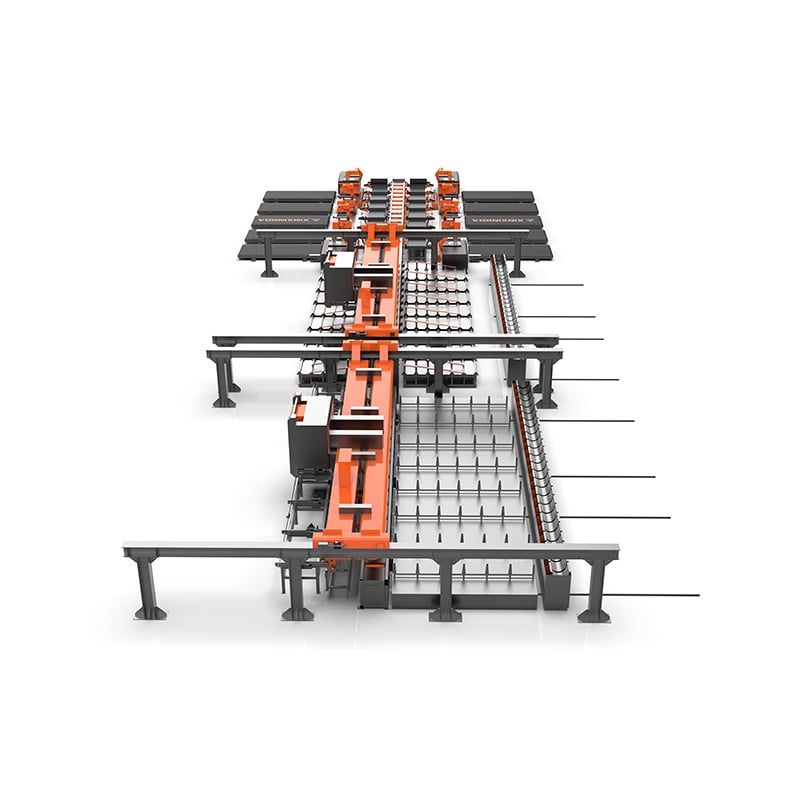
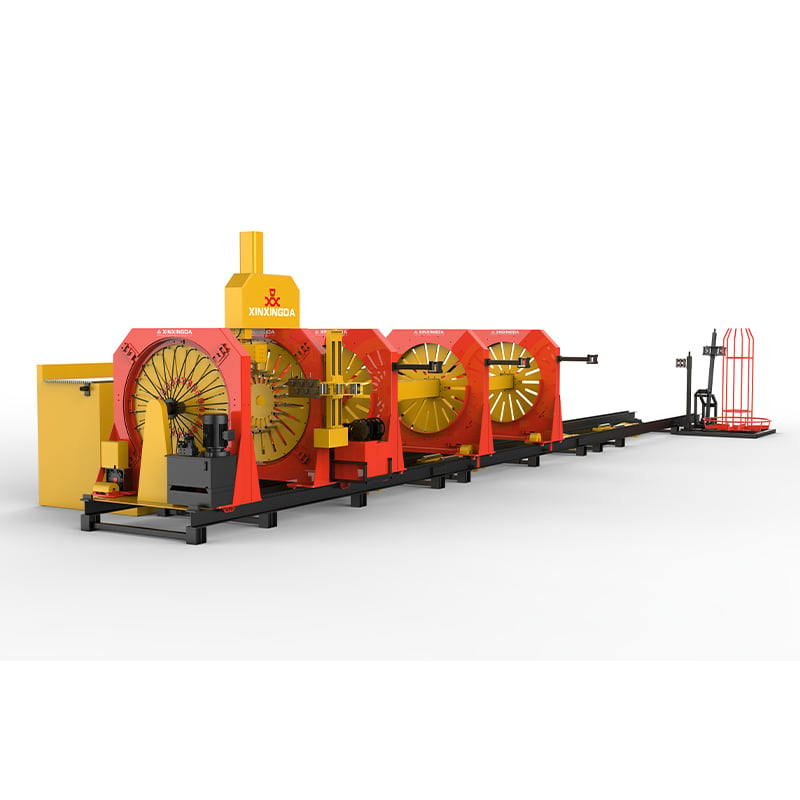
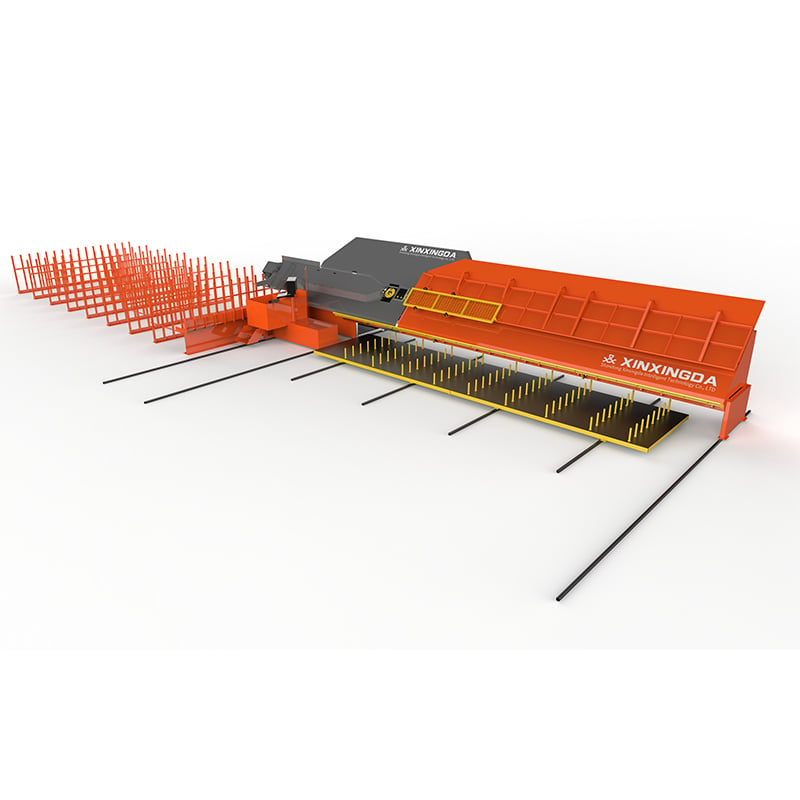
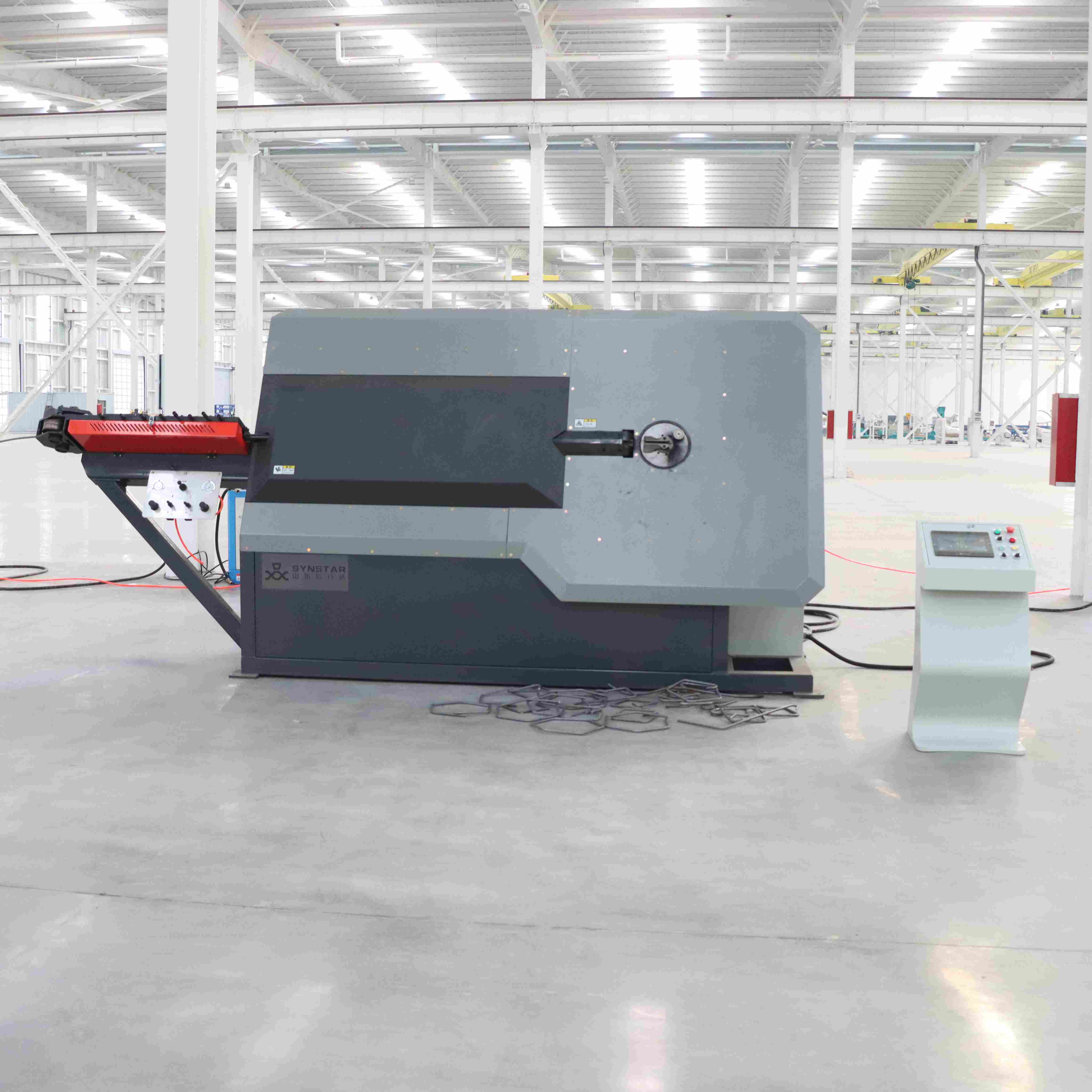
The hardware dimension is the most intuitive part of the cost structure, covering the entire equipment system from raw material processing to finished product output. This dimension can be further divided into three major sections: the first is smelting and casting equipment, including various heating furnaces, smelting furnaces and casting machines, which determine the initial quality of the materials; the second is forming and processing equipment, such as rolling mills, extruders, forging machines and various cutting processing centers, which form the core framework of the production line; the third is finishing and treatment equipment, including heat treatment furnace clusters, straightening machines, surface treatment lines and automated inspection devices, which directly affect the performance and added value of the final product. The breadth and depth of hardware configuration directly determine the technical level and product positioning of the processing center.
The software dimension is manifested as the "brain" and "nerves" of production and operation. This encompasses not only digital tools such as industrial control software and manufacturing execution systems, but also technical know-how including process packages, operation norms, and inspection standards. In the era of intelligent manufacturing, the weight of software investment in the overall cost is continuously increasing. It not only affects production efficiency but also determines the stability and traceability of product quality.
The spatial dimension is manifested as the physical carrier that accommodates all production activities. The selection of land resources (location, area, geological conditions) and the design of factory facilities (span, load-bearing capacity, lighting, logistics flow lines) together constitute the core content of this dimension. It is worth noting that the spatial dimension is not merely a simple container; whether its planning is scientific directly affects the logistics efficiency and expansion potential of subsequent operations.
The environmental dimension has increasingly become an unavoidable cost component in modern manufacturing. The investment in environmental protection facilities such as wastewater treatment systems, exhaust gas purification devices, solid waste temporary storage facilities, and noise isolation measures has shifted from being optional to mandatory. This dimension not only concerns compliance but also reflects a company's commitment to sustainable development and its sense of social responsibility.
II. Core Variables Affecting Project Cost
Under the same dimensional framework, the cost differences among different projects stem from the combination and selection of several key variables.
The depth of processing is the primary variable. The equipment level and process complexity required for rough processing and fine processing are significantly different. The cost structure of simple sawing and straightening is incomparable to that of a complete "smelting + forming + heat treatment + surface treatment" industrial chain. Each increase in the level of processing depth often means an expansion of the equipment system and a leap in process difficulty.
The properties of materials determine the particularity of the process path and equipment selection. Different materials such as common carbon steel, alloy steel, stainless steel, aluminum alloy, and titanium alloy, due to their essential differences in melting point, strength, and chemical activity, have completely different processing temperatures, deformation resistance, and environmental requirements. The higher the value of the material and the greater the processing difficulty, the more stringent the requirements for equipment performance and process control, and the corresponding cost level will inevitably rise.
Production capacity scale affects equipment specifications and production line configuration. Small-scale production can use general-purpose equipment and flexible layout, while large-scale continuous production requires specialized and automated production line design, with higher levels of equipment customization and more complete auxiliary facilities. The scale effect reduces the input per unit product, but it also means a significant increase in one-time construction investment.
Quality standards are invisible cost multipliers. The strictness of quality control systems for materials used in ordinary buildings and those for high-end fields such as aerospace and medical devices is vastly different. Investments in high-precision testing equipment, clean production environments, and full-process quality traceability systems are all inevitable choices driven by a focus on quality.
III. The Transformation Logic of Cost and Value
When the above analytical framework is placed in the context of investment decision-making, the cost of construction, which was previously a static expenditure figure, transforms into a dynamic process of value creation.
There is a clear correspondence between technical equipment and the added value of products. Although the introduction of high-end equipment increases the initial cost, it also opens up market space for higher value products. Key indicators such as the precision of rolling mills, heat treatment control capabilities, and surface treatment levels directly determine the fields that products can enter - whether it is the ordinary mechanical processing market or higher-barrier entry tracks such as nuclear power, aviation, and precision instruments.
Environmental protection investment and sustainable operation capacity also reflect the value transformation of cost. Although complete environmental protection facilities increase the financial pressure during the construction period, they bring the certainty of long-term compliance operation and avoid the potential rectification risks and production restrictions in the future. Against the backdrop of continuously rising environmental standards, advanced environmental protection planning itself is a form of risk hedging.
The connection between digital investment and operational efficiency is becoming increasingly close. Automated material flow, digital process control, and intelligent production scheduling - these software-based investments manifest as costs during the construction period but transform into quantifiable benefits such as labor savings, energy consumption optimization, and yield improvement during the operation period. The level of intelligent manufacturing has become an important yardstick for measuring the core competitiveness of processing centers.
IV. Systemic Thinking in Investment Decision-making
Based on the above analysis, the investment decision-making for the bar deep processing center needs to break away from the simplistic "cost control" mindset and adopt a systemic perspective.
Positioning comes first as the starting point of decision-making. Only by clarifying the product direction (serving which market), the process route (reaching what processing depth), and the quality target (meeting what standards) can the configuration requirements in each dimension be reasonably defined. Positioning determines the reasonable range of cost. Discussing cost without positioning is like the blind men touching an elephant.
Configuration synergy is the key to optimization. There must be mutual matching among various dimensions such as hardware, software, space and environment. High-end hardware will be hard to exert its due performance without corresponding software support; advanced production lines will have their efficiency greatly reduced if placed in factories with poor logistics; the configuration of environmental protection facilities must also be in line with production scale and process characteristics. Facilities that are too low will fail to meet regulations, while those that are too high will result in resource waste.
Phase planning provides a feasible implementation path. For investors with limited funds, a strategy of "overall planning and phased implementation" can be considered: focus on core processes and build the main production lines in the initial stage, while reserving space for future expansion; after the market is opened and funds are recovered, gradually improve supporting links such as finishing, deep processing, and intelligence. This phased investment approach can control the initial cost while reserving flexibility for long-term development.
Conclusion
The cost of a bar deep processing center is essentially a quantitative expression of a series of strategic choices. From hardware configuration to software investment, from space planning to environmental governance, every investment corresponds to a deep consideration of product direction, market positioning, and technical path. Understanding the deep logic of cost composition and establishing a systematic analysis framework is far more valuable in the long term than focusing on specific figures at a certain point in time. Against the backdrop of the transformation and upgrading of the manufacturing industry, those projects that can find the best balance between cost and value will eventually take the initiative in market competition.
 Hot News
2026-05-27
2026-05-18
2026-05-12
2026-05-08
2026-05-01
2026-04-27
Copyright © 2026 Shandong synstar Intelligent Technology Co., Ltd. All rights reserved. - Privacy Policy
 EN
EN