With the large-scale advancement of infrastructure projects and the continuous increase in labor costs, the traditional manual production method of steel cage has been unable to meet the dual requirements of modern engineering for efficiency and accuracy. The steel cage rolling welding machine, as an automated steel processing equipment controlled by PLC, has become a standard configuration for various projects such as bridge pile foundations, high-speed railways, and urban pipe galleries. However, in the face of a wide variety of equipment models and price ranges in the market, how to select a device with high cost-effectiveness and that truly suits one's needs is often a challenge for construction enterprises and steel processing factories. This article provides a systematic purchasing guide from aspects such as equipment principle, selection key points, core parameters, and manufacturer selection for readers.
1. What is the Steel Bar Cage Rolling Welding Machine?
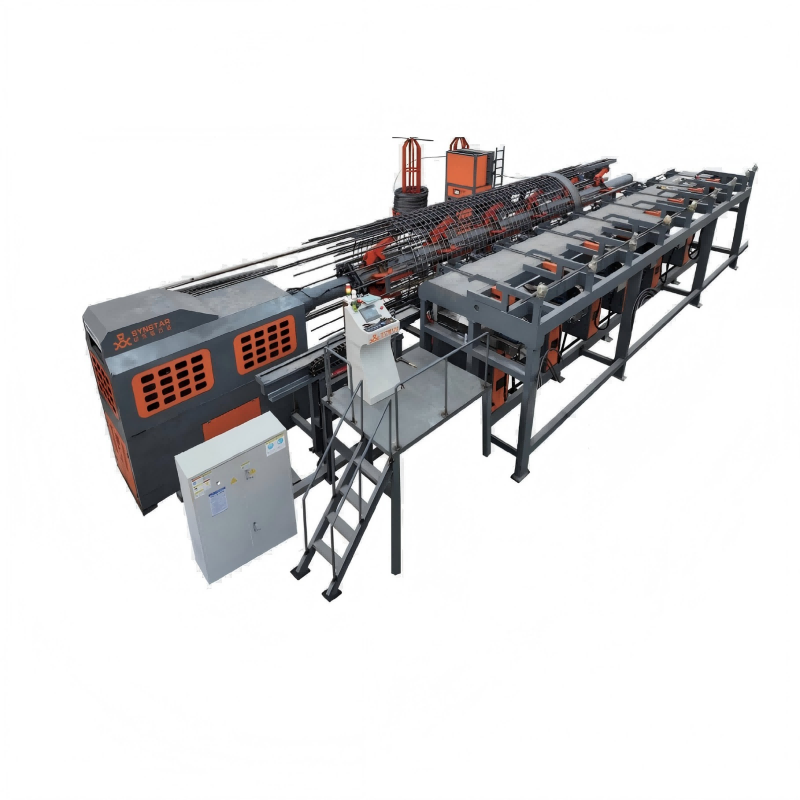
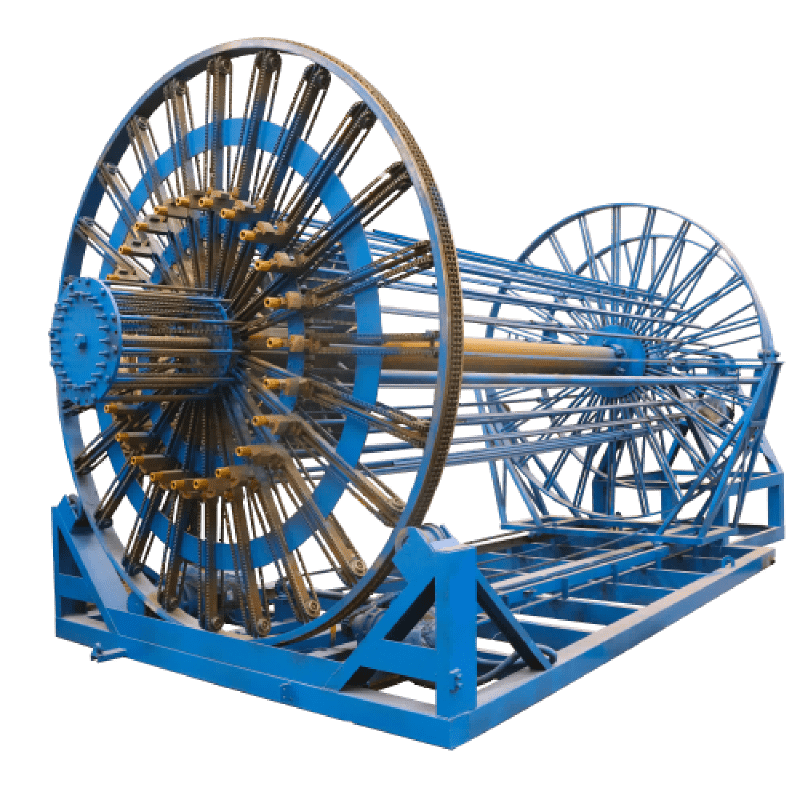
The steel bar cage rolling welding machine, also known as the steel bar cage forming machine, operates based on the following principle: According to the construction requirements, the main bars of the steel bar cage are manually passed through the corresponding template holes of the fixed rotating disc and then fixed on the moving rotating disc. The bar strands (welded bars) are straightened by the straightening device and then wound around the main bars. The moving disc and the fixed disc rotate synchronously, causing the moving disc to move at a constant speed and simultaneously performing welding, thereby forming the finished steel bar cage. The equipment consists of twelve core components such as the driving guide rail, control console, main bar rack, and hydraulic support device. It adopts an intelligent welding manipulator and PLC control system, and can automatically form steel bar cages ranging from 2 meters to 27 meters in length.
After adopting the steel cage rolling welding machine, the spacing between the main bars and the wrapped bars is uniform, and the diameter of the steel cage is consistent. The product quality fully meets the specification requirements. In actual projects, during manual production of the steel cage, the supervisor would go to the site for inspection almost every day. However, after using mechanical processing, the supervisor basically achieved "no inspection" for the finished steel cage.
II. Selecting the Right Model Starts with Asking the Right Questions: These five questions should be clarified first.
Before purchasing the equipment, the construction team should not start by looking through the product manual. Instead, they should first clearly define their own requirements. These five questions determine the direction of equipment selection:
What is the maximum pile diameter?
The roller welding machine for reinforcing cage is mainly divided into different types according to the different pile diameters, such as 1250 type, 1500 type, 2000 type, 2200 type, 2500 type, and 3000 type. The 2000 type can be used to make reinforcing cages with a pile diameter of less than 2 meters, and the 2500 type can be used to make reinforcing cages with a pile diameter of less than 2.5 meters. When selecting the model, it is essential to take the maximum pile diameter on the engineering drawing as the benchmark and reserve a certain margin.
2. What is the maximum length of the steel reinforcement cage?
The standard configuration of the steel cage rolling welding machine can typically produce steel cages with a length of 12 meters. If the project requires a single piece of a 18-meter or even longer steel cage, it is necessary to inform the manufacturer in advance about the request for customizing an extended length.
3. What is the heaviest weight of the steel reinforcement cage?
This issue is easily overlooked but is of great importance. Equipment with normal configuration can produce steel reinforcement cages weighing up to 5 tons. If the weight of the steel cage exceeds 7 tons, it is recommended to add a traction device to the equipment to ensure production safety and quality.
4. Is the reinforcement arrangement single or double?
The winding forms of the reinforcing cage include single-wire winding and double-wire parallel winding. Different methods correspond to different welding point spacings and equipment configurations. When purchasing, it is necessary to inform the manufacturer of the drawing requirements.
5. Is it manual welding or automatic welding?
The general CNC reinforced cage welding machine adopts manual spot welding method. Some project departments require the addition of an automatic welding robot device. The latter is more expensive but requires fewer workers. It needs to be judged comprehensively based on the budget and construction period and informed to the manufacturer in advance.
III. Core Parameters and Key Technical Indicators
After clarifying one's own requirements, it is also necessary to pay attention to the key parameters of the equipment itself. These indicators directly determine the production capacity and quality of the equipment.
The processing diameter and length range are the core performance indicators of the equipment. The main bar diameter range is generally from Φ12mm to Φ40mm, the bar diameter range is from Φ6mm to Φ16mm, the spacing range of the bars is adjustable from 50mm to 400mm (for some models, it can reach 500mm), the welding speed is usually 1 to 6 meters per minute, and the spindle speed can be adjusted between 0.5 and 5 revolutions per minute.
In terms of precision, high-quality steel cage rolling welding machines can control the error of main steel bar spacing within 1 centimeter, and the spacing error of coiled steel bars within one meter within 5 millimeters. The welding method is mainly carbon dioxide shielded welding, and the motor and control components are preferably equipped with brands such as Mitsubishi, Panasonic, and ABB from Japan. The power of the entire machine ranges from 15 kilowatts to 30 kilowatts.
IV. How to Identify the Quality of Core Components?
The long-term stable operation of the steel cage rolling welding machine is highly dependent on the quality of the core components. When purchasing the equipment, do not merely focus on the appearance and price; instead, you must "open the cover to inspect the inside" and pay close attention to the following major components:
Reducer: It is the most expensive and crucial component in the equipment. Whether the manufacturer uses domestic brands or imported brands directly affects the stability and failure rate of the equipment operation.
Electrical Control System: The PLC program determines the intelligence level of the equipment. High-end models usually employ controllers from brands such as Mitsubishi of Japan, Panasonic, or Siemens of Germany. Dynamic components like motors and encoders use brand products, which can effectively ensure the synchronization accuracy of the equipment's movement and rotation, and prevent the finished products from twisting or deforming.
Hydraulics and Steel Structure: The hydraulic support device is used to lift the heavy steel reinforcement cage during the rolling welding process, preventing it from sagging due to its own weight and thus affecting the welding quality. Oil cylinders with large diameters (such as 100mm diameter) can provide stronger load-bearing capacity. At the same time, the steel types used for the frame and cross ribs are also important indicators for judging the rigidity of the equipment.
V. Manufacturer Services and After-sales Guarantee
Buying the equipment is just the first step; achieving long-term stable operation is the key. When making a purchase, be sure to pay attention to the following points:
Can the manufacturer provide a complete set of services covering the entire process of new factory layout design, equipment selection, installation and commissioning, as well as training for operators?
Is the local service network complete? Is the supply of spare parts timely? Can it reduce the downtime losses?
The general warranty period for the entire machine is usually 12 months. It is necessary to clearly define the warranty scope and response time.
VI. Beware of Low-Cost Scams
Currently, there are indeed some extremely cheap steel cage roll welding equipment available on the market. Some models labeled as "fully automatic" can be purchased for only a few thousand yuan. In such cases, it is recommended to remain rational - the manufacturing of equipment requires costs. Equipment with excessively low prices often uses low-quality configurations or even inferior products for core components such as steel grades, reducers, and electrical control components. In actual use, it is prone to serious quality issues such as arm bending, weak welding points, and decreased precision. This not only affects production efficiency but may also pose potential quality risks.
Conclusion
The selection of a roller welding machine for reinforcing bars is a comprehensive process and cannot be reduced to a simple price comparison. A practical approach is as follows: first, clarify the engineering requirements of your own project, then compare the core parameters and accessory quality of the equipment, and select reputable manufacturers within a reasonable price range. It is recommended that construction enterprises conduct on-site inspections to understand the actual operation of the equipment and the usage feedback from existing customers, and make a wise choice that combines technical insight and business judgment.
 Hot News
2026-05-27
2026-05-18
2026-05-12
2026-05-08
2026-05-01
2026-04-27
Copyright © 2026 Shandong synstar Intelligent Technology Co., Ltd. All rights reserved. - Privacy Policy
 EN
EN