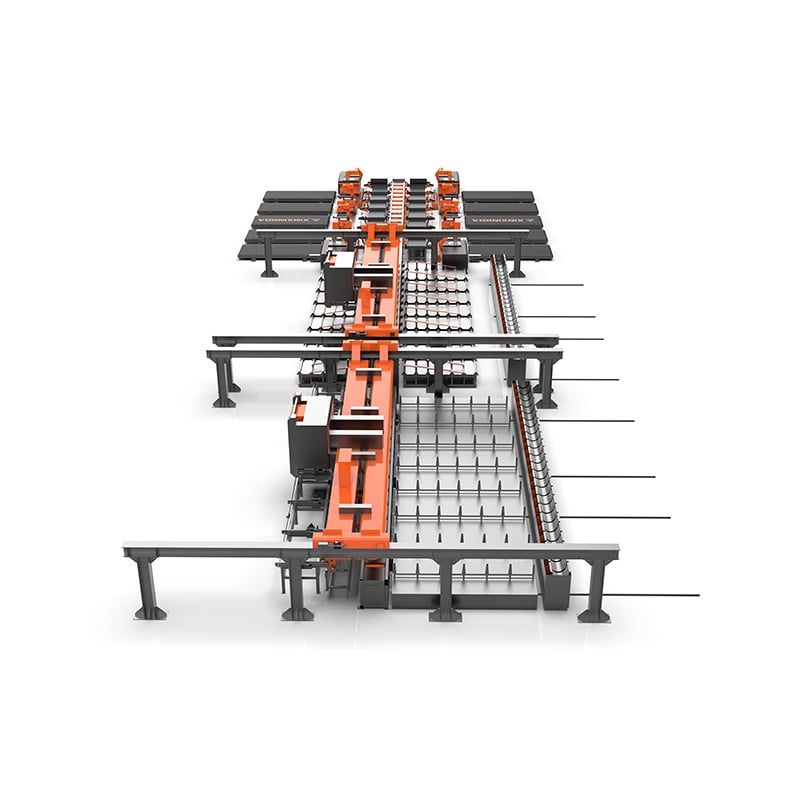
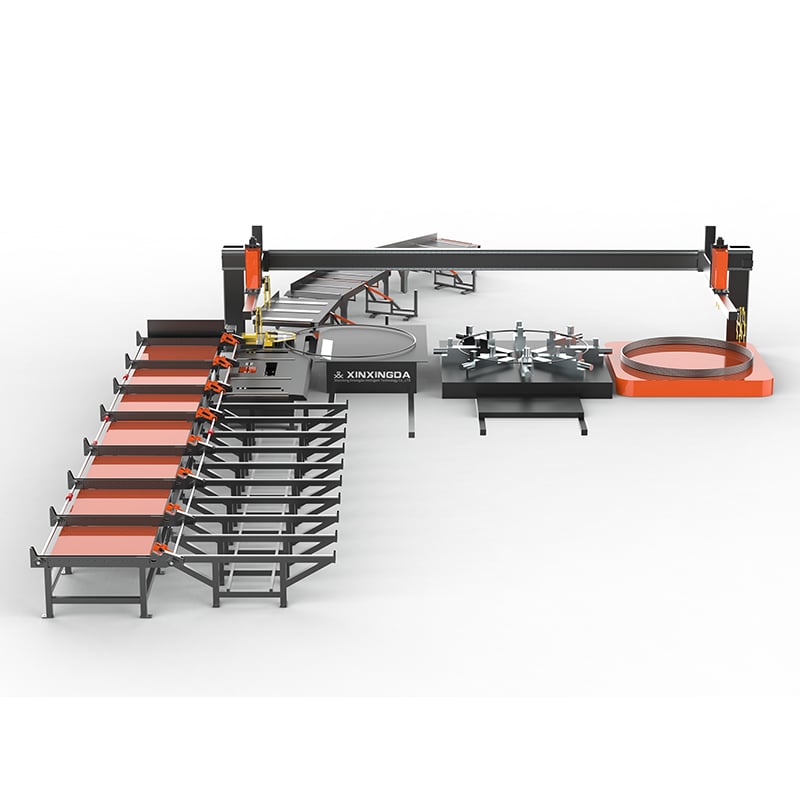
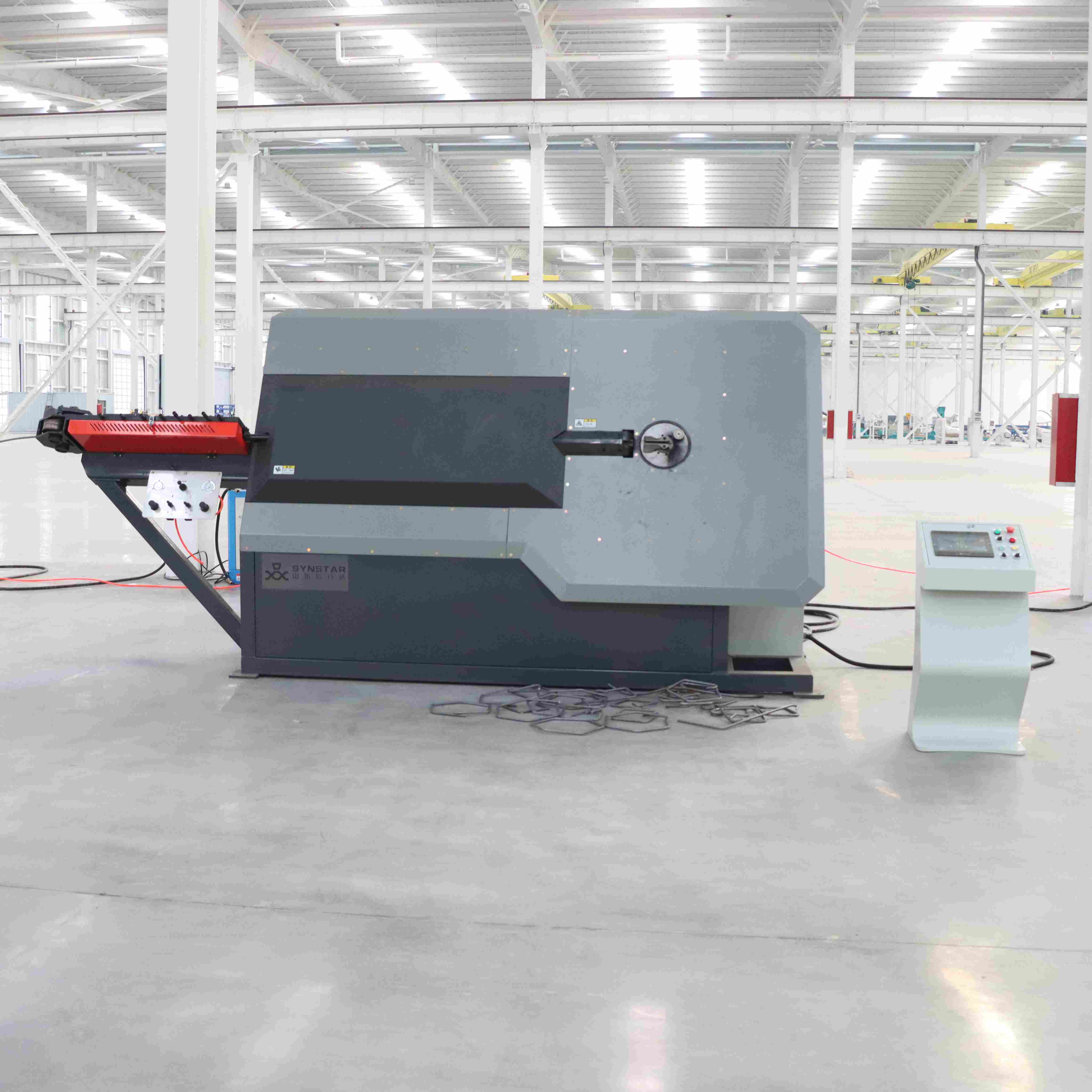
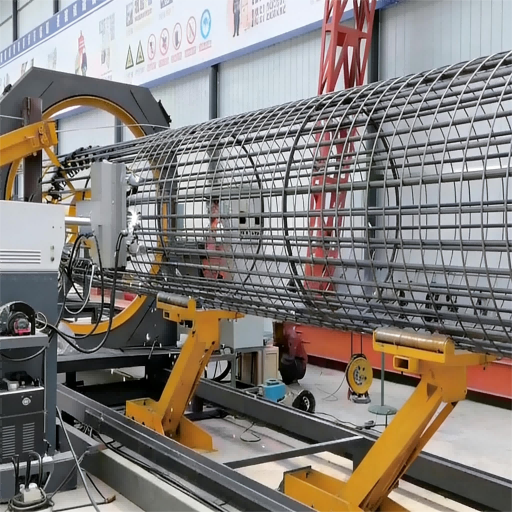
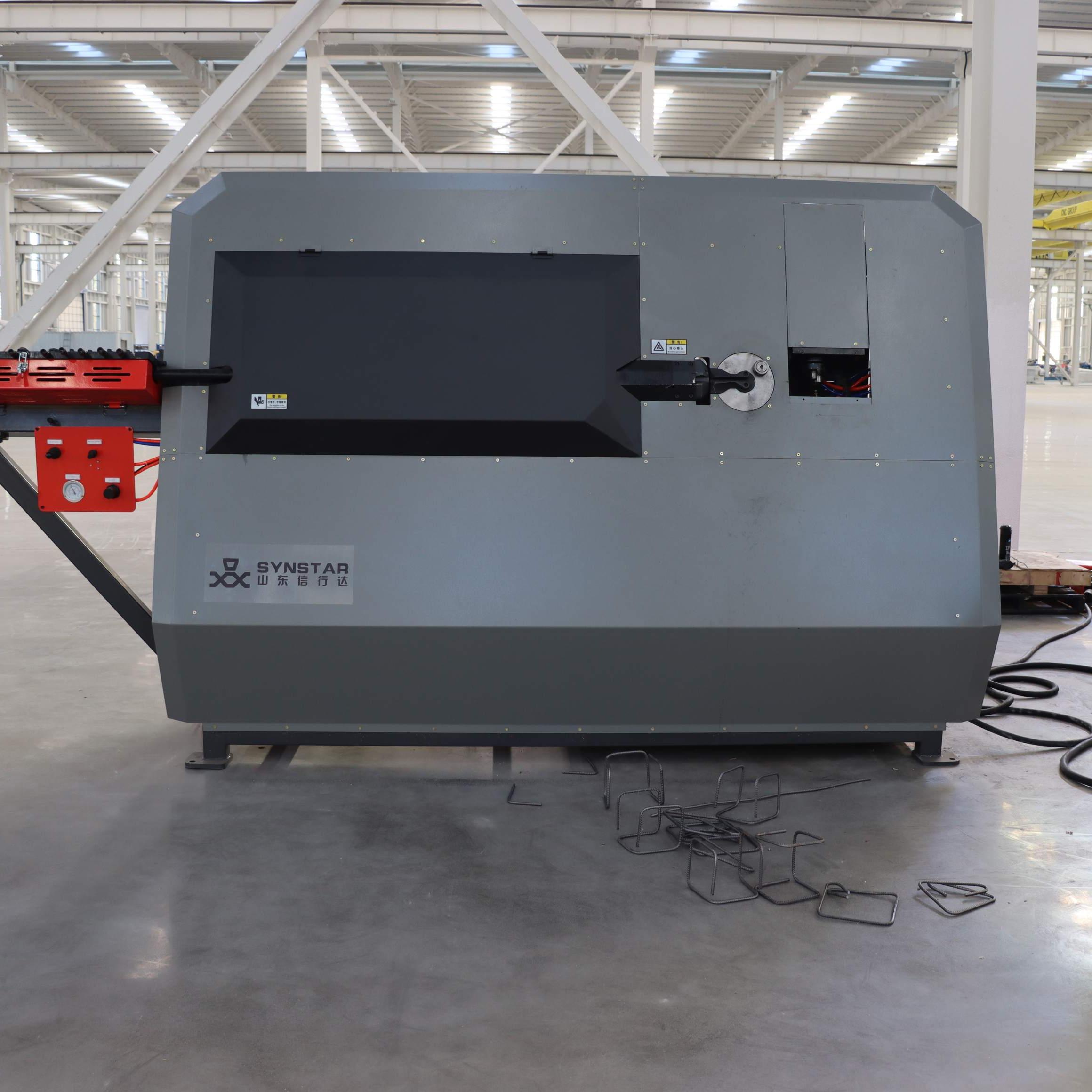
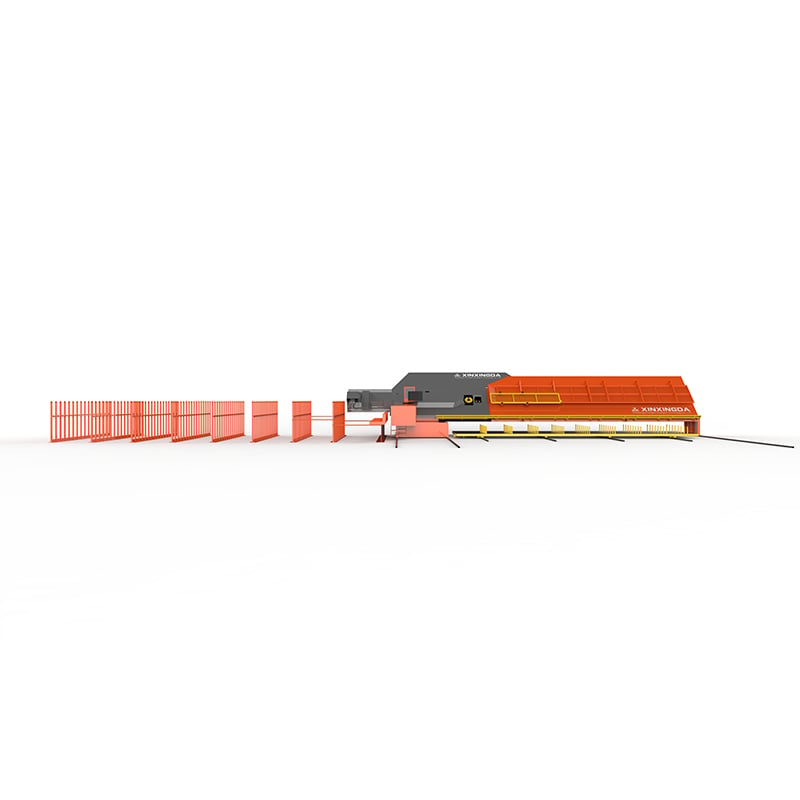
The steel cage rolling welding machine, as an automated equipment controlled by PLC, integrates the services of straightening, bending and rolling welding of building steel bars, and is widely used in construction fields such as highways and high-speed railways. Compared with traditional manual binding, it significantly saves labor and time costs, and the processing quality is also more stable. However, having a good equipment is only the first step. To truly bring out its high efficiency, efforts must be made in the four aspects of pre-preparation, actual operation during the process, post-maintenance, and teamwork. This article will consider from these four dimensions and share practical experience in the efficient application of the steel cage rolling welding machine.
I. Preparations: The prerequisite for the equipment to operate with "zero waiting" and high efficiency is to be "well-prepared" every time it is started. Many construction sites fail to achieve high efficiency because the fundamental reason is not that the equipment is not fast enough, but rather that the equipment adjustment is not implemented properly, the raw materials are not prepared adequately, and the actual operation is not familiar, resulting in frequent shutdowns, waiting, and rework.
1. Precise adjustment of equipment and main parameters: Before starting the production process, first adjust the equipment according to the hole diameters of the steel cage, the total number of main bars, the spacing of the main bars, and the spacing of the stirrups as specified in the design drawing. Adjust the number and spacing of the anchor bolts of the fixed plate and the moving plate, and reasonably determine the running speed of the moving plate (the running speed directly affects the precision of the stirrup spacing). Many equipment are equipped with touch screens, and the main parameters such as the length of the pre-buried part, the pitch, and the number of wire coils can be set at will. The operation is simple and convenient. After the parameter settings are completed, try running the machine without load as much as possible to determine that there are no abnormalities in the machine's operation. Then, it can be officially put into production and manufacturing.
2. System zoning of raw materials and priority of material preparation: Proper layout of the production area is the key to improving work efficiency. Overall planning of the equipment area, main reinforcement storage area, main reinforcement raw material area, and finished reinforced cage area should be done clearly, considering the convenience of moving and storing various raw materials and finished products. In advance, determine the length required for main reinforcement cutting, welding connection or sleeve connection according to the engineering drawings, and suspend them on the main reinforcement dispensing frame; at the same time, suspend the coil reinforcement on the single twisting machine. Raw materials "wait" for equipment, rather than equipment "waiting" for raw materials, is the most basic rule for normal operation.
3. Improvement of human-machine battle hero proficiency: Operators need to undergo professional training by the technicians of the equipment dealer to deeply understand the characteristics of the equipment. Only by thoroughly mastering the performance and operation procedures of the equipment can they immediately identify and handle any abnormalities that occur, avoiding prolonged shutdowns due to improper handling. If possible, it is recommended to choose to modify fully automatic welding intelligent robots or install automatic welding equipment. By using the cylinders to tightly clamp the coil ribs during operation, intelligent welding can be achieved, allowing one operator to complete the work that was previously handled by multiple people.
II. High-efficiency Steps: The Seven Processes Eliminate the Inefficiency of the Normal Operation of the Low-Efficiency Steel Bar Cage Rolling Welding Machine. The normal operation of this equipment is based on a standardized process flow. The following seven stages are interlinked, and any delay or error in any one of these stages will reduce the overall efficiency.
Delivery: Utilize the automatic feeding system for the main bars to evenly distribute the main bars into the feeding trays. It is recommended to use H-shaped steel for welding and assembling the main bar material rack, and adopt a two-section structure for better disassembly and transportation. If the reinforcing cage uses the multi-wound bar method, two single-winding machines and a bidirectional straightening system need to be configured.
2. Thread Insertion and Fixation: Pass the main steel bars on the feeding tray over the flexible hose of the fixing disc, then insert them into the flexible hose of the moving disc. Tighten the fixing nuts using an electric wrench. There is a small detail that is often overlooked: whether the ends of the building steel bars are precisely aligned directly affects the quality of the subsequent welding. At a certain construction site, after practical investigation, it was found that the ends of the main steel bars were uneven. To solve this problem, a thick steel plate was welded about one meter in front of the rolling welding machine, and the nuts were modified to replace the fixing nuts. This solution was reasonable and effectively addressed the issue. In addition, appropriately extending the mobile track can reduce the welding of the original four steel cage sections to three sections, significantly reducing the connection time and improving the accuracy and efficiency.
3. Start welding: At the top of the steel reinforcement cage, the fixed disc and the moving disc rotate simultaneously. The cross bars are continuously wound in parallel several times to securely weld them to the main bars.
4. Normal welding: Start the equipment and make the Murata capacitor and the fixed plate rotate synchronously, allowing the main wire to continuously wind around the main wire and then proceed with the welding; at the same time, the moving plate moves slowly at the preset speed. Workers must not bypass the equipment on their own and should always monitor the welding quality. When the welding reaches the designated location, an internal structure reinforcement ring must be added. As the iron cage continues to lengthen, the hydraulic support should be moderately raised to support the steel cage, to avoid deformation due to its own weight and thus affecting the quality.
5. Termination and Disconnection: Once the steel cage reaches the desired length, stop the welding process. Securely weld the ends of the main bars together in a few loops, and then disconnect the construction steel bars.
6. Separation and Unloading of the Cage: Restart the equipment to free the tail end of the steel cage from the fixed disc hose; loosen the fixing nut of the moving disc to allow the moving disc to shift again, so that the hose can be detached from the steel cage; then use the aerial crane to unload the finished steel cage.
7. Equipment calibration: Lower the fixed support to its original position, move the disc back to the starting point, and prepare in advance for the production and manufacturing of the next section of the reinforced concrete cage.
III. Acceleration of Production Switching: Another crucial test for achieving high efficiency from the "shutting down and waiting" stage to " seamless connection" is the production switching capability - can the molds and parameters be efficiently adjusted when producing different specifications of steel reinforcement cages? This directly affects the daily utilization rate of the equipment.
1. Pressing automation method: By adopting the quick-change bolt structure and standardized templates, the production changeover time within the same team can be reduced from 2 hours to within 30 minutes. After adjusting the roller position to change the specification model, make sure that the anchor bolts are securely tightened to avoid accidents caused by the rollers flying out during the welding process. The diameter of the mandrel is recommended to be more than 2.5 times the diameter of the processed reinforcing bar to ensure the smoothness of the bending process.
2. Main parameter memory and reuse: The contemporary CNC machine tool steel cage rolling welding machine has the function of file storage, which can save the integrated main parameters of different types of steel cages (such as hole diameter, pitch, total number of main bars, welding method, etc.). During the replacement process, the preset formula can be directly read from the touch screen without the need for reconfiguration, fully demonstrating the "one-click production" feature.
IV. Daily Maintenance and Care: Ensure Continuous High Efficiency
High efficiency is not an isolated "spurt" but rather a sustained and stable output. Even the best equipment will gradually make "basic mistakes" if it is neglected in maintenance and care. Daily maintenance and care must be closely integrated with daily inspection, weekly inspection, and regular patrol inspection, and a system must be established and implemented at all levels.
Daily inspection items for new project: ① Check if there are any problems with the circuit connections, and whether the bolts and nuts are loose; ② Check if the braking system, torsion springs and brake discs have any abnormalities; ③ Inspect the wear, corrosion and conductivity of the electrode copper blocks; ④ Remove the splashed substances and dust from the main driving wheel roller shaft, electrode swing rod, and welding electrodes; ⑤ Check the lubrication condition of the moving parts (such as double-plate couplings, electrode swing rods, etc.); ⑥ Check if the water channel refrigeration system is unobstructed and if there is any water leakage; ⑦ Confirm that the operation platform and machinery are kept level.
Weekly inspection of new projects: ① Fill all the grease nipples of the equipment with unsalted butter. If the oil deteriorates, it should be replaced regularly; ② Use a brush or a gentle electric blower to remove the dust from the electrical cabinet to prevent short circuits and damage to the equipment.
Regular inspection (1-2 months): ① Turn off the power supply, and tighten each connection of the disconnect switch, motor terminal block, and wiring terminal block inside the electrical control cabinet; ② Check the remaining oil in the reducer and hydraulic system, and replace it if insufficient; ③ Check the tension of the chains and belts in all areas; ④ Replace the lubricating oil in the reducer every 6 months.
V. Teamwork and Collaboration: The Final Milestone for Human-Machine Integration Even the most advanced equipment still requires others to operate and manage it. To achieve high efficiency, a scientific and reasonable team configuration and clear job division are indispensable. Taking a set of standardized reinforced cage rolling welding machines as an example, the following configuration is proposed:
Rebar assistant (1-2 people): Responsible for raw material cutting, production and placement of reinforcement rings, as well as hoisting and transporting of the finished reinforced cages.
Operator (1 person): Responsible for operating basic parameters and the touch screen, supervising welding quality, and stopping the machine immediately to resolve any abnormalities.
Welding assistance (1 person, optional): Responsible for welding at critical nodes, or opt to install an automatic welding intelligent robot to complete the entire process automatically.
By adopting this division of labor method, with two shifts of 10 workers each working on one piece of equipment per day, it is possible to produce over 20 complete 12-meter-long reinforced concrete cages. If upgraded to the latest resistor welding machine, the production rate can be further increased by over 50%. At the same time, it is particularly important to note: non-production staff are strictly prohibited from approaching the equipment while it is running. One must be cautious of the risk of clothing, pants, and arms getting caught in the equipment. When feeding the steel bars, protective rubber gloves should be worn.
VI. Quick Reference Table for Common Issues
Flexibly apply the following methods for checking common issues. This enables you to quickly identify and address problems when the equipment malfunctions, thereby minimizing the downtime of the equipment:
The cause of the malfunction is likely to be the loose adjustment of the straightening wheel for the building steel bars. The wheel needs to be tightened appropriately to straighten the bent steel bars. If the wheel is too tight, it needs to be loosened appropriately to straighten the bent bars. If the wheel is too loose, it needs to be tightened appropriately to straighten the bent bars. The steel bars are twisted when the screw/wire is tightened. The straightening wheel's viewing angle is incorrect or the rolling bearing is damaged. Check the viewing angle of the straightening wheel, replace the damaged rolling bearing. When the blade is lost, the sensitivity of the blade sensor is inappropriate or it is worn out slowly. Adjust the blade sensor to the blade return position to check for run-out of the wire. Adjust the pressure of the rolling spring and the stretching spring, and check the slide rail and the drag wire rod. The building steel bars protrude at the end of the tube after being taken out. The left and right working pressure is uneven. Adjust the clamping degree of the left and right straightening wheels to make the building steel bars present a level bend. If the angle of the straightening block is too large, the blade retreats not back or the torsion spring is too loose, check the angle of the straightening block, adjust the torsion spring and the upper clearance of the numerical control blade. Summarize the inspection methods based on the common problem-solving experience of the equipment. For common faults and difficult problems, it is recommended to contact the professional technicians of the equipment manufacturer in time. Do not attempt to disassemble the equipment while it is powered on.
Conclusion: The efficient application of the steel cage rolling welding machine is not achieved by relying on a single "master technique", but rather through a comprehensive and flexible utilization approach - precise early adjustment enables the equipment to select the correct main parameters, standardized process flow reduces the failure duration of each step, flexible application of the production capacity of the equipment to quickly switch production lines, meticulous daily maintenance ensures continuous stable output, and combined with scientific and reasonable personnel division and proficient fault diagnosis skills. By doing all these well, the steel cage rolling welding machine can truly realize its expected value and promote the improvement of both the engineering construction quality and progress.
 Hot News
2026-05-27
2026-05-18
2026-05-12
2026-05-08
2026-05-01
2026-04-27
Copyright © 2026 Shandong synstar Intelligent Technology Co., Ltd. All rights reserved. - Privacy Policy
 EN
EN