I. Equipment Overview
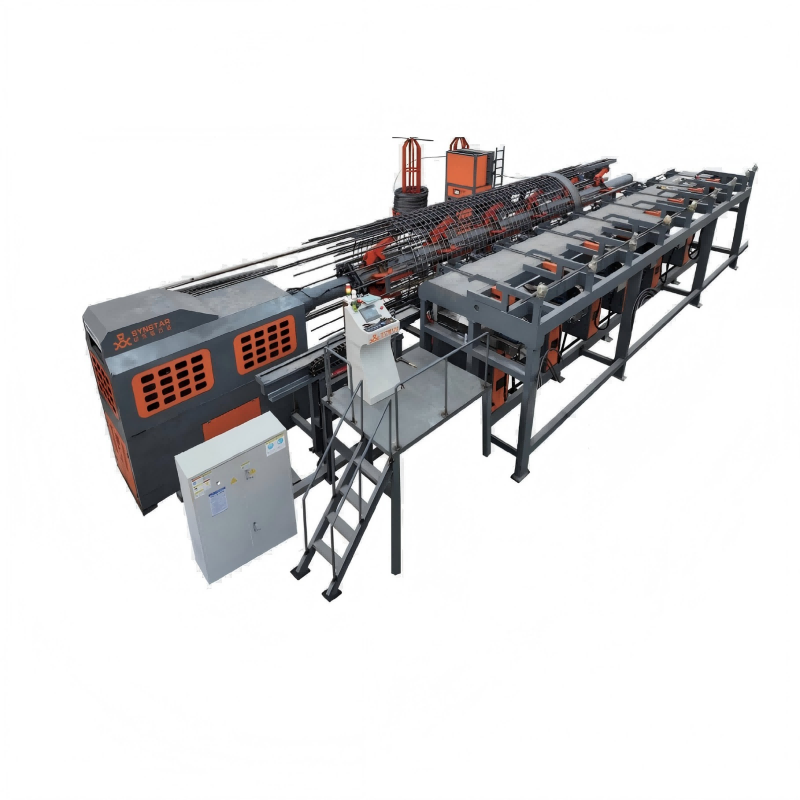
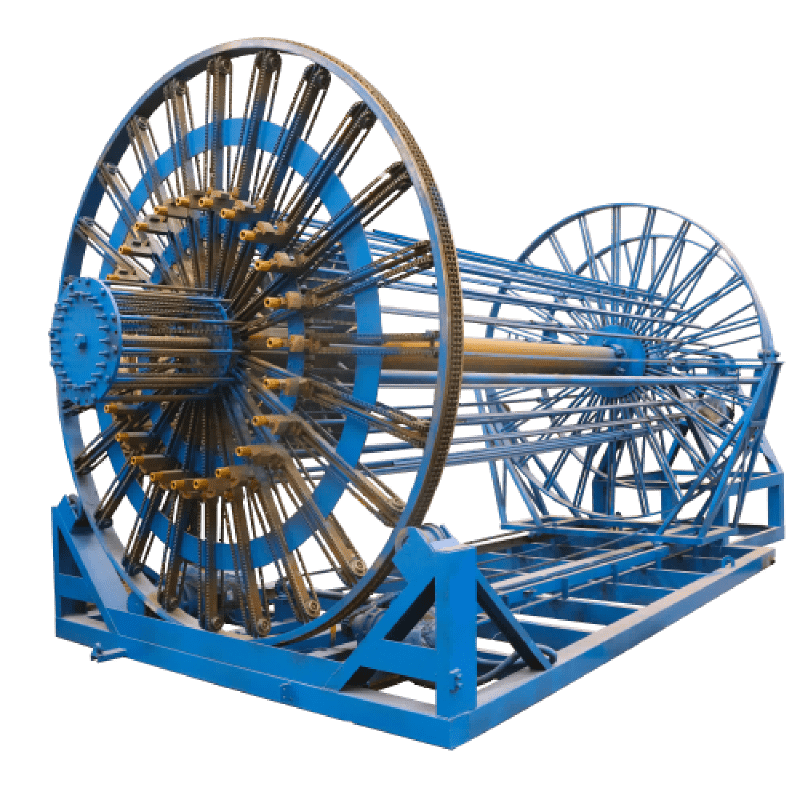
The steel cage rolling welding machine, also known as the steel cage forming machine or the CNC steel cage rolling welding machine, is a core automated equipment used in modern bridge, high-speed railway, expressway, water conservancy facilities and high-rise building pile foundation projects for the production of cylindrical steel cages.
This equipment has transformed the inefficient traditional manual binding or welding method for making steel cages. Through mechanical rotation winding and welding technology, it automatically measures the length, synchronously winds and welds the main bars and stirrups of the steel cage to form it. It is one of the most technologically mature and widely used steel processing equipment in the domestic pile foundation construction field at present.
II. Main Structure of the Equipment
A standard steel cage rolling welding machine is mainly composed of the following major systems:
Main drive system (rotary drive mechanism):
Located at one end of the equipment, it rotates the rotary mold plate through a high-torque reduction motor. The mold plate is equipped with multiple main bar fixing holes, which are responsible for driving the main bars to perform circular motion and providing power for the winding of the stirrups.
Mobile support system (follower mechanism):
Located at the other end of the equipment (mobile end), it cooperates with the main drive system to synchronously support and drive the main reinforcement to move slowly in the axial direction. Its bottom is usually equipped with linear guides to ensure smooth movement.
Reinforcement bar coiling frame and straightening mechanism:
It is responsible for loading coiled reinforcement bars (stirrups). The equipment straightens the coiled bars through the straightening frame and automatically coils them at a fixed distance around the rotating main bars.
Welding system (automatic welding manipulator):
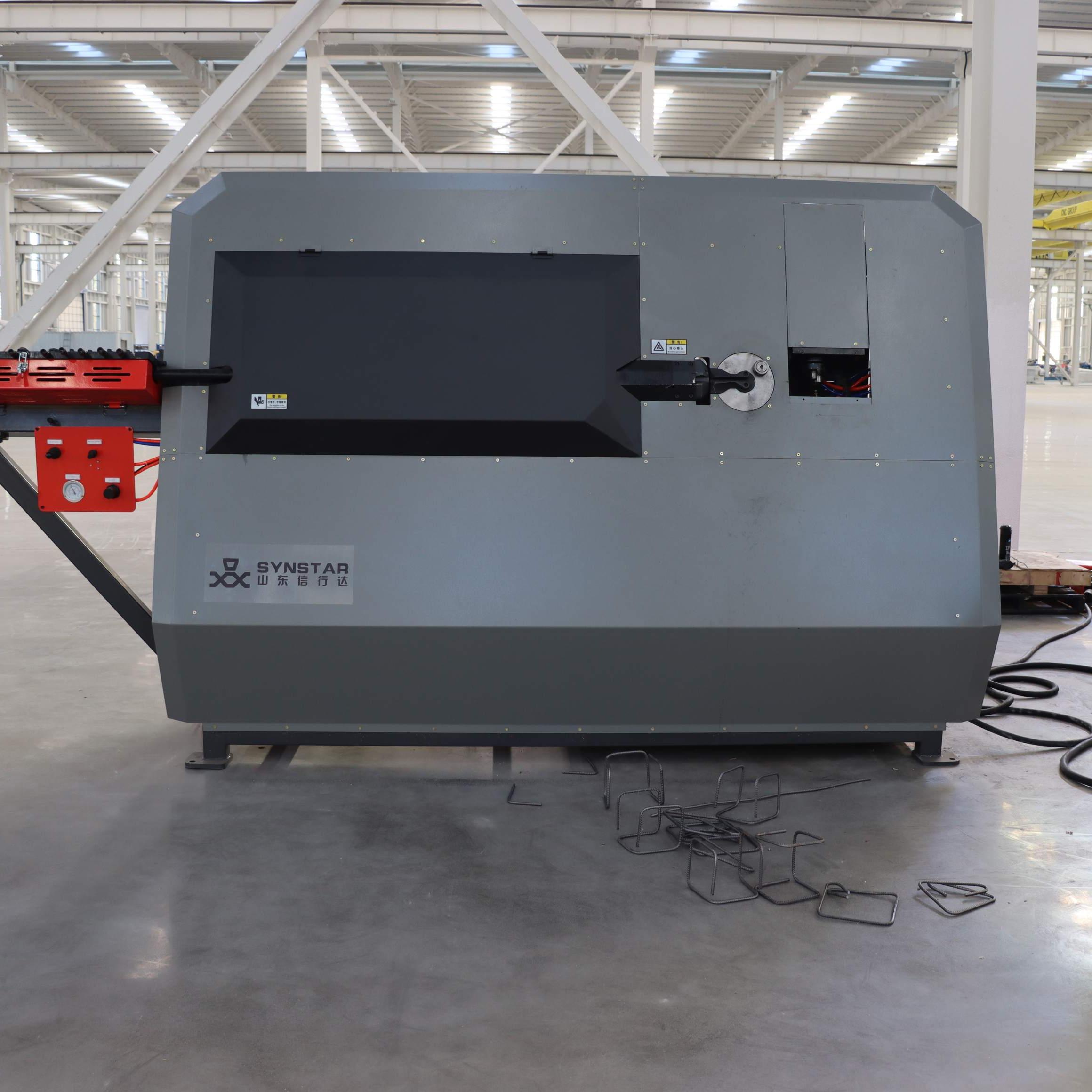
This is the core of the equipment. It is usually equipped with a CO2 gas shielded welding machine or an electric welding machine. The welding torch is fixed on the mechanical arm and automatically spot welds at the intersection of the stirrup and the main bar. The distance of the welding point can be automatically adjusted according to the spacing of the stirrups to ensure a firm connection.
PLC control system:
It adopts a programmable logic controller in combination with a touch screen human-machine interface. The operator only needs to input parameters such as the number of main bars, the spacing of stirrups, the diameter and length of the cage on the screen, and the equipment can automatically complete the processing.
III. Working Principle
The working process of the steel cage rolling welding machine is a compound motion of "rotation + movement":
Feeding: Insert the pre-cut main bars (longitudinal bars) into the corresponding holes of the main drive plate and the moving plate, and then lock and fix them by pneumatic or hydraulic means.
Winding: Weld or fix the end of the stirrup (helical reinforcement) to the first main bar.
Forming: Start the equipment. The main drive disc rotates all the main ribs, while the support system moves slowly backward.
Rotation enables the stirrups to be evenly wound around the periphery of the main bars.
The movement causes the position of the solder joint to keep moving forward.
Welding: With the introduction of stirrups, the automatic welding manipulator, under the control of the PLC, welds (or skips the points set not to be welded) the intersection points of the stirrups and the main bars at the set intervals.
When the mobile end moves to the set length, the equipment stops, the fixing device is released, and the finished steel cage is lifted off the workbench, preparing for the next cycle.
IV. Core Advantages
Compared with traditional manual production, the steel cage rolling welding machine has the following significant advantages:
The production efficiency is extremely high. With a high degree of automation, the processing speed is 3 to 5 times that of manual work. It can operate continuously for 24 hours. For large-scale pile foundation projects with tight schedules, it can significantly shorten the construction period.
2. Stable product quality
Accurate spacing: The spacing of stirrups is uniform, with errors controllable within the millimeter range, fully meeting national standards.
Solid structure: The welding points are uniform and firm, and the main bars and stirrups form a stable skeleton structure, which is not prone to deformation during hoisting and lowering.
Regular appearance: After the steel cage is formed, it has good roundness and high straightness, which improves the project quality.
3. Material and Labor Savings
Savings in stirrups: Due to the continuous winding process, there are no lap joints. Compared with the "stirrup circles" made by manual spot welding, about 1% to 2% of the steel bar usage can be saved.
Reduce labor: Traditional manual production requires 7-8 people to work together (for transportation, binding, and welding), while the roll welding machine only needs 3-4 people (for operation, material preparation, and auxiliary hoisting), significantly reducing labor costs.
4. High Safety
Mechanized operations reduce the risks of workers being exposed to welding arc light, high temperatures, and heavy lifting at close range, thereby improving the working environment.
V. Scope of Application and Specifications
Reinforcement cage rolling welding machines are mainly classified into the following common models based on the differences in processing diameter and length:
Processing diameter: Generally, it can process steel cages with diameters ranging from 400mm to 3000mm (or even larger).
Processing length: According to the site conditions and design requirements, it can be divided into multiple specifications such as 12m, 15m, 18m, 27m, etc. Some high-end models can achieve unlimited length processing through the extension function.
Applicable reinforcing bars: The main bar diameter is usually 12mm - 40mm; the stirrup diameter is usually 6mm - 12mm.
Mainly applied to:
Bridge engineering: bored cast-in-place piles, column piles.
Railway transportation: metro retaining piles, high-speed railway bridge piers.
Industrial and civil buildings: deep foundation pit support piles, high tower foundations.
Hydraulic engineering: breakwater pile foundation, hydropower station foundation.
 Hot News
2026-05-27
2026-05-18
2026-05-12
2026-05-08
2026-05-01
2026-04-27
Copyright © 2026 Shandong synstar Intelligent Technology Co., Ltd. All rights reserved. - Privacy Policy
 EN
EN