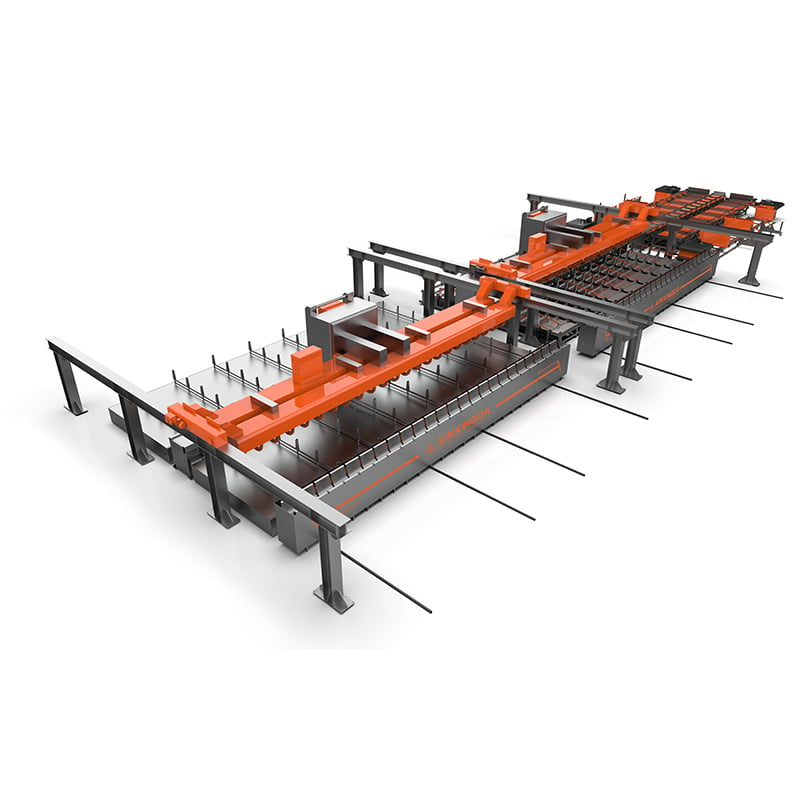
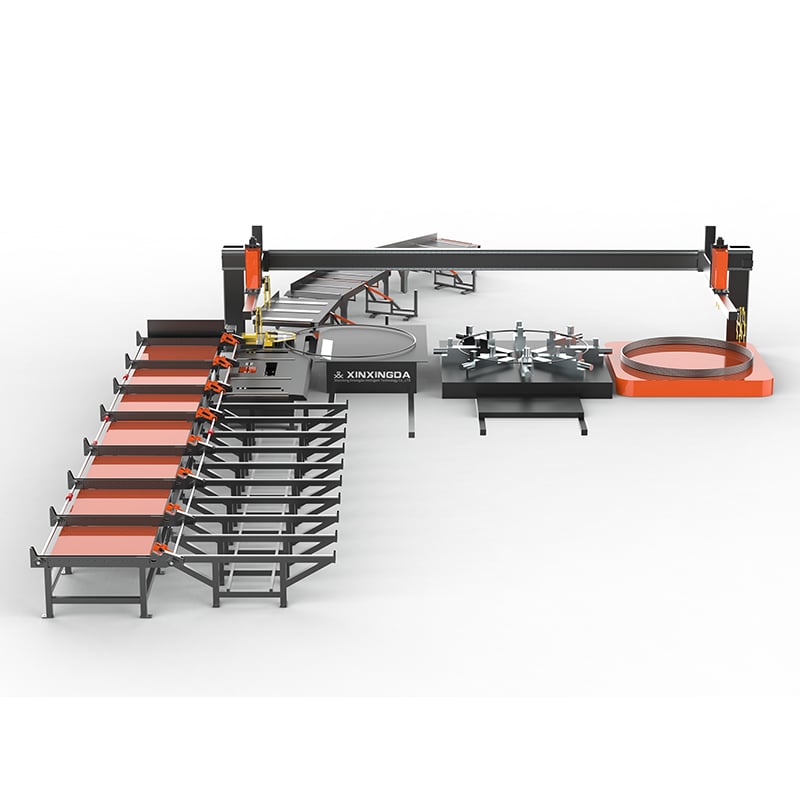
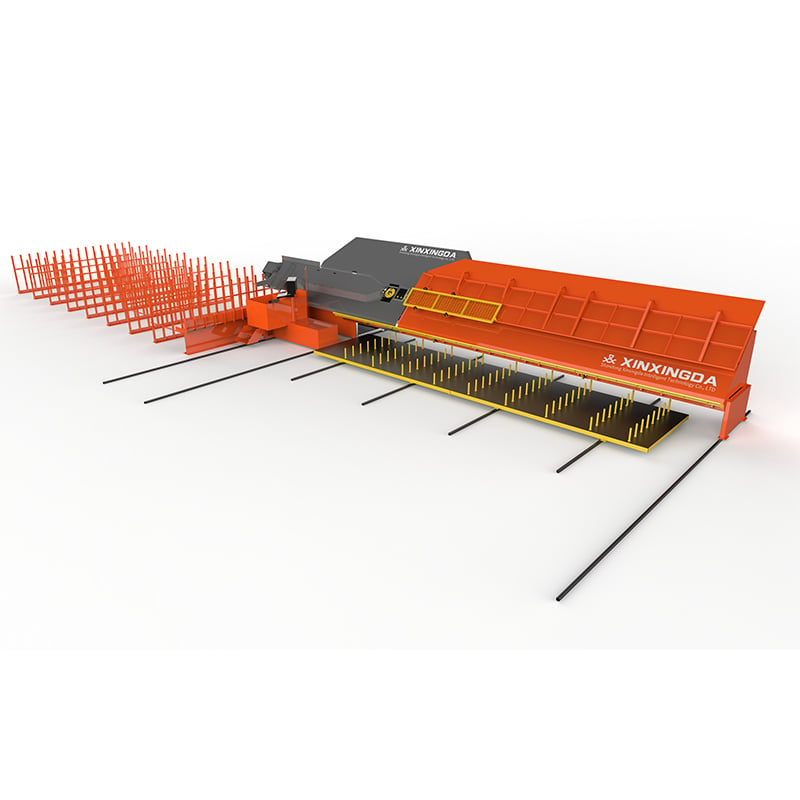
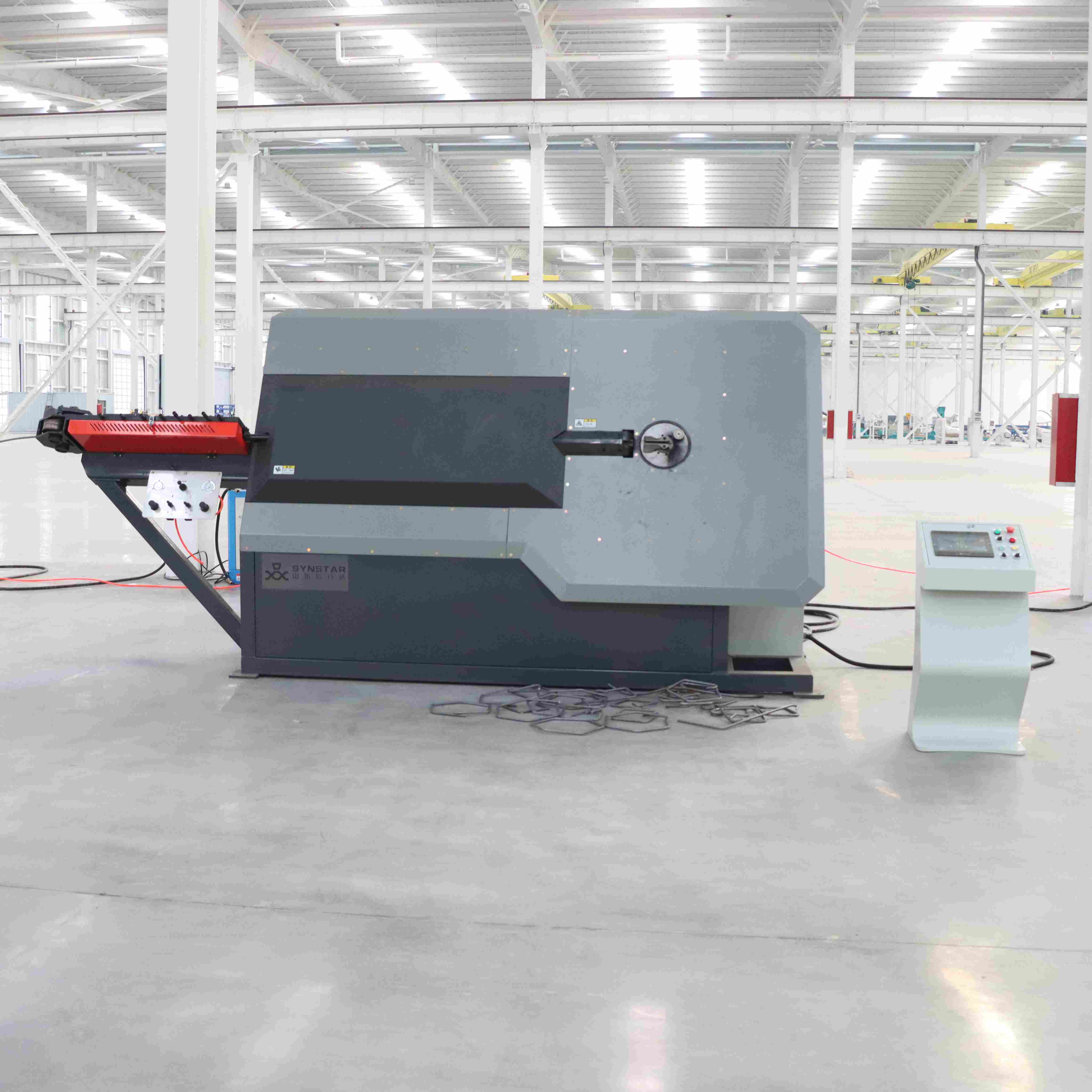
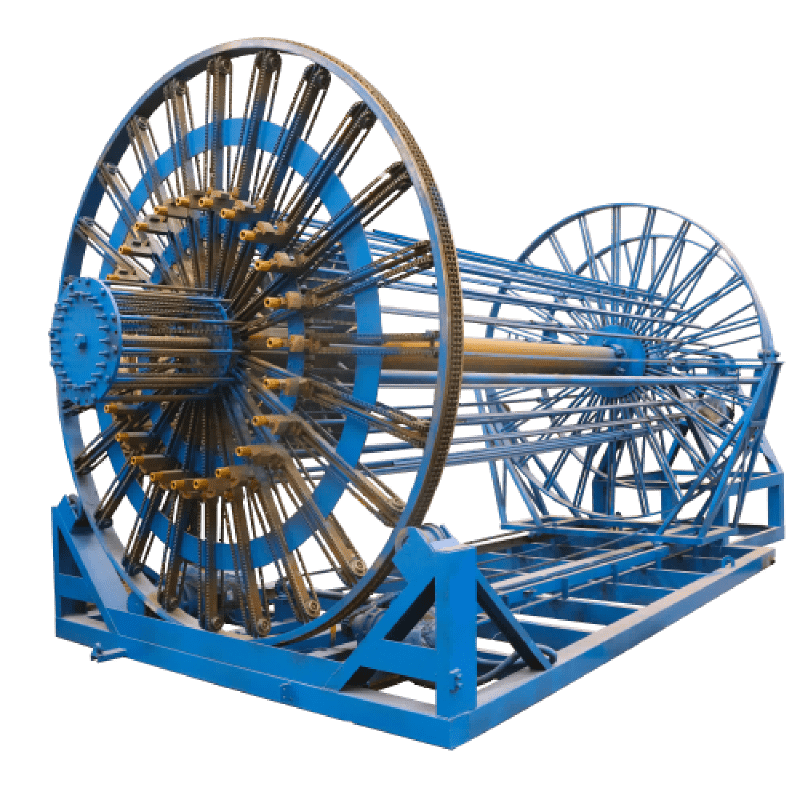
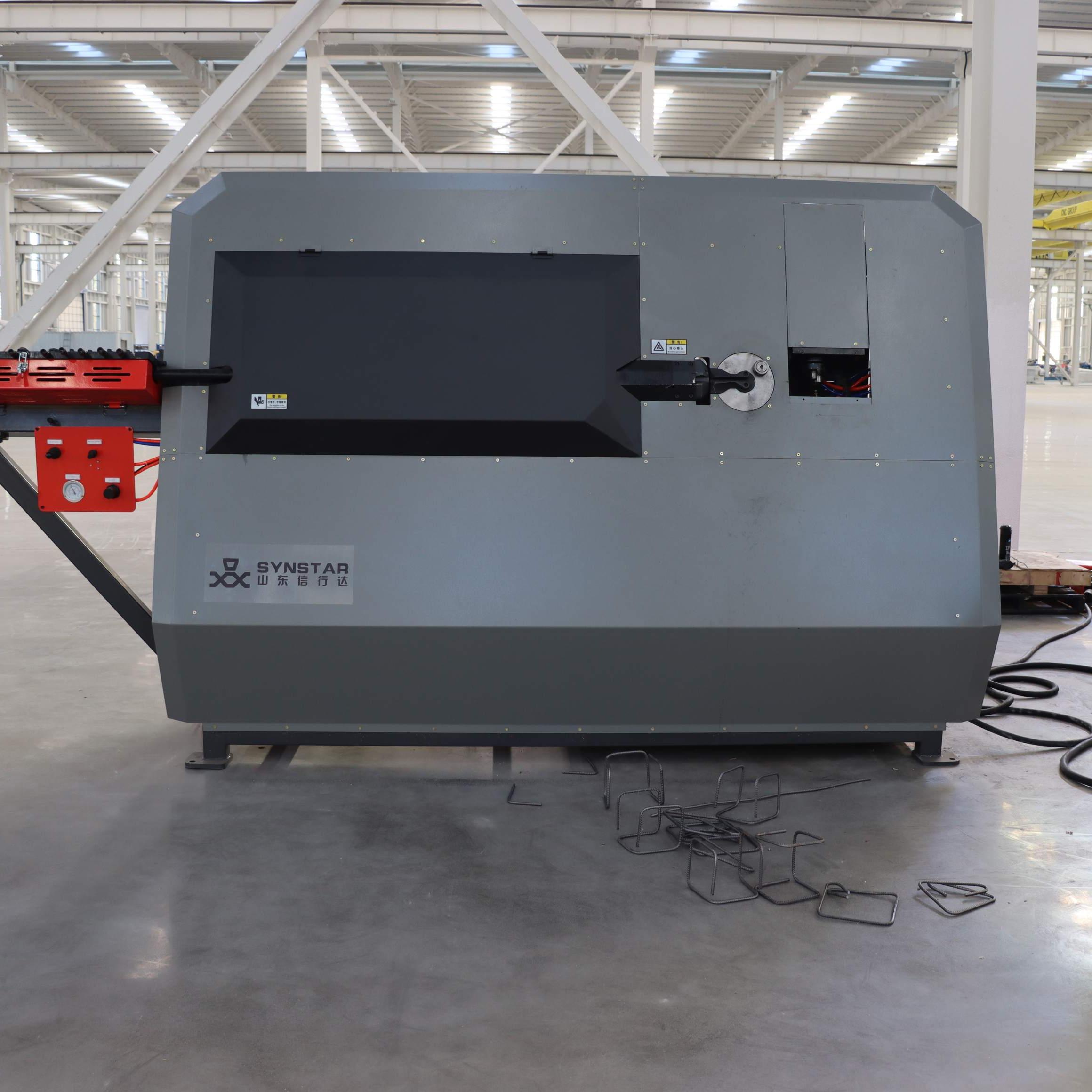
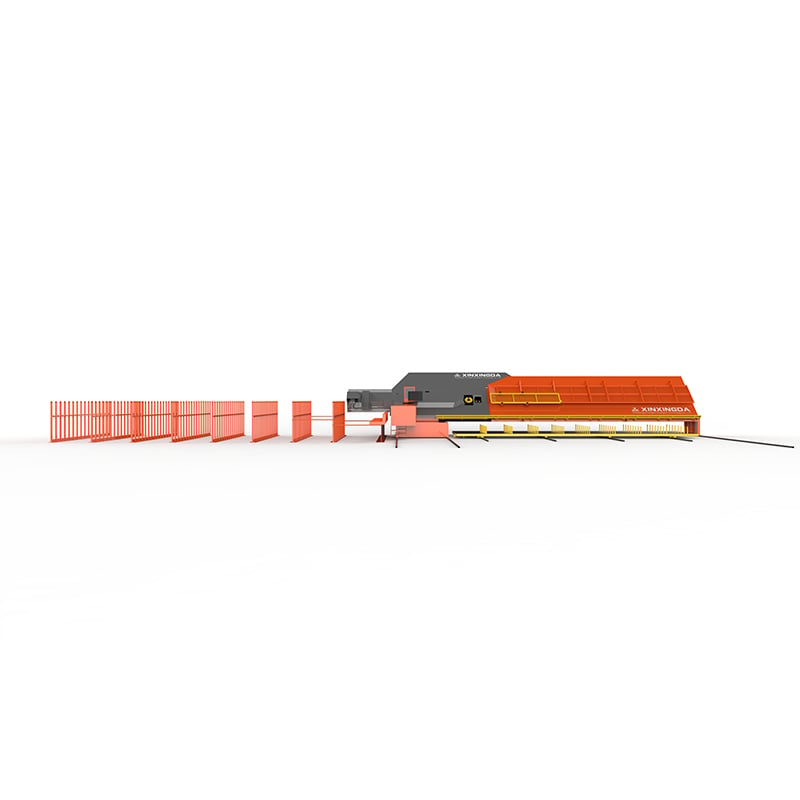
W branży budowlanej „przetwarzanie prętów zbrojeniowych” od dawna uznawane było za proces wymagający dużych nakładów pracy ręcznej. Jednak pojawienie się poziomego CNC centrum gięcia prętów zbrojeniowych szybko zmienia tę percepcję.
Nie jest to po prostu ulepszenie tradycyjnej maszyny do gięcia, lecz przemysłowa jednostka przetwarzająca integrująca automatyczne załadunek materiału, gięcie w dwóch kierunkach, inteligentną kompensację oraz połączenie danych. Dla projektów takich jak budownictwo mieszkaniowe, mosty, linie kolejowe o wysokiej prędkości oraz metra, które wymagają dużej ilości strzemion, haczyków oraz elementów niestandardowych kształtów, to urządzenie stopniowo przekształca się z „konfiguracji opcjonalnej” w „rozwiązanie standardowe”.
1. Jakie kluczowe problemy rozwiązuje?
Tradycyjny proces przetwarzania prętów stalowych wygląda następująco: ręczne podnoszenie materiału → cięcie mechaniczne → ręczne gięcie → ręczne układanie na stosy. Ten łańcuch charakteryzuje się czterema nieuniknionymi wadami:
Zmienność dokładności
Ręczne gięcie prętów opiera się na wzroku i dotyku pracowników. Haki sejsmiczne pod kątem 135° są często wykonywane pod kątem 130° lub 140°, a odchylenia wymiarowe przekraczają często 5 mm. W przypadku niepowodzenia kontroli przez nadzorującego cała partia musi zostać przeprodukowana.
2. Wąskie gardło wydajności
Jeden wykwalifikowany pracownik w parze z maszyną do gięcia może wytworzyć około 400 prętów zbrojeniowych dziennie. Wydaje się to przyzwoitą wydajnością, ale dotyczy ona jedynie „czystego czasu obróbki” – bez uwzględnienia czasu potrzebnego na podnoszenie materiałów, zmianę matryc, usuwanie odpadów oraz oczekiwanie.
3. Straty materiału
W przypadku początkowego etapu ręcznego gięcia należy zarezerwować 200 mm długości pręta jako uchwyt ręczny. Na końcu pozostaje zwykle 30–50 mm materiału, którego nie da się wykorzystać. W dużym projekcie mieszkaniowym same te straty materiału mogą wynosić kilkadziesiąt ton.
4. Brak siły roboczej
Średni wiek pracowników budowlanych przekracza 45 lat, a młodzi ludzie wykazują niską gotowość do wstąpienia do tego sektora. Trudno jest tymczasowo zatrzymać pracowników w okresach szczytowego obciążenia projektów, a jakość pracowników różni się znacznie, co utrudnia zapewnienie stabilności.
Logika wejścia dla poziomego centrum gięcia polega na przekazaniu tych czterech problemów specjalistom z zakresu mechaniki, hydrauliki oraz algorytmów.
II. Jak działa to urządzenie?
Na przykładzie popularnych krajowych modeli podstawowy skład poziomego centrum gięcia obejmuje:
Stelaż magazynowy: umożliwiający przechowywanie cewek lub prostych prętów zbrojeniowych o ładowności od 3 do 8 ton.
Automatyczny mechanizm podawania: napędzany serwosilnikiem, z dokładnością podawania wynoszącą ±1 mm.
Jednostka wyprostowująca: wielokółkowa, dwukierunkowa wyprostowarka eliminująca naprężenia wewnętrzne w surowcu.
Mechanizm gięcia: jedno- lub dwugłowicowy, regulowany w zakresie od 0 do 180 stopni w płaszczyźnie poziomej
Gotowy mechanizm lądowania z funkcją ślizgową: automatycznie wyładowuje się przy gięciu, może być podłączony do taśmy transportowej lub robota.
Procedura obsługi:
Operator wprowadza na ekranie dotykowym średnicę, długość, kąt gięcia oraz ilość prętów zbrojeniowych.
System automatycznie oblicza długość podawania, kolejność gięcia oraz tor unikania przeszkód.
Jednokrotne naciśnięcie przycisku uruchamia proces – urządzenie automatycznie wykonuje podawanie, cięcie, gięcie i wyładowywanie.
Gotowe wyroby są układane w ustalonych partiach; wymagana jest jedynie obsługa ręczna lub wiązanie.
Główne parametry (na przykładzie popularnych modeli):
Średnica obrabianych prętów: φ6 do φ32 (pręty spawane / proste pręty)
Maksymalny kąt gięcia: ±180°
Prędkość gięcia: 45–60° na sekundę
Cykl przetwarzania pojedynczego korzenia: 4–8 sekund (w zależności od rozmiaru)
Liczba osi sterowania: serwo 4–6 osiowe
Interfejs danych: obsługuje import z pendrive’a, transmisję przez lokalną sieć oraz integrację z BIM.
III. Wprowadzane zmiany nie ograniczają się jedynie do „zmniejszenia zapotrzebowania na siłę roboczą”.
1. Dokładność: od „±5 mm” do „±1 mm”
Urządzenie wykorzystuje system sterowania w pętli zamkniętej, w którym enkodery zapewniają rzeczywistą, ciągłą informację zwrotną o położeniu podawania i gięcia. Dla kąta gięcia można ustawić współczynnik kompensacji sprężystości; błąd zmierzonego kąta po uformowaniu haczyka 135° wynosi ≤ 1°. Taką stabilność, niezbędną przy produkcji elementów prefabrykowanych o ścisłych wymaganiach dotyczących grubości warstwy ochronnej oraz belek skrzyniowych dla linii kolejowych o wysokiej prędkości, niemożliwe jest osiągnąć ręcznie.
2. Wydajność: dzienne zdolności produkcyjne wynoszące 12 000 sztuk na maszynę nie stanowią granicy.
Poziomy centrum gięcia pracujące w sposób ciągły przez 8 godzin może przetworzyć od 8 000 do 12 000 zbrojeń, co odpowiada wydajności 8–12 wykwalifikowanych pracowników. Co więcej, urządzenie może pracować 24 godziny na dobę, a w trakcie zmiany nocnej wystarczy jedna osoba pełniąca dyżur.
3. Współczynnik wykorzystania materiału: powyżej 98%
Numeryczny system podawania materiału pozwala precyzyjnie kontrolować długości odcinka początkowego oraz pozostałych odpadów. Podczas cięcia prętów stalowych w wielu różnych wymiarach system automatycznie optymalizuje ich rozmieszczenie. W jednym z projektów mostowych po wprowadzeniu tego urządzenia współczynnik ubytku prętów stalowych zmniejszył się z 4,2% do 1,1%.
4. Zmiana produktu: od „pół godziny” do „30 sekund”
Tradycyjna maszyna gięcia wymaga rozbierania i montażu form oraz regulacji pozycji granicznych, co zajmuje od 15 do 30 minut. Horyzontalny ośrodek gięcia przyjmuje system szybkiej zmiany formy, a powołując ustawiony wcześniej program, specyfikacje można zmienić, zmniejszając czas zmiany do 30 sekund. Jest to szczególnie ważne w przypadku scenariuszy przetwarzania z małymi partiami i wieloma specyfikacjami (takimi jak nieregularne kolumny i niestandardowe obręcze).
IV. Jakie projekty są najbardziej odpowiednie do wprowadzenia?
Na podstawie danych dotyczących zastosowań sprzętu w ciągu ostatnich trzech lat, następujące trzy rodzaje projektów mają największe korzyści:
Wysokiegowieczne budynki mieszkalne / duże budynki publiczne
Standardowe pręty zbrojeniowe wymagają dużej ilości i mają stosunkowo skoncentrowane specyfikacje. Jedna maszyna może zaspokoić zapotrzebowanie na pręty zbrojeniowe dla objętości od 50 000 do 100 000 metrów kwadratowych, a koszty zakupu urządzenia można odzyskać w ciągu 3–4 miesięcy.
2. Kolej szybkiej kolei / kolej międzymiastowa
Specyfikacje prętów zbrojeniowych dla belek skrzynkowych są jednolite, ich ilość jest ogromna, a wymagania dotyczące odchyłek wymiarowych są wyjątkowo wysokie (zazwyczaj ≤ 2 mm). Obecnie główne zakłady produkujące belki kolejowe zasadniczo wykorzystują poziome centra gięcia.
3. Zakład elementów prefabrykowanych
Elementy PC stawiają surowe wymagania co do spójności strzemion, dlatego konieczna jest zautomatyzowana linia montażowa do ich łączenia. Urządzenie wyposażone jest w interfejsy komunikacyjne, które pozwalają na integrację z platformami produkcyjnymi płyt zespolonych oraz formami do schodów.
V. Na co zwrócić uwagę przy wyborze?
Obecny rynek dzieli się głównie na dwie grupy: sprzęt krajowy i importowany. Zalecenia dotyczące wyboru są następujące:
Zakres przetwarzania
Jeśli głównym materiałem do obróbki są małe pręty gwintowane (o średnicy φ12 i mniejszej), można wybrać maszynę lekką; jeśli wymagana jest obróbka prętów prostych o średnicy φ25 lub większej, należy zwrócić uwagę na moc jednostki głównej oraz sztywność ramy maszyny.
2. Konstrukcja głowicy zakrzywionej
Model z podwójną głowicą jest bardziej wydajny, ale jego cena jest około 30% wyższa. Model z pojedynczą głowicą zajmuje mniej miejsca i charakteryzuje się niższym wskaźnikiem awarii, co czyni go odpowiednim dla małych i średnich projektów.
3. Użyteczność oprogramowania
Współczesne urządzenia główne obsługują obecnie bezpośrednie importowanie rysunków CAD oraz automatyczne rozpoznawanie wymiarów. Niektóre marki oferują platformy chmurowe, umożliwiające zdalne przypisywanie zadań oraz przeglądanie wyników produkcji z biura.
4. Serwis posprzedażowy
Dzienna liczba godzin pracy sprzętu do przetwarzania stali jest duża. Szybkość reakcji obsługi posprzedażowej ma bezpośredni wpływ na harmonogram realizacji inwestycji. Zaleca się wybór marek posiadających punkty serwisowe w województwie, w którym znajduje się realizowany projekt.
Sześć. Co oznacza dostawa sprzętu?
Cena poziomego centrum gięcia mieści się w przedziale od 400 000 do 1,2 mln juanów. Dla generalnego wykonawcy nie jest to jedynie zakup środków trwałych, lecz także zmiana metody organizacji produkcji.
W tradycyjnym trybie przetwarzania stalowa konstrukcja stanowi „tylną obsługę”. Po dostarczeniu sprzętu etap przetwarzania zaczyna charakteryzować się cechami standaryzacji, cyfryzacji i powielalności typowymi dla produkcji przemysłowej. Kierownik projektu może zarządzać gotowymi prętami stalowymi tak samo jak betonem, a planista może zamawiać pręty zbrojeniowe (pętle) tak samo jak planuje produkcję w fabryce.
Robotnicy stalowi już nie muszą się nachylać, aby podnosić materiały ani szacować kątów na podstawie doświadczenia. Zamiast tego zaczynają uczyć się obsługi ekranu dotykowego, dostosowywania parametrów oraz konserwacji sprzętu.
To zmiana wprowadzona przez ten sprzęt oraz transformacja, która obecnie odbywa się na placu budowy.
 Gorące wiadomości
2026-05-27
2026-05-18
2026-05-12
2026-05-08
2026-05-01
2026-04-27
Copyright © 2026 Shandong synstar Intelligent Technology Co., Ltd. Wszelkie prawa zastrzeżone. - Polityka prywatności
 EN
EN